
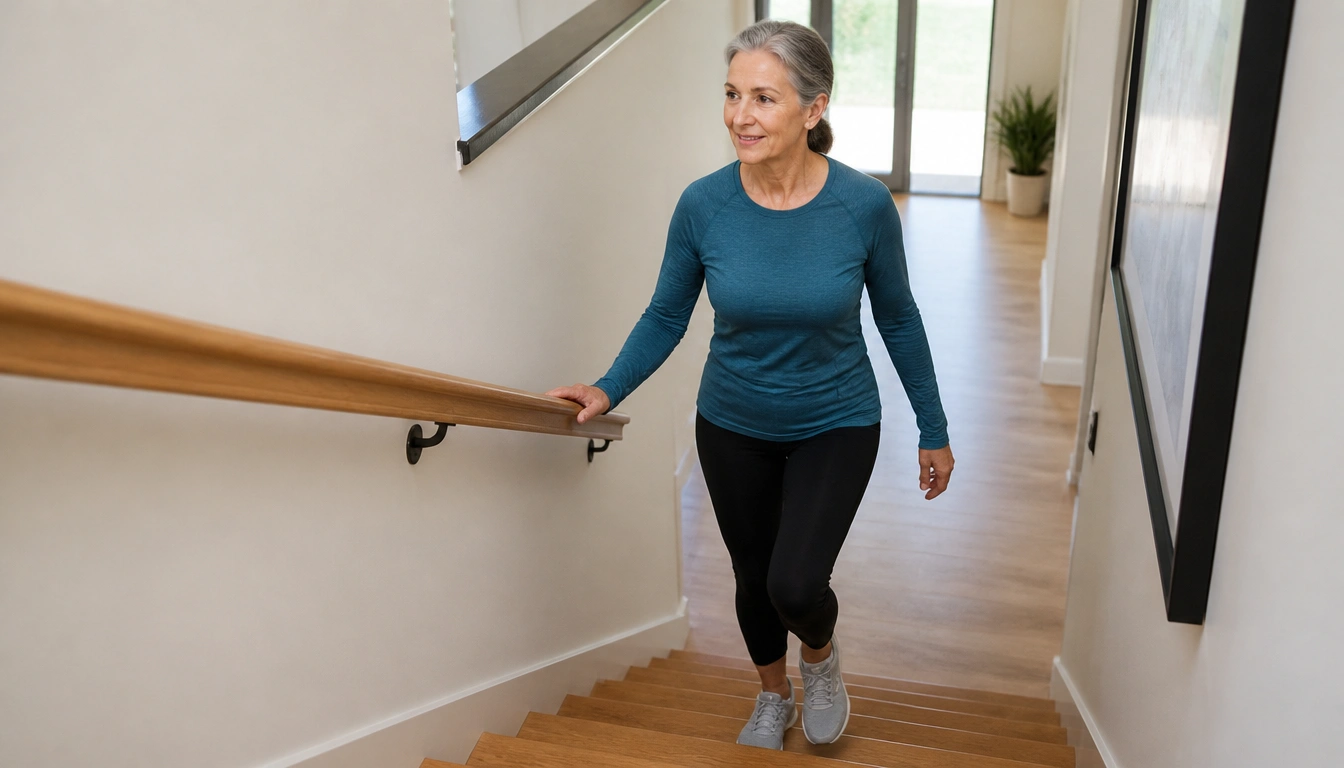
Yes—an adult over 50 can start a stair walking routine safely by beginning with very short bouts, using a handrail, wearing supportive shoes, and choosing a well-lit, uncluttered staircase. Stair walking can support cardio fitness, lower-body strength, and balance. The safest approach is to start with one flight or less, build gradually over weeks, and stop if symptoms such as chest discomfort, dizziness, or sharp joint pain appear.
Key Takeaways
- Start with one short stair bout and treat it like a small workout snack, not a test of fitness.
- Stair ascent builds cardio and leg strength; descent adds balance and eccentric muscle control, which can be the harder part after 50.
- A handrail, good lighting, dry surfaces, and supportive shoes are essential safety tools, not optional extras.
- Short stair bouts can still count toward weekly activity goals when they are accumulated across the day.
- People with knee pain often tolerate ascent better than descent, so step-to or side-stepping patterns may help.
- Chest pain, dizziness, unusual shortness of breath, or sharp joint pain are stop signs that need medical review.
Why stair walking matters after 50
A stair walking routine for adults over 50 works because it trains the movements that matter for daily life: rising, climbing, carrying your body weight, and staying steady on your feet. The Centers for Disease Control and Prevention and the World Health Organization both encourage older adults to combine aerobic work with muscle-strengthening activity each week, and stairs can contribute to both at the same time.
Going up stairs demands more from the heart and lungs than level walking because you are lifting your body against gravity. It also works the quadriceps, glutes, and calves in a functional way that supports getting up from chairs, climbing curbs, and handling hills. Going down is different: it asks the muscles to slow your body under control, which is called eccentric work. That eccentric demand is one reason stair descent can feel harder than ascent and why it is useful for balance and coordination.
For many adults after 50, the value of stairs is not just fitness. It is access. You do not need a gym, special equipment, or a long block of free time. A staircase at home, at work, or in a community building can become a practical movement tool if it is safe and used consistently.
Who should be cautious before starting
Not everyone should begin stair exercise in the same way. If you have known heart disease, uncontrolled blood pressure, frequent dizziness, a recent fall, significant neuropathy, or joint pain that worsens with stairs, get individualized medical guidance before making stairs a regular workout. The same caution applies if you have trouble judging depth, feel unsteady on your feet, or are recovering from an injury or surgery.
People who are deconditioned or returning to exercise after a long break can still often use stairs, but they may need a slower start and more rest. The issue is not age alone. It is how your heart, joints, balance, and feet respond to the task. If you are unsure, a clinician or physical therapist can help you decide whether to start with stairs, flat walking, strengthening work, or a combination.
When stairs already make you anxious, begin with an easy option first: one short flight, clear hand support, and no carrying. Confidence matters because rushing or bracing against fear can worsen mechanics and increase the chance of a misstep.
A beginner stair walking plan
If you are over 50 and out of shape, the best plan is simple and repeatable. Start with one flight of stairs, or even a partial flight if that is all you can tolerate safely. Walk up at an easy pace, pause at the top, and use the handrail on the way down if descent feels less secure. The goal at first is not speed. It is controlled movement and a finish that leaves you feeling capable rather than wiped out.
Use the first week or two to learn how your legs and breathing respond. If one short bout feels manageable, repeat it later in the day instead of forcing a longer session. Over several weeks, add another flight, another repeat, or a slightly quicker pace only if your joints, balance, and breathing are settling well. Progress should feel gradual enough that you could keep going tomorrow.
A useful progression pattern is ascent first, then recovery, then reassess. If the up phase feels fine but the down phase is uncomfortable, keep the descent shorter, slower, or supported while you build tolerance. That is still useful training and often the smarter choice for older knees.
How to pace stairs so they count
You do not need a continuous workout for stair walking to matter. Short bouts spread through the day can still contribute to weekly activity goals, especially when they are done briskly enough to raise breathing and heart rate a little. This is one reason stairs fit so well into real life: the routine can be accumulated.
Think in micro-bouts. One flight after breakfast, one later in the afternoon, and another after dinner can be more sustainable than a long session you avoid. If your schedule allows only a few minutes, that is still useful. The CDC and WHO-style weekly targets are about total activity across the week, not about completing it all at once or only in a gym.
Rest is part of pacing. Stop long enough to regain control of your breathing and posture before the next bout. If you can speak in short sentences while climbing, the pace is likely moderate for many people, but breathing response varies by person and medical status. The right dose is the one you can repeat safely.
As fitness improves, you can build toward more frequent bouts or a longer continuous climb. The most helpful sign of progress is not how hard the workout feels in one moment, but whether you can recover well and come back to it consistently.
How to make stairs safer
Safety checks are part of the exercise, not extra housekeeping. Before you start, look at the staircase itself. It should be well lit, dry, free of clutter, and stable underfoot. Loose rugs, broken edges, poor lighting, and obstacles all raise fall risk. If a stairwell feels rushed, crowded, or poorly maintained, choose a different route or skip the session.
Wear supportive, closed-heel shoes with non-slip soles. Avoid socks on bare steps, slippery slippers, or footwear that makes your foot slide forward. Do not carry bulky items while doing stair exercise, and avoid using your phone at the same time. If you need to transport something, take the item separately or set it down before exercising.
Use the handrail. That is especially important after 50 because balance reserve is not the same for everyone, and the descent phase can challenge control. A handrail can help steady you, reduce fear, and give you a margin of safety if your foot placement is off.
Avoid stair workouts when you are tired, distracted, rushing, or feeling lightheaded. The safest stair routine is one that is done calmly, in a predictable environment, with enough attention to notice how your body feels.
Knee-friendly stair modifications
People with knee osteoarthritis or other knee pain often tolerate going up stairs better than going down. That does not mean stairs are off-limits. It means the movement may need to be modified so you can keep moving without provoking a flare.
If descent is the problem, try a step-to pattern: place both feet on one step before moving to the next. This slows the load and gives the knee more time to control the movement. Some people also do better with side-stepping, especially on the descent, because it can reduce the direct forward load through the knee. Keep holding the rail when you use either pattern.
Back off if pain becomes sharp, if the knee feels unstable, or if symptoms worsen later that day or the next day instead of settling. A little muscle effort is normal; increasing joint pain is not something to push through. If you are not sure whether the discomfort is ordinary or a warning sign, a physical therapist or clinician can help you sort it out.
For many adults, the most sustainable version of stair walking is not the hardest one. It is the one that preserves movement while respecting the knee.
How to fit stair walking into daily life
Stair exercise works best when it is attached to something you already do. This is often called habit stacking. For example, you might climb one flight after morning coffee, after lunch, or when you return home from an errand. If you work in a building with stairs, you can use them for one floor and take the elevator for the rest.
At home, stairs can become a brief movement break between tasks: before showering, after checking the mail, or while waiting for the kettle to boil. At work or in community settings, use stairs when the route is safe and practical, but do not force stair use if the environment is cluttered or you are carrying something awkward.
The goal is consistency, not heroics. A low-dose stair routine that fits into your real day is more likely to stick than a plan that requires ideal conditions. Over time, those short sessions can support cardiorespiratory fitness, leg strength, and balance in a way that feels practical rather than overwhelming.
When to stop and get medical advice
Stop the stair session immediately if you develop chest discomfort, dizziness, sharp joint pain, unusual shortness of breath, or a sudden loss of balance. These symptoms are not something to train through. Sit down, recover, and seek medical advice if the symptom is new, severe, or recurring.
Even if the symptom passes quickly, it still deserves attention if it keeps happening. Chest symptoms and abnormal breathlessness need particular caution in adults over 50, especially if you have cardiovascular risk factors or a history of heart disease. Recurrent dizziness or repeated balance loss also needs review because it can point to a medical issue, a medication effect, or a fall risk that needs a better plan.
If stair walking reliably triggers symptoms, you may need a different form of exercise until you are evaluated. That could mean flat walking, seated strengthening, or a supervised program rather than independent stair work. The safest routine is the one matched to your current health status.
Frequently Asked Questions
How many stairs or flights should a beginner over 50 start with?
Start with one short flight, or even a partial flight if needed, and treat it as a brief practice bout. If that feels manageable, repeat it later in the day rather than forcing a long session. Gradual progress matters more than the starting number.
Is stair climbing safe for people over 50 with knee pain or osteoarthritis?
Often yes, but it depends on the joint and the symptom pattern. Many people tolerate ascent better than descent. If stairs increase pain, try a step-to pattern, side-stepping, or fewer descents. Sharp pain or worsening swelling means you should back off and get checked.
Should you use the handrail when stair walking for exercise?
Yes. Using the handrail is a smart safety choice, especially after 50, because it helps with balance and control. It is especially useful on the descent, when eccentric muscle control and stability matter more.
How often should adults over 50 do stair walking each week?
There is no single required frequency. Stair bouts can be done on multiple days each week and can be accumulated in short sessions across the day. The best schedule is one you can repeat safely alongside your other weekly movement goals.
What should you do if stair climbing causes dizziness, chest pain, or unusual shortness of breath?
Stop right away, sit or stand safely, and do not continue the workout. Chest pain, dizziness, and unusual shortness of breath need medical review, especially if they are new, severe, or keep coming back. If symptoms are intense or persistent, seek urgent care.
The Bottom Line
A stair walking routine can be a practical way for adults over 50 to build cardio fitness, leg strength, and balance without a gym. The safest approach is short bouts, steady progression, and an environment that supports good foot placement and clear focus.
Use the handrail, wear stable shoes, and treat the descent as a meaningful part of the workout rather than an afterthought. If knee pain, dizziness, chest symptoms, or unusual breathlessness show up, stop and get medical advice before continuing. For many people, the best stair routine is the one that is simple enough to repeat and safe enough to keep doing.
Medical disclaimer
Medical disclaimer: This content is for educational and informational purposes only and is not a substitute for professional medical advice, diagnosis, or treatment. Dietary needs and supplement suitability vary by individual.
Sources
- Centers for Disease Control and Prevention (CDC) — cdc.gov. Accessed October 2026.
- National Institutes of Health (NIH) — nih.gov. Accessed October 2026.
- Academic Research Institution — harvard.edu. Accessed October 2026.
- American College of Sports Medicine (ACSM) — acsm.org. Accessed October 2026.
