
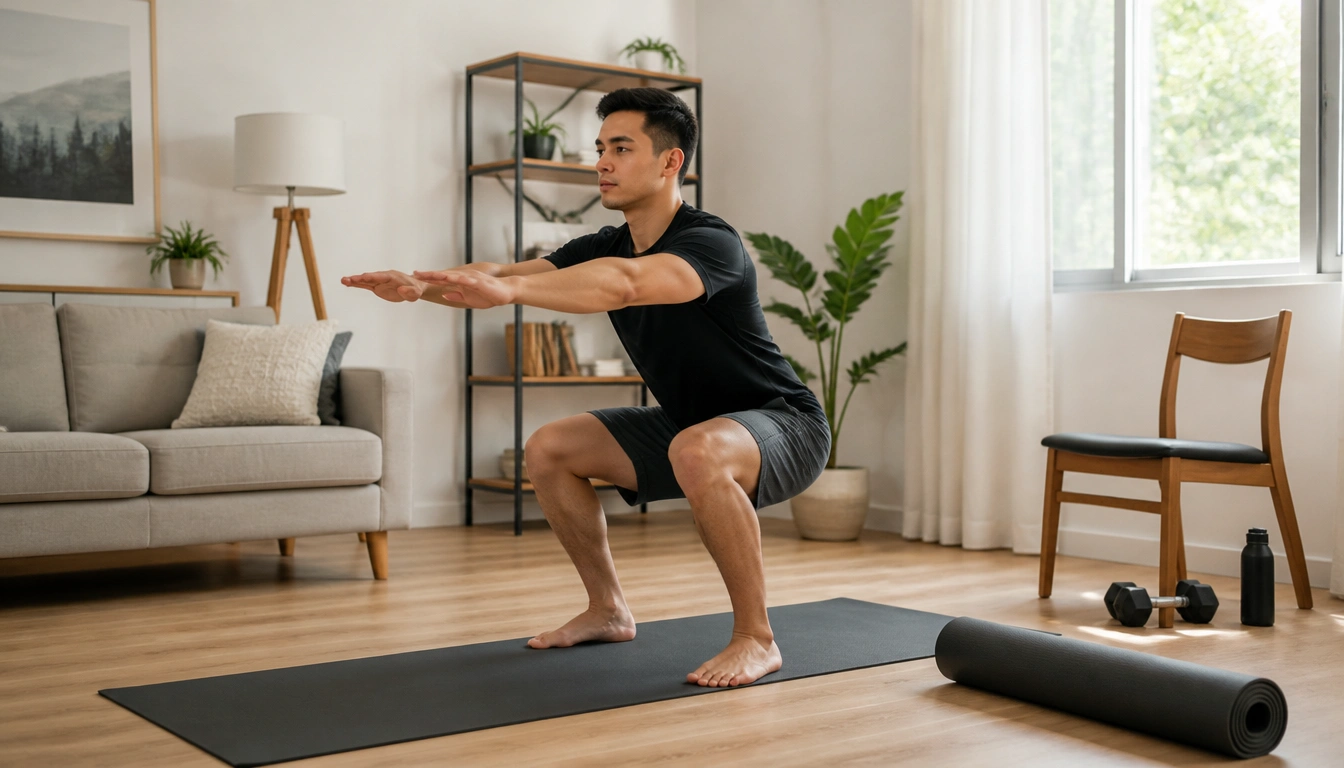
A good home exercise week is not random bursts of effort; it is a repeatable mix of cardio, strength, recovery, and rest. Use the week to cover all major movement needs: two or more strength days, several days of moderate aerobic movement, short recovery sessions, and at least one lighter day. If you are starting out, begin below the full guideline and build up gradually.
Key Takeaways
- Spread movement across the week so each day has a job: strength, cardio, recovery, or rest.
- The CDC and other public health bodies recommend at least 150 minutes of moderate activity weekly, plus strength work on 2 or more days.
- Beginners can start with short movement snacks and still make real progress if they build consistency first.
- Home workouts work better when you reduce friction: set out clothes, reserve a small space, and anchor exercise to daily routines.
- Older adults, pregnant people, and anyone with medical conditions may need modified intensity, extra balance work, or medical clearance.
Why a weekly home movement plan works better than random workouts
A weekly home movement plan gives every kind of exercise a purpose. Cardio supports heart and lung fitness, strength work helps preserve muscle and bone, recovery days reduce overload, and rest gives your body time to adapt. That structure matters more at home because there is no gym commute to create a natural routine. Without a plan, it is easy to wait for motivation, skip sessions, or repeat the same workout until it feels stale.
The CDC, the World Health Organization, and the NHS all emphasize regular physical activity as a long-term health habit, not a one-off challenge. A structured week also makes it easier to notice whether you are doing enough of the basics: aerobic activity, strength training, mobility, and recovery. That balance is especially useful for people who sit a lot, feel stiff in the morning, or are trying to return to movement after a long break.
Home exercise has another challenge: the workout space is also the living space. A weekly plan helps separate “exercise time” from “normal life” by assigning a role to each day. That reduces decision fatigue and makes it easier to keep going when your schedule is busy.
How to translate public health exercise guidelines into a home schedule
Official guidelines from the CDC and NHS recommend at least 150 minutes of moderate-intensity aerobic activity each week, or a lower amount of vigorous work if that suits you better, along with muscle-strengthening activity on at least 2 days a week. Those targets can sound large if you are not used to exercising at home, but they are meant to be flexible. You do not need to complete them in one session, and you do not need a gym to reach them.
A realistic home schedule starts with the minimums and builds from there. If you are a beginner, you might begin with 10 to 15 minutes at a time and use the week to create a pattern. If you are already active, you can divide your weekly total into longer sessions, short intervals, or a mix of both. The goal is not to “win” each workout; it is to accumulate enough movement across the week to support health, energy, and consistency.
Think in categories rather than isolated workouts:
- Aerobic movement: brisk walking in place, stair climbing, dance, low-impact cardio, or outdoor walking.
- Strength work: squats, lunges, push-ups, hinges, rows with bands or household items, planks, and glute bridges.
- Recovery: gentle mobility, light stretching, or easy walking.
- Rest: a true lighter day with only incidental movement.
That mix turns public health guidance into something practical enough to repeat.
A simple 7-day home movement framework
One useful way to build a home movement week is to assign a different focus to each day. This keeps the plan balanced while leaving room for household demands, energy changes, and weather. You can move the days around, but keep the weekly pattern intact.
Monday: lower-body strength and mobility. Start with a brief warm-up, then do bodyweight squats, glute bridges, step-ups, sit-to-stands, or reverse lunges. Finish with hip and ankle mobility. Lower-body strength helps with stairs, walking, and getting up from chairs.
Tuesday: moderate cardio. Use brisk walking, a dance video, marching intervals, or a low-impact cardio circuit. Your breathing should be faster, but you should still be able to speak in short sentences. This is a good day for a 20- to 40-minute session or several shorter sessions across the day.
Wednesday: recovery and mobility. Keep this day light. Walk gently, stretch, or spend a few minutes on joint circles, thoracic rotations, and easy floor work. Recovery days help you keep momentum without feeling worn down.
Thursday: upper-body strength and core. Try wall push-ups, incline push-ups on a counter, band rows, overhead presses with light objects, and dead bugs or bird dogs for the trunk. If the floor is uncomfortable, use the wall or a sturdy surface. The goal is steady effort, not perfect equipment.
Friday: intervals or short cardio bursts. This can be a shorter, more vigorous day if you feel ready for it. Use a few rounds of faster marching, step-ups, low-impact jacks, or mountain climbers at a pace you can control. If you do not want vigorous work, repeat moderate cardio instead.
Saturday: weekend activity. Choose movement that fits real life: a longer walk, gardening, active play with children, housework with intent, or an outdoor outing. This day supports variety and makes the week feel less clinical.
Sunday: rest or reset. Full rest is fine. If you prefer, do a very light mobility routine or a short walk. The purpose of this day is to lower pressure and prepare for the next week.
If you want a simpler version, use this rhythm: two strength days, two cardio days, one recovery day, one active weekend day, and one rest day. That pattern covers most health goals without needing a gym.
How to choose the right intensity at home without gym equipment or a wearable
You do not need a heart-rate monitor to judge effort. A practical way to gauge intensity is the talk test. During moderate-intensity work, you should be able to talk but not sing comfortably. During vigorous work, speaking becomes harder and you can usually say only a few words at a time. This approach is widely used in public health guidance because it is simple and works in a living room, hallway, or backyard.
For strength work, intensity is about control and challenge, not soreness. A set should feel demanding by the final few repetitions while still allowing good form. If you can breeze through a movement, make it harder by slowing the tempo, adding a pause, increasing range of motion, or choosing a less supported version. If form breaks down, scale back.
Useful home-based intensity cues include:
- Breathing: more noticeable effort during cardio, but not gasping.
- Muscle effort: a sense of challenge during the last part of a set.
- Recovery time: you can return to normal breathing within a few minutes after stopping.
If you are unsure, start easier than you think you need. Consistency beats occasional overreaching, especially when you are building a home routine from scratch.
Beginner scaling: starting with short movement snacks and building up gradually
If 150 minutes a week feels far away, start smaller. Public health guidance supports the idea that some activity is better than none, especially for people who are currently inactive. A beginner plan can begin with 5- to 10-minute “movement snacks” spread through the day. Those short bouts count because they build the habit first and the volume second.
Example beginner progression:
- Week 1–2: 5 to 10 minutes of movement most days, plus one or two very short strength sessions.
- Week 3–4: extend a few sessions to 15 to 20 minutes and add a second strength day if recovery feels good.
- Later: gradually lengthen cardio sessions, increase total weekly time, or add a little intensity, but change only one variable at a time.
Movement snacks are especially helpful at home because they fit into real life. Try a short walk while dinner cooks, a few sit-to-stands after breakfast, or a mobility routine after brushing your teeth. The point is not to exhaust yourself; it is to make movement automatic enough that it no longer feels like a major event.
If you miss a day, do not restart from zero. Pick up with the next planned session or complete a shorter version. Building a habit means expecting imperfect weeks.
Practical habit design for home exercise
Home exercise usually fails for practical reasons, not because people lack discipline. The biggest barriers are friction, distraction, and unclear timing. A few small design choices can make the routine much easier to start.
Reduce setup friction. Lay out workout clothes the night before, keep a mat or towel in view, and choose one spot for exercise. When the first step is already done, there is less room for negotiation.
Use anchors. Attach movement to something that already happens every day. You might do mobility after waking up, a short strength circuit after the kettle boils, or a walk after lunch. Anchors turn exercise into a cue-based habit instead of a vague intention.
Protect the space. Clear cords, rugs, and furniture edges from the workout area. Even a small space can work if it is consistent and safe. If possible, keep that space visually separate, even if it is only one corner of a room.
Keep the plan visible. A simple weekly note on paper or on your phone can reduce decision fatigue. When the day already has a label, you do not have to invent the workout from scratch.
Make the entry point easy. Tell yourself you only have to start for 5 minutes. Once you begin, you may continue; if not, you still kept the habit alive. That approach is often more sustainable than waiting for a perfect block of time.
Safety and modification notes for older adults, pregnancy, postpartum recovery, and common health conditions
Safety matters more at home because you are choosing your own pace and your own environment. The NHS and CDC both emphasize adapting exercise to health status, age, and functional ability rather than forcing a one-size-fits-all routine.
Older adults: Add balance and stability work several days a week if you are at risk of falls. Useful options include heel-to-toe standing, single-leg support near a wall, slow sit-to-stands, and walking drills. Keep strength training focused on form, control, and daily function. For many older adults, shorter sessions with more frequent practice are easier to recover from than long workouts.
Pregnancy: If your clinician has not restricted activity, moderate exercise is often appropriate. Choose lower-impact cardio, avoid overheating, and adjust positions if lying flat or jumping feels uncomfortable. As pregnancy progresses, comfort and stability matter more than intensity.
Postpartum recovery: Return gradually and get medical clearance when needed, especially if you had complications, a cesarean birth, pelvic floor symptoms, or significant pain. Start with walking, gentle mobility, and light strengthening before returning to harder intervals or impact work.
Common health conditions or joint limits: If you have cardiovascular disease, diabetes, chronic lung disease, severe arthritis, or another condition that affects exercise tolerance, speak with a healthcare professional before starting a new plan. Modify impact, range of motion, and speed to fit your body. Pain that is sharp, worsening, or associated with swelling should not be pushed through.
Stop exercising and seek medical help if you develop chest pain, pressure, severe shortness of breath, dizziness, fainting, or sudden sharp pain.
What to do if your week goes off track
Most home routines are not lost because of one missed workout; they unravel when a missed day turns into a missed week. The best reset strategy is to make the next step small and obvious. If you missed strength day, do a shorter version. If you missed two cardio sessions, take a brisk walk and resume the plan the next day. Do not try to “make up” every missed minute in one session.
Use a minimum effective dose when life gets busy. That might mean 10 minutes of walking, one set of squats and push-ups, or a mobility routine before bed. A smaller session keeps the pattern intact and protects your confidence. It is much easier to rebuild a week that has a short, imperfect session than one that has none at all.
If the schedule keeps breaking down, simplify it. Reduce the number of workout days, shorten the sessions, or place them at a more predictable time. Sustainable home exercise is supposed to fit your life, not compete with it. The best weekly plan is the one you can repeat next week without needing a reset from scratch.
Frequently Asked Questions
How many minutes of exercise should I aim for each week at home?
For most adults, public health guidance recommends at least 150 minutes of moderate-intensity aerobic activity a week, plus muscle-strengthening activity on 2 or more days. If that feels too high, start below it and build gradually. Short sessions still count, especially when they help you stay consistent.
What should a balanced home workout week include besides cardio?
A balanced week should include strength work, recovery time, and some lighter movement or rest. Strength sessions help support muscle and bone, while recovery days help you avoid overdoing it. If you are older or at risk of falls, balance work becomes especially important.
How can beginners start a home movement habit without burning out?
Begin with short movement snacks, such as 5 to 10 minutes at a time, and focus on showing up rather than doing a perfect workout. Choose easy starting points, keep sessions simple, and increase only one thing at a time, such as duration or frequency.
How do I make home workouts easier to start and stick to?
Lower the setup barrier. Leave clothes out, keep a mat visible, and connect exercise to daily anchors such as waking up, brewing coffee, or finishing lunch. A clear weekly plan also helps because you do not have to decide what to do each day.
What safety warning signs mean I should stop exercising and get medical help?
Stop exercising and seek medical help if you have chest pain, pressure, severe shortness of breath, dizziness, fainting, or sudden sharp pain. If you have a medical condition, new exercise symptoms, or major joint pain, get individualized advice before continuing.
The Bottom Line
A successful home movement week is built around structure, not motivation alone. If each day has a job—strength, cardio, recovery, activity, or rest—you are more likely to stay consistent and cover the basics that support long-term health.
Start where you are. Beginners can use short movement snacks, then grow into the full weekly targets over time. Reduce friction, keep the workout space ready, and use familiar daily routines as anchors so exercise feels less like a decision and more like part of the day.
If your week goes off track, shrink the plan instead of abandoning it. A shorter session is still a real session, and that is often what keeps the habit alive long enough to become routine.
Medical disclaimer
Medical disclaimer: This content is for educational and informational purposes only and is not a substitute for professional medical advice, diagnosis, or treatment. Dietary needs and supplement suitability vary by individual.
Sources
- National Health Service (NHS) — www.nhs.uk. Accessed November 2026.
- Centers for Disease Control and Prevention (CDC) — cdc.gov. Accessed November 2026.
- National Institutes of Health (NIH) — nih.gov. Accessed November 2026.
