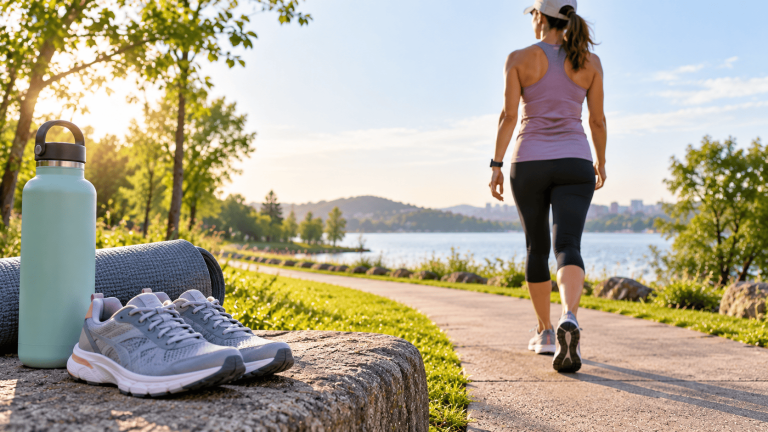
A walking routine for women over 40 can start with 10 to 20 comfortable minutes several days per week and gradually build toward the adult activity guideline of at least 150 minutes of moderate-intensity aerobic activity per week. Brisk walking can provide much of that aerobic activity. Add muscle-strengthening exercise at least twice weekly, increase walking gradually, and choose a pace that fits your current fitness, joints, health conditions, and schedule.
Key Takeaways
- Adults should work toward at least 150 minutes of moderate-intensity aerobic activity each week, and brisk walking can count toward that total.
- If you are currently inactive, start below the full weekly target and increase gradually.
- A brisk pace generally means you can talk but would find singing difficult.
- Walking supports aerobic fitness, but women over 40 should also include muscle-strengthening exercise at least twice weekly.
- Walking is useful during the menopause transition, but evidence does not support treating it as a guaranteed remedy for hot flashes or other menopause symptoms.
- Consistency matters more than an arbitrary daily step goal such as 10,000 steps.
Why Walking Works Well After 40
Walking is accessible, inexpensive, and easy to adjust. You can change the pace, route, duration, and terrain without learning a complicated exercise program. It also fits naturally into commuting, lunch breaks, errands, family time, and outdoor recreation.
CDC identifies brisk walking as moderate-intensity aerobic activity. Regular physical activity supports cardiovascular health, physical function, mental health, sleep, and overall well-being. These benefits remain important throughout midlife and later adulthood.
Women in their 40s and beyond also experience different life stages. Some are premenopausal, some are in perimenopause, and others have reached menopause. A walking plan does not need to depend on a particular hormone status, although symptoms, recovery, joint comfort, sleep, and energy can affect how you organize exercise.
Keep it practical: the best walking routine is not the one with the most steps or longest workouts. It is the one you can repeat while gradually doing enough activity to support your health.
How Much Walking Should Women Over 40 Aim For?
Current U.S. physical activity guidance recommends at least 150 minutes of moderate-intensity aerobic activity each week for adults. An alternative is 75 minutes of vigorous activity or an equivalent combination of moderate and vigorous activity.
You can divide the 150 minutes throughout the week. Five 30-minute brisk walks are one option, but they are not the only option. Shorter walking periods can add up, which makes the guideline easier to fit around work and family responsibilities.
If you have been inactive, the full guideline is a destination rather than a required starting point. CDC emphasizes that some physical activity is better than none. Begin with an amount you can tolerate comfortably, then increase as walking becomes easier.
How Fast Should You Walk?
Your brisk walking speed does not need to match someone else’s pace. Fitness, terrain, temperature, medications, body size, joint health, and other factors can change how hard a given speed feels.
CDC recommends the talk test as a simple way to judge intensity. During moderate-intensity activity, you can generally talk but not sing. Your breathing and heart rate rise, yet the effort remains sustainable.
Easy walking also has value. Use slower walks for recovery, getting started, breaking up sedentary time, or days when brisk activity does not feel appropriate. Add moderate-intensity periods gradually if your goal is to work toward the aerobic guideline.
A Four-Week Walking Routine for Women Over 40
| Week | Walking plan | Main focus |
|---|---|---|
| Week 1 | 10–15 minutes on 4 days | Comfortable pace and consistency |
| Week 2 | 15–20 minutes on 4 days | Add several brisk minutes when comfortable |
| Week 3 | 20–25 minutes on 4–5 days | Build more moderate-intensity time |
| Week 4 | 25–30 minutes on 5 days when appropriate | Move toward a sustainable weekly activity target |
This four-week schedule is a practical example, not an official prescription. Repeat a week when you need more time to adapt. If you already walk regularly, you may start at a higher level. Someone returning after illness, injury, or a long inactive period may need a slower progression.
Progress one variable at a time: add a little duration, frequency, pace, or hill work rather than increasing everything in the same week.
A Simple Weekly Schedule
| Day | Activity |
|---|---|
| Monday | Brisk walk |
| Tuesday | Easy walk plus strength training |
| Wednesday | Brisk walk or several shorter walking periods |
| Thursday | Easy walking or recovery |
| Friday | Brisk walk plus strength training |
| Saturday | Longer comfortable walk, hike, or another enjoyable aerobic activity |
| Sunday | Rest, easy walking, or normal daily movement |
Adjust the days to fit your schedule. The important elements are regular aerobic activity, adequate recovery, and muscle-strengthening work rather than following a particular Monday-to-Sunday pattern.
Use Short Walks When Time Is Limited
You do not need a continuous 30-minute window to benefit from being active. CDC allows adults to break weekly activity into smaller chunks.
- Walk for 10 minutes after breakfast.
- Take another 10-minute walk at lunch.
- Walk for 10 minutes after dinner.
- Use part of a work break for movement.
- Walk while taking a phone call that does not require a screen.
Breaking the routine into smaller periods can make consistency much easier without lowering the importance of reaching an appropriate overall weekly activity level.
How to Progress Beyond Easy Walking
Once your basic routine feels comfortable, you can increase the challenge without turning every walk into a hard workout.
Add Brisk Intervals
Walk comfortably for several minutes, increase to a brisk pace for a short period, then return to your normal pace. Repeat as appropriate. Intervals can raise the intensity without requiring the entire walk to feel demanding.
Choose Gentle Hills
Inclines raise the effort at a slower speed. Start with modest hills and allow your legs and joints time to adapt.
Extend One Walk
Rather than making every walk longer, extend one weekend or lower-pressure session. This can increase weekly activity while keeping weekday workouts manageable.
Walking and Menopause
Some women over 40 are experiencing perimenopause, while others are not. Regular physical activity remains valuable during this stage, but it is important to separate broad health benefits from claims about treating individual menopause symptoms.
The Office on Women’s Health encourages regular physical activity during and after the menopause transition and specifically lists brisk walking as a useful option. Physical activity supports heart, bone, and overall health.
Research on exercise for menopause-specific symptoms is less certain. A 2024 overview of reviews found some evidence for exercise-related improvements, but results for aerobic exercise and symptoms such as hot flashes were inconsistent. Walking should therefore support your overall activity plan rather than serve as a promised treatment for hot flashes, sleep disruption, or other menopause symptoms.
Walking, Heart Health, and Fitness After Menopause
Aerobic exercise can support cardiovascular fitness during and after midlife. A 2024 systematic review and meta-analysis included 59 trials involving more than 4,000 postmenopausal women and found improvements in several cardiometabolic measures and cardiorespiratory fitness.
However, the review rated the certainty of evidence as very low across outcomes. That means the direction of the evidence is encouraging, but the exact size of the effect remains uncertain.
For everyday planning, the established federal activity guideline remains the most useful target: accumulate regular moderate-intensity aerobic activity and combine it with strength training.
Is Walking Enough for Bone Health?
Walking is a weight-bearing activity, but it should not be marketed as a complete bone-strengthening program. Bone health becomes increasingly important around and after the menopause transition, and walking alone may not provide enough stimulus for every skeletal site.
A 2025 systematic review of randomized trials in women ages 45 to 60 found limited and low-quality evidence on exercise for preventing bone and muscle loss during peri- and early postmenopause. Walking showed a benefit at the total hip in the available early postmenopause evidence, but researchers concluded that the optimal exercise approach remains uncertain.
Federal guidance also calls for muscle-strengthening activity at least twice weekly. Combining walking with appropriately programmed resistance exercise gives your routine a broader training effect than walking alone.
Think combination: walking supports aerobic activity, while resistance training gives muscles and bones a different type of challenge.
Add Strength Training Twice a Week
CDC recommends at least two days per week of muscle-strengthening activities that work the major muscle groups. Walking does not replace this part of the guideline.
Strength sessions can use free weights, weight machines, resistance bands, or body-weight movements. Choose exercises and resistance levels that match your experience and physical abilities.
- Squat or sit-to-stand variations
- Hip-hinge or deadlift variations
- Rows
- Pressing movements
- Step-ups or lunges when appropriate
- Core and carrying exercises
If strength training is new to you, learning technique from a qualified professional can make the process easier and help you adapt exercises around previous injuries or physical limitations.
Do You Need 10,000 Steps a Day?
No federal guideline requires women over 40 to walk exactly 10,000 steps every day. U.S. adult aerobic recommendations use minutes and intensity rather than a universal daily step target.
Step counting can still motivate you. If you use a phone or wearable, compare your activity with your own usual level and look for realistic opportunities to move more rather than treating one number as a pass-or-fail test.
You can also track minutes walked, number of planned sessions completed, or weekly moderate-intensity activity. Pick the measure that helps you stay consistent without creating unnecessary pressure.
Make Walking Easier to Maintain
- Choose a regular cue such as breakfast, lunch, commuting, or dinner.
- Keep walking shoes where you can easily reach them.
- Use indoor routes when weather makes outdoor walking difficult.
- Walk with a friend when social support improves consistency.
- Keep a shorter backup walk for unusually busy days.
- Review your weekly total rather than judging the routine by one missed day.
The routine becomes easier when walking has a predictable place in your day. Motivation can change, but a convenient route and reliable cue remain available.
Walking Shoes and Outdoor Safety
Choose shoes that feel comfortable, fit securely, and work for the surfaces where you normally walk. You do not need a particular brand or expensive shoe unless your individual foot or orthopedic needs call for one.
Use sidewalks or safe walking paths when possible. At night, choose well-lit areas and clothing that helps drivers see you. Adjust the route or move indoors during extreme heat, cold, storms, poor air quality, or other unsafe conditions.
Bring water when duration, weather, or your individual needs make it useful. Ordinary short walks generally do not require electrolyte products.
Common Walking Mistakes After 40
Going From Inactive to Daily Long Walks
A rapid increase in walking volume can leave your feet, calves, knees, hips, or back struggling to adapt. Start with a manageable amount and progress gradually.
Making Every Walk Hard
Easy walking can remain part of the week. Not every session needs hills, intervals, or a personal record.
Using Walking as Your Only Exercise
Walking can cover much of your aerobic activity, but current guidelines also call for muscle-strengthening exercise. Strength work becomes particularly useful for maintaining physical function as you age.
Chasing Calories or Weight Loss on Every Walk
Walking offers health benefits even when body weight does not change. Fitness, mobility, mood, cardiovascular health, and the simple reduction of sedentary time all provide valid reasons to walk.
Ignoring Persistent Pain
Normal effort and mild temporary muscle fatigue differ from persistent or worsening pain. Adjust the routine and seek appropriate evaluation when pain keeps returning, changes your gait, or limits normal activities.
When to Get Individual Guidance
Many healthy adults can begin with easy walking without a complicated medical workup. Individual advice becomes more important when cardiovascular disease, significant arthritis, osteoporosis, balance problems, a recent injury, surgery, pregnancy, or another medical condition affects exercise choices.
A healthcare professional or physical therapist can also help when joint pain, pelvic symptoms, recurring injuries, or physical limitations make ordinary walking uncomfortable.
Stop exercising and seek prompt medical attention for concerning symptoms such as chest pain, fainting, severe or unusual shortness of breath, or another symptom that may indicate a medical emergency rather than normal exercise effort.
Frequently Asked Questions
The Bottom Line
A walking routine for women over 40 can stay straightforward. Start from your current ability, walk consistently, and gradually build more brisk activity until you are moving toward the adult aerobic guideline. Short walks count, and an arbitrary 10,000-step target is not required.
Walking works best as one part of a broader fitness plan. Include strength training at least twice weekly, allow recovery, and adjust activity around joint health, menopause symptoms, medical conditions, and your schedule. Aim for a routine that supports long-term movement rather than an aggressive first month that is difficult to sustain.
Medical disclaimer
Medical disclaimer: This content is for educational and informational purposes only and is not a substitute for professional medical advice, diagnosis, or treatment. Dietary needs and supplement suitability vary by individual.
Sources
- Centers for Disease Control and Prevention. What You Can Do to Meet Physical Activity Recommendations. December 4, 2025.
- Centers for Disease Control and Prevention. Adding Physical Activity as an Adult. December 4, 2025.
- Centers for Disease Control and Prevention. What Counts as Physical Activity for Adults. December 6, 2023.
- Office on Women’s Health. Menopause and Your Health. U.S. Department of Health and Human Services. Accessed September 2026.
- Huynh E, Wiley E, Noguchi KS, et al. The Effects of Aerobic Exercise on Cardiometabolic Health in Postmenopausal Females: A Systematic Review and Meta-Analysis of Randomized Controlled Trials. Women’s Health. 2024;20:17455057241290889.
- Money A, MacKenzie A, Norman G, et al. The Impact of Physical Activity and Exercise Interventions on Symptoms for Women Experiencing Menopause: Overview of Reviews. BMC Women’s Health. 2024;24:399.
- Whitman PW, Alexander CJ, Kaluta L, Burt LA, Gabel L. Does Exercising During Peri- or Early Post-Menopause Prevent Bone and Muscle Loss: A Systematic Review. Bone. 2025;201:117650.