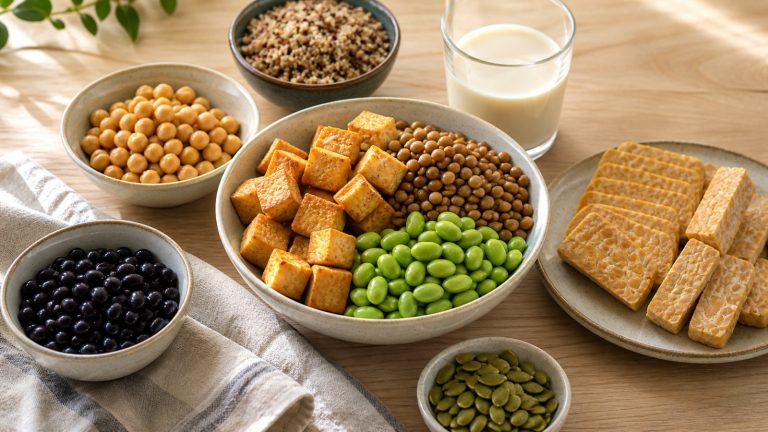
Protein intake for men over 40 does not require a special age-based high-protein diet. The established adult RDA is 0.8 grams per kilogram of body weight per day for healthy adults, while exercise, calorie intake, recovery, illness, and medical conditions can change practical needs. Build meals around varied protein-rich foods, spread them through the day when convenient, and combine adequate protein with regular resistance training when muscle and strength are priorities.
Key Takeaways
- The established adult protein RDA is 0.8 grams per kilogram of body weight per day.
- Turning 40 does not automatically create a higher federal protein requirement.
- Resistance training, endurance exercise, calorie restriction, recovery, and health conditions can change practical protein needs.
- Fish, poultry, eggs, dairy foods, beans, lentils, tofu, soy foods, nuts, and seeds can all contribute protein.
- Protein powder is optional and mainly offers convenience.
- Chronic kidney disease can substantially change protein planning and requires individualized guidance.
Why Protein Matters After 40
Protein provides amino acids that the body uses to build and maintain muscle, connective tissue, skin, internal organs, enzymes, hormones, and other essential structures. It also supports tissue repair and normal immune function.
Nothing dramatic happens to protein requirements on a man’s 40th birthday. Midlife can still be a useful time to pay closer attention to muscle, strength, exercise habits, dietary quality, and long-term physical function.
Muscle health depends on more than protein intake. Resistance training supplies an important stimulus for muscle adaptation, while adequate calories, sleep, and recovery help support the process.
Midlife principle: think of protein and resistance training as complementary habits rather than treating protein alone as an anti-aging strategy.
How Much Protein Do Men Over 40 Need?
The established Recommended Dietary Allowance for healthy adults is 0.8 grams of protein per kilogram of body weight per day. The RDA is designed to meet the needs of nearly all healthy people in the group; it is not a maximum intake or a universal sports-performance target.
To estimate this reference, convert pounds to kilograms by dividing body weight by 2.2, then multiply by 0.8. A man who weighs about 176 pounds, or 80 kilograms, would calculate an RDA of about 64 grams per day.
That example is not an individualized prescription. A man who strength trains regularly, performs substantial endurance exercise, is recovering from illness or surgery, or is eating fewer calories may have different practical needs.
Important distinction: the RDA is a reference for nutritional adequacy. It should not be interpreted as proof that every amount above it is necessary—or harmful.
Does Protein Need Automatically Increase at 40?
No separate federal protein RDA begins at age 40. Current Dietary Reference Intake resources continue to use adult reference values rather than creating a new requirement specifically for men in their 40s.
Protein science is still evolving. U.S. and Canadian agencies are reviewing macronutrient Dietary Reference Intakes, including protein, as newer evidence becomes available. Until that process establishes updated values, online claims that every man over 40 requires one specific higher target should not be confused with an official recommendation.
Individual circumstances remain more useful than age alone. Training, body size, energy intake, food preferences, recovery, and medical history all help determine whether more protein may be appropriate.
Protein and Strength Training After 40
Men who lift weights or perform other resistance exercise may have different protein goals from sedentary adults. Training creates a demand for repair and adaptation, while dietary protein supplies amino acids needed for those processes.
Sports-nutrition recommendations often use protein intakes above the basic adult RDA for active people. Those ranges apply to specific training contexts and should not be presented as a requirement for every man over 40.
If your goal is gaining muscle, maintaining lean mass during a calorie deficit, or recovering from a demanding training program, a registered dietitian or qualified sports-nutrition professional can help set an intake based on body size, total calories, training volume, and medical history.
For muscle support: protein supplies building material, while progressive resistance training supplies the reason for muscle to adapt.
Should You Spread Protein Across the Day?
Many people eat little protein early in the day and much more at dinner. Adding protein to breakfast and lunch can make total daily intake easier to achieve without requiring unusually large evening portions.
Researchers continue to study whether a more even distribution provides additional muscle benefits. Evidence does not support one mandatory meal schedule or exact protein dose for every man over 40.
A practical approach is to include a meaningful protein source at regular meals and then consider total daily intake. That strategy avoids turning every meal into a calculation.
Best Protein Foods for Men Over 40
The 2025–2030 Dietary Guidelines for Americans emphasize diets built around whole, nutrient-dense foods, including protein foods, dairy, vegetables, fruits, healthy fats, and whole grains. Variety helps protein intake fit into an overall nutritious eating pattern.
- Fish and seafood
- Chicken, turkey, and other poultry
- Eggs
- Greek yogurt and cottage cheese
- Milk and fortified soy milk
- Beans, peas, and lentils
- Tofu, tempeh, edamame, and other soy foods
- Nuts and seeds
- Lean meat when it fits your dietary pattern
Protein quality matters, but so does the rest of the food. Fish provides different nutrients from lentils, while yogurt offers a different nutrition profile from poultry. Rotating sources can make the overall diet more balanced.
Animal Protein vs. Plant Protein
Animal foods such as dairy, eggs, fish, poultry, and meat generally provide all essential amino acids in substantial amounts. Plant foods can also contribute effectively when the overall diet supplies enough protein, calories, and variety.
Beans, lentils, soy foods, nuts, seeds, and whole grains can increase protein while also providing fiber and other nutrients. You do not need to combine complementary plant proteins at every individual meal when your daily eating pattern is varied.
A diet can use animal protein, plant protein, or a combination. The better choice depends on nutritional adequacy, health, preferences, affordability, and the quality of the overall eating pattern.
A Simple Protein-Rich Day
| Meal | Protein-focused idea |
|---|---|
| Breakfast | Eggs with whole-grain toast and fruit, or Greek yogurt with berries and oats |
| Lunch | Lentil bowl, tofu grain bowl, tuna salad, or chicken with vegetables and whole grains |
| Snack if needed | Yogurt, cottage cheese, edamame, or fruit with nuts |
| Dinner | Fish, beans, tofu, poultry, or another protein food with vegetables and a preferred carbohydrate source |
This example demonstrates distribution rather than prescribing portions. Adjust amounts to appetite, energy needs, activity, medical conditions, and your overall protein plan.
How to Increase Protein Without Rebuilding Your Diet
- Add eggs, Greek yogurt, cottage cheese, tofu, or beans to breakfast.
- Include a clear protein source at lunch instead of saving most protein for dinner.
- Add beans or lentils to soups, salads, grain bowls, and wraps.
- Use dairy milk or fortified soy milk when it suits the meal.
- Keep easy protein foods available for days when cooking is difficult.
- Use protein powder only when convenience makes it genuinely useful.
Small additions often work better than suddenly doubling portions of meat or replacing most meals with shakes.
What Does the 50-Gram Daily Value Mean?
The FDA uses a Daily Value of 50 grams for protein on Nutrition Facts and Supplement Facts labels. This standardized value helps consumers interpret and compare packaged products.
It is not a personalized requirement for every man. Body size, life stage, exercise, medical conditions, and other factors can make individual needs different.
FDA also uses percent Daily Value to help interpret labels. A food providing 5% DV or less is generally considered low in that nutrient, while 20% DV or more is considered high.
Do You Need Protein Powder?
No. Protein powder is a convenience product, not an age-based requirement. Eggs, dairy foods, fish, poultry, tofu, beans, lentils, nuts, seeds, and other foods can provide protein without a supplement.
Powder may help when breakfast is rushed, travel limits food choices, appetite is low, or a training plan makes protein targets difficult to reach with regular meals alone.
Compare protein per serving, serving size, added sugars, sodium, and ingredients. Avoid assuming that testosterone boosters, proprietary blends, herbal ingredients, greens, or digestive enzymes automatically improve a protein product.
Does More Protein Automatically Help With Weight Loss?
Protein can make meals more filling for some people and may help support lean tissue during certain weight-loss programs. Those effects do not turn a high-protein diet into an automatic fat-loss method.
Body weight reflects total energy intake, activity, sleep, medications, medical conditions, genetics, food environment, and other factors. Adding protein to an unchanged diet may also increase total calories.
Use protein as one component of an overall eating pattern rather than treating it as a shortcut around energy balance and sustainable habits.
Protein and Kidney Health
Kidney disease changes the conversation around protein. NIDDK explains that the body creates waste as it uses protein, and healthy kidneys normally remove that waste from the blood.
Some people with chronic kidney disease may need moderate protein intake so waste does not accumulate, while consuming too little can contribute to malnutrition. People receiving dialysis may have different protein needs because treatment can remove protein from the blood.
Protein planning can therefore vary by kidney function, dialysis status, nutritional status, and other medical factors. NIDDK recommends working with a dietitian or healthcare professional to find the appropriate balance.
Kidney-health caution: do not begin an aggressive high-protein diet based on fitness advice if you have chronic kidney disease or reduced kidney function.
Common Protein Mistakes Men Over 40 Make
Assuming More Is Always Better
Protein is essential, but extremely high intake does not automatically provide additional benefits. Use an amount that fits your health, training, and overall nutrition.
Eating Nearly All Protein at Dinner
A dinner-heavy pattern can make total intake harder to manage. Adding protein foods to breakfast and lunch offers a practical alternative without requiring exact meal targets.
Replacing Fiber-Rich Foods With Protein Products
Shakes, bars, and meat-heavy meals should not crowd out vegetables, fruits, beans, whole grains, nuts, and seeds. Healthy eating requires more than meeting a protein number.
Using Protein Instead of Strength Training
Dietary protein supports muscle tissue, but progressive resistance exercise provides an important stimulus for maintaining and building strength.
Assuming Protein Powder Is Required
Powders can save time, but ordinary foods can meet protein needs for many men. Use supplements for convenience or a specific nutritional reason rather than because of age.
Ignoring Kidney Disease
Chronic kidney disease can change appropriate protein intake. Generic high-protein fitness advice should not replace an individualized kidney-nutrition plan.
When to Get Individual Protein Guidance
General guidance works well for many healthy adults, but some situations deserve more individualized planning.
- You have chronic kidney disease or reduced kidney function.
- You train intensively for strength, bodybuilding, endurance, or another sport.
- You are recovering from major illness, injury, or surgery.
- You are following a significant calorie deficit.
- You follow a restrictive diet that makes protein difficult to obtain.
- You have unexplained weight loss, weakness, reduced appetite, or noticeable loss of muscle.
A registered dietitian can help translate body size, training, calorie needs, health conditions, and food preferences into a practical plan.
Frequently Asked Questions
The Bottom Line
Protein intake for men over 40 does not require an arbitrary high-protein target. The established adult RDA of 0.8 grams per kilogram per day provides a useful reference for healthy adults, while training, calorie intake, recovery, and health conditions can justify a more individualized approach.
Build meals around varied protein-rich foods, include plant sources regularly, and pair adequate intake with resistance training when strength and muscle are priorities. Protein powder can improve convenience but is not required. Men with chronic kidney disease or specialized training and medical needs should avoid generic high-protein rules and use individualized guidance.
Medical disclaimer
Medical disclaimer: This content is for educational and informational purposes only and is not a substitute for professional medical advice, diagnosis, or treatment. Dietary needs and supplement suitability vary by individual.
Sources
- U.S. Department of Health and Human Services and U.S. Department of Agriculture. Dietary Guidelines for Americans, 2025–2030. 10th Edition. January 2026.
- Office of Disease Prevention and Health Promotion. Dietary Reference Intakes. Updated November 19, 2025.
- Office of Disease Prevention and Health Promotion. Review of Macronutrients and Energy. Updated November 19, 2025.
- U.S. Food and Drug Administration. Daily Value on the Nutrition and Supplement Facts Labels. Accessed September 2026.
- National Institute of Diabetes and Digestive and Kidney Diseases. Healthy Eating for Adults With Chronic Kidney Disease. Accessed September 2026.