
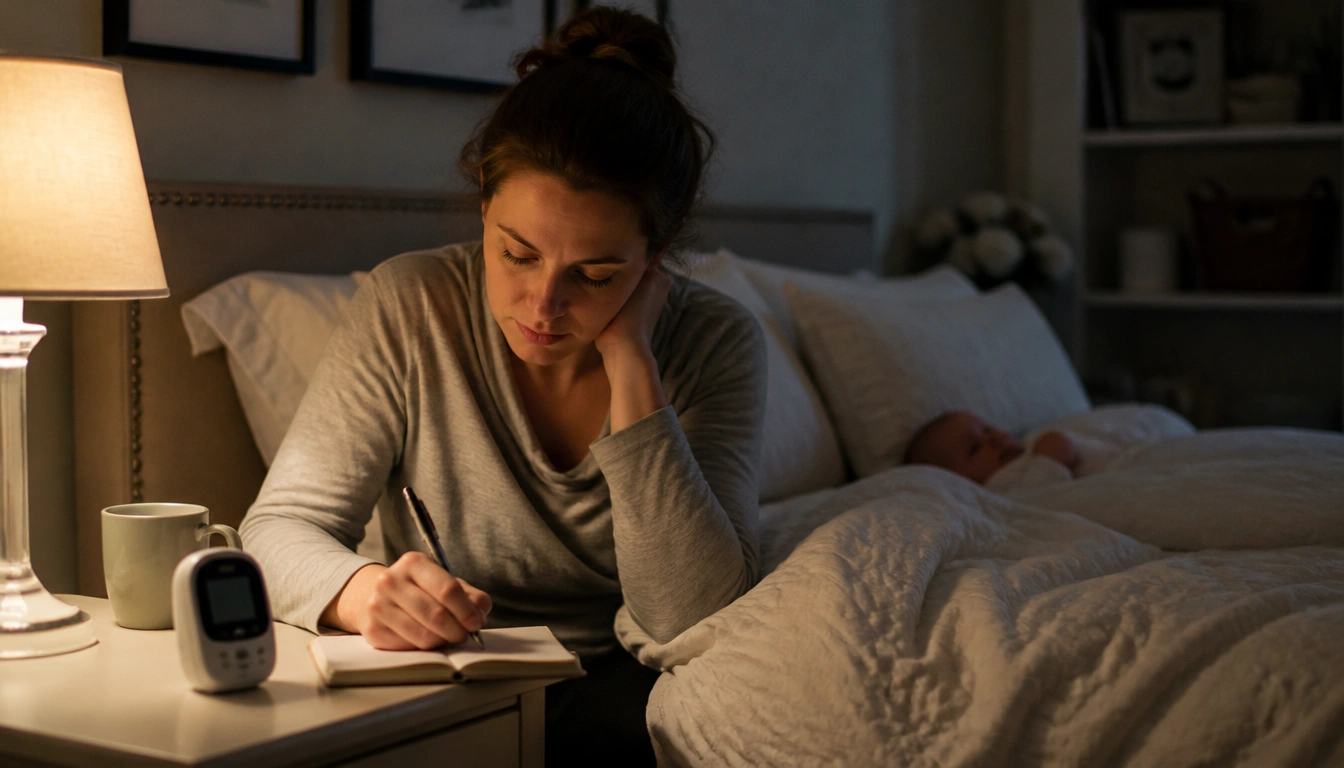
Use a simple sleep journal that takes less than a minute: rate how rested you feel, note the main disruption, and record one evening anchor such as a brain dump, earlier caffeine cutoff, or screen-free wind-down. That gives you enough information to spot patterns and reduce mental clutter without turning sleep into another data project. It is most useful when you focus on trends, not perfect numbers.
Key Takeaways
- A simple sleep journal works better than a detailed tracker when nights are fragmented and time is limited.
- Use a 3-line format: rest rating, disruption factor, and one evening anchor you completed.
- Morning entries should take under 60 seconds so the journal is sustainable on rough days.
- Look for patterns over 1 to 2 weeks, such as better mornings after less late caffeine or a consistent wind-down.
- A brain dump before bed can reduce racing thoughts by moving worries out of your head and onto paper.
- If sleep loss comes with snoring, gasping, unsafe sleepiness, or months of persistent insomnia, a journal is not enough.
Why busy parents need a simpler sleep journal than a traditional sleep tracker
A simple sleep journal is often more useful for busy parents than a wearable, app, or detailed sleep log because it matches the reality of fragmented nights. If you are up with a baby, helping a toddler, or mentally rehearsing tomorrow’s school run at 2 a.m., exact sleep latency and efficiency percentages can become a source of guilt instead of insight.
The goal is not to prove you slept badly. The goal is to notice what affects how you feel and function. The Centers for Disease Control and Prevention and the American Academy of Sleep Medicine both advise that adults generally need 7 or more hours of sleep, but parents of young children may not get that every night. A good journal helps you see the difference between a rough night that still lets you function and a pattern that keeps building.
It also protects your attention. Instead of checking a phone, opening an app, or trying to reconstruct every awakening, you can capture a few meaningful notes and move on. That keeps the journal low-friction enough to stick with.
The 3-line sleep journal method: rest rating, disruption factor, evening anchor
Use the same three lines every morning so there is no decision fatigue. Keep the format short enough that you can do it before coffee, while the kettle boils, or during a baby’s first nap.
Line 1: Rest rating. Give your sleep a quick 1-to-5 rating based on how restored you feel on waking. This is not a moral score. It is a snapshot of how your body and brain seem to be working today.
Line 2: Disruption factor. Write the biggest thing that disturbed sleep: “baby woke twice,” “worrying about work,” “partner snored,” “up for water,” or “uninterrupted.” If there were several disruptions, note the one that felt most important.
Line 3: Evening anchor. Record one thing you did that may have supported sleep, such as “screens off 30 minutes before bed,” “brain dump done,” “no caffeine after lunch,” or “bedroom felt cool and dark.” If nothing happened, leave it blank or write “none.”
That is enough. You do not need sleep efficiency, minute-by-minute awakenings, or a perfect bedtime score. For exhausted parents, a short record is often more honest and more sustainable than a highly detailed one.
How to use the journal in under 60 seconds each morning
The easiest way to make this habit stick is to attach it to something you already do. Put the journal and pen on your nightstand, or keep a notebook in the kitchen where you make breakfast. If you prefer digital notes, save a single template so you are not typing from scratch.
A simple morning routine could look like this:
- Open the notebook or note app.
- Write a rest rating from 1 to 5.
- Jot the main disruption in a few words.
- Add one evening anchor you used, or leave it blank.
Stop there. If you start narrating the whole night, the journal turns into another task. The point is to create a repeatable record that works on your worst mornings, not only on your best ones. On especially hard days, even one line is still useful.
If you miss a day, do not backfill the details from memory unless you truly want to. Missing entries are normal. The journal only needs to be consistent enough to reveal patterns over time.
What to look for over 1 to 2 weeks without getting obsessive
After several days, review the notes as if you were a coach, not a judge. Ask what seems to help, what seems to hurt, and what is outside your control. Look for broad patterns instead of exact totals.
Useful patterns might include:
- Better rest ratings after a screen-free wind-down.
- More nighttime wakeups after late caffeine or a stressful evening.
- Better mornings when bedtime is closer to the same hour each night.
- More fatigue on days after several disrupted nights in a row.
Do not over-interpret one short night. A single bad night can happen because of teething, illness, a work deadline, or a toddler who needed comfort. That does not mean your whole sleep routine is failing. For busy parents, trend lines matter more than isolated entries.
It can help to ask one practical question: “What single adjustment seems most likely to improve tomorrow?” That might be an earlier caffeine cutoff, a shorter bedtime routine, or a better handoff with your partner. Keep the changes small enough that you can test them without adding stress.
How the journal helps with racing thoughts and the bedtime brain dump
Many parents find that the hardest part of sleep is not physical exhaustion but mental noise. The brain starts replaying tomorrow’s schedule, unfinished chores, school forms, money worries, or the exact thing you forgot to buy. Writing these thoughts down can reduce nocturnal cognitive arousal by showing your brain that the idea has been captured and does not need to be held in working memory.
This is the “brain dump” part of the sleep journal. Keep a separate section or a few spare lines for anything urgent enough to keep circling in your head. It might look like:
- Pay daycare bill
- Email teacher
- Buy diapers
- Ask partner about tomorrow’s pickup
You are not solving the problem at bedtime. You are parking it. That distinction matters. Once the thought is on paper, it is often easier to return to sleep instead of mentally rehearsing the same list again and again.
If you wake during the night, keep the same approach. A small notepad and pen can be less activating than a phone, which is more likely to pull you into light, alerting stimulation. The journal becomes a container for worries, not a conversation with them.
Parent-specific adaptations for newborns, infants, toddlers, and co-parent shift coverage
Parenting stage changes how you should read the journal. For newborns and young infants, sleep fragmentation is expected and often unavoidable. In that phase, do not use the journal to judge whether you are “doing sleep right.” Use it to notice whether anyone is getting a protected block of sleep and whether daytime functioning is still workable.
For new parents, focus on trends and alertness more than one short night. A low rest rating after three wakeups may be normal; a low rest rating every day with dangerous sleepiness is more concerning. If you are postpartum or caring for a very young baby, the journal should lower guilt, not increase it.
For toddlers, the notes may help reveal routine patterns: late screens, a bedtime that keeps drifting later, or certain evenings when resistance is worse. For co-parents, the journal can support shift planning. Instead of chasing perfect sleep efficiency, use the notes to identify windows for coverage. One parent may sleep better from 9 p.m. to 1 a.m. while the other takes the later stretch. Even one reliable block can make the next day more manageable.
The journal can also help you compare notes without blame. “I slept better after the early shift” is more useful than “I should have slept better.” That practical tone matters when both adults are tired.
Low-friction supports to pair with the journal
A sleep journal works best when it is paired with a few small habits, not a whole new lifestyle overhaul. The strongest options are the ones you can repeat on low-energy nights.
Caffeine timing: If caffeine seems to be affecting your sleep, note the time of your last coffee, tea, soda, or energy drink. The CDC and other public health guidance generally recommend avoiding late caffeine if it seems to interfere with sleep. You do not need to eliminate it all at once; just watch for the timing that repeatedly shows up before poorer rest ratings.
Screen cutoff: A shorter wind-down can help the brain shift gears. Turning off screens at least 30 minutes before bed is a practical target from sleep-hygiene guidance. If that feels unrealistic, start with one screen-free pocket most nights, such as the last 15 to 30 minutes before bed.
Bedroom setup: A dark, quiet, comfortably cool room supports sleep. You do not need a perfect environment, but small changes like dimmer lighting, lower noise, or fewer clutter cues can help. If a baby monitor or white noise is part of your reality, the journal can help you notice whether those tools help or disrupt you.
The idea is to pair the notebook with the easiest levers first. Once you see what matters most, you can ignore the rest.
When a sleep journal is not enough: red flags and when to see a clinician
A journal is for tracking habits and patterns. It is not a substitute for medical evaluation. If sleep problems persist for months or you are struggling to function during the day, it is time to get help rather than collect more notes.
See a healthcare professional if you have persistent insomnia lasting 3 months or longer, severe daytime impairment, microsleeps, or sleepiness that makes driving unsafe. Get evaluated sooner if someone notices loud snoring, gasping, choking, or pauses in breathing during sleep, which can suggest obstructive sleep apnea. Restless, uncomfortable legs at night can also point to a sleep issue that needs care.
For parents, it is especially important to separate normal lifestyle disruption from warning signs. A sleep journal can explain some of your fatigue, but it cannot diagnose a sleep disorder, mood condition, or medical problem. If your sleep feels more than “busy-parent tired,” or if you are worried about safety, ask for professional guidance.
The best use of the journal is simple: let it guide small, realistic adjustments and show you when the pattern is bigger than household life.
Frequently Asked Questions
What should I write in a sleep journal if I only have 60 seconds?
Write three things: how rested you feel, the main disruption, and one evening anchor such as a brain dump, earlier caffeine cutoff, or screen-free wind-down. That is enough to spot patterns without turning the journal into another chore.
How can a sleep journal help with racing thoughts at bedtime?
A short brain dump moves worries and to-dos out of your head and onto paper. That can reduce mental replay and make it easier to fall asleep or return to sleep after waking, especially when your mind is busy with parenting tasks.
What sleep patterns should busy parents look for instead of obsessing over exact hours?
Look for repeat patterns: better mornings after less late caffeine, worse sleep after screens, or improved rest when bedtime is more consistent. For parents, trends and daytime function usually matter more than one short night or a perfect sleep score.
When does poor sleep need medical attention rather than a journal and better habits?
Get medical advice if insomnia lasts 3 months or more, if you have severe daytime sleepiness or unsafe driving drowsiness, or if you snore loudly, gasp, stop breathing, or have restless legs at night. Those can signal a sleep disorder that needs evaluation.
How should new parents or parents of infants use a sleep journal without adding guilt?
Use it to track patterns and protected sleep blocks, not to judge yourself. During newborn and infant stages, fragmented sleep is common. Focus on whether you can function safely, whether shifts are helping, and which changes reduce stress the most.
The Bottom Line
A simple sleep journal works best when it is short, repeatable, and honest. For busy parents, the three-line format—rest rating, disruption factor, and evening anchor—captures enough information to guide real-life changes without adding another exhausting task.
Use the journal to notice patterns, calm a racing mind with a brain dump, and support practical choices like earlier caffeine cutoff, a shorter screen-free wind-down, or better shift coverage with a partner. Keep the focus on trends, not perfect sleep math.
If poor sleep is paired with months of insomnia, loud snoring, gasping, breathing pauses, or unsafe daytime sleepiness, the journal is not enough on its own. At that point, medical evaluation matters more than better tracking.
Medical disclaimer
Medical disclaimer: This content is for educational and informational purposes only and is not a substitute for professional medical advice, diagnosis, or treatment. Dietary needs and supplement suitability vary by individual.
Sources
- Centers for Disease Control and Prevention (CDC) — cdc.gov. Accessed October 2026.
- National Health Service (NHS) — qvh.nhs.uk. Accessed October 2026.
- National Health Service (NHS) — www.nhs.uk. Accessed October 2026.
- Centers for Disease Control and Prevention (CDC) — cdc.gov. Accessed October 2026.
