
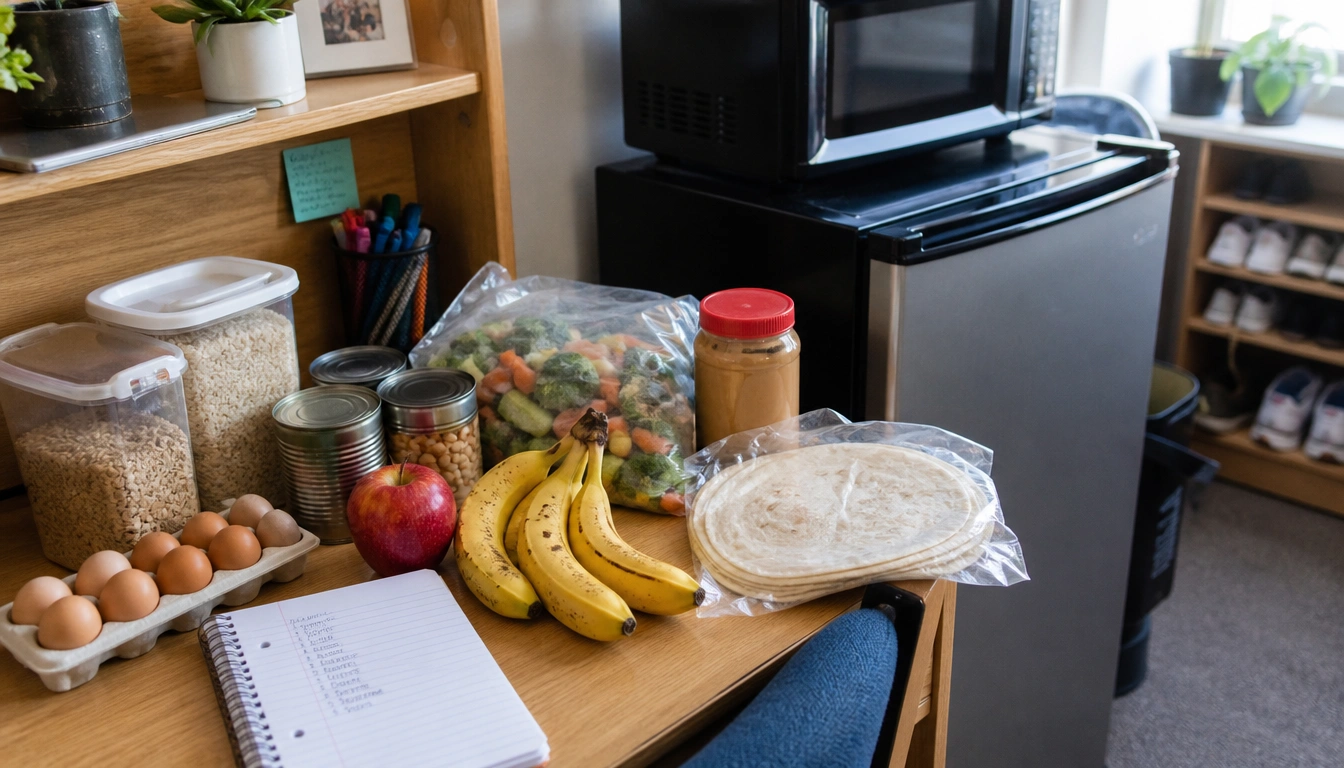
Build a healthy, budget-friendly grocery routine by planning around what you can realistically store, cook, and eat each week. Start with a quick inventory and schedule check, then buy flexible basics like oats, rice, beans, eggs, frozen vegetables, fruit, and a few backup meals. Use store brands, unit prices, and pickup orders to save money, and adjust your plan for dorm life, shared kitchens, and exam weeks.
Key Takeaways
- Plan for your actual week, not an ideal one: count dining hall meals, busy days, and nights when cooking will not happen.
- Choose versatile ingredients that work in multiple meals, so one purchase can cover breakfast, lunch, dinner, and snacks.
- Match your food list to your living space: mini-fridge and microwave staples for dorms, batch-cook and freezer strategies for apartments.
- Use budget tools like store brands, unit prices, and online pickup to reduce impulse buys and stretch your grocery money.
- Keep leftovers and shared-fridge storage safe by labeling food, storing it correctly, and respecting time limits for perishables.
- If budget stress is causing skipped meals, fatigue, or food-related anxiety, use campus food pantries and health or counseling services early.
Why a grocery routine matters in college
A solid healthy grocery planning routine for college students does more than fill a fridge. It helps you stay focused in class, avoid the energy swings that come with random snacking, and reduce the money drain that happens when you buy food without a plan. It also cuts food waste, which matters when you are buying for one person and may not have much storage space.
Nutrition guidance from the USDA and Nutrition.gov emphasizes building meals around fruits and vegetables, whole grains, and lean or plant-based proteins. That pattern is useful in college because it is flexible. It can work in a dorm, a shared apartment, or a week when you rely on the dining hall part of the time. The goal is not perfect eating. The goal is a routine that is repeatable on your busiest weeks.
College life also creates a predictable problem: your schedule changes faster than your habits do. If you shop for a week that never happens, food goes bad or sits untouched. If you shop with a simple structure, you can adapt when an exam runs late, a work shift gets added, or your kitchen access is limited.
The four-step system that keeps grocery shopping manageable
A reliable student routine works best as four repeatable steps: Audit, Plan, Shop, and Prep. Each step keeps you from buying too much, forgetting basics, or relying on expensive convenience food when you are tired.
Audit
Before you write a list, check your backpack, pantry, mini-fridge, and freezer. Look for duplicates, near-expired items, and leftovers you actually need to use. Then check your calendar. Count how many breakfasts, lunches, and dinners you will really eat at home. If three meals are covered by dining hall visits or family meals, do not shop as if you need seven full days of food.
Plan
Build meals around a few ingredients that can flex across the week. The versatility principle is especially useful for students: one container of oats can be breakfast, a snack, or baking ingredients; one bag of beans can become tacos, grain bowls, or soup. Planning this way reduces waste and makes your cart more efficient.
Shop
Use a list and keep it focused on what you can realistically store and prepare. Grocery trips go off track when each aisle becomes a guessing game. If your store has pickup or delivery with a shopping cart, building the order in advance can help you avoid impulse buys from end caps, snack displays, and “buy more” promotions.
Prep
Do one small prep action right away. That might mean rinsing fruit, portioning yogurt, freezing bread, cooking rice, or making a tray of roasted vegetables. The point is to lower the effort barrier for your next meal so healthy food is easier to eat than takeout or vending machine snacks.
What to buy first: the flexible student grocery basket
If you are starting from scratch, begin with food groups that can combine in many ways. The USDA MyPlate model is a useful guide here because it encourages a balance of grains, protein, fruits, vegetables, and dairy or fortified alternatives. For students, the best list is not the longest list; it is the list that gives you options.
| Food group | Good student choices | Why it helps |
|---|---|---|
| Grains and starches | Oats, rice, pasta, tortillas, bread, potatoes | Cheap base for quick meals and filling breakfasts |
| Proteins | Eggs, beans, lentils, tofu, Greek yogurt, tuna, chicken | Helps meals feel satisfying and supports steady energy |
| Vegetables | Frozen mixed vegetables, carrots, onions, cabbage, canned tomatoes | Nutritious, affordable, and less likely to spoil fast |
| Fruits | Bananas, apples, oranges, frozen berries | Portable snacks and easy add-ins for oats or yogurt |
| Fats and flavor | Peanut butter, olive oil, cheese, spices, salsa | Makes simple food taste better so you are more likely to eat it |
| Backups | Canned soup, shelf-stable milk, frozen meals, crackers | Useful on exhausted days or when you miss a planned cooking session |
Frozen and canned foods deserve a place in a healthy cart. Frozen vegetables are often just as nutritious as fresh produce and can reduce spoilage. Low-sodium canned beans or tomatoes are also practical when time is short. Fresh produce still matters, but buying only fragile produce can backfire if you are away from campus for a few days.
When money is tight, think in combinations rather than individual recipes. Oats plus peanut butter plus fruit can become breakfast. Rice plus beans plus salsa can become lunch. Eggs plus frozen vegetables plus tortillas can become dinner. That kind of planning makes a small grocery list go further.
How to shop differently in a dorm
Dorm grocery planning should assume limited cold storage, no stove, and very little time. In that setting, the smartest routine uses shelf-stable staples, microwave meals you assemble yourself, and a few fresh items that will get used quickly.
Good dorm-friendly basics include instant or rolled oats, microwaveable rice cups, whole-grain bread or tortillas, peanut butter, canned beans, tuna or salmon, shelf-stable milk or fortified soy milk, apples, bananas, oranges, baby carrots, and single-serve yogurt if you have room for it. A microwave-safe bowl, mug, and container can expand your options more than a bigger grocery haul.
For meals, think in layers: a grain, a protein, a fruit or vegetable, and a flavor source. For example, oats with banana and peanut butter; a rice cup with beans and salsa; microwave potatoes topped with tuna and a little cheese; or tortillas filled with beans, spinach, and sauce. If you have an electric kettle, it can help with couscous, instant noodles with vegetables added, or quick oatmeal.
In a dorm, avoid buying produce that needs a lot of prep unless you know you will use it fast. A whole head of cabbage, carrots, or apples usually lasts longer than delicate greens. That matters because food waste is expensive when you live alone and cannot cook large batches.
How to shop differently in a shared apartment
An apartment kitchen gives you more freedom, but it also creates a new challenge: too much food looks like a bargain until it starts spoiling. If you have access to a stove, oven, and freezer, use them to cook once and eat several times.
Batch cooking works well for students with steadier kitchen access. You can make a pot of rice, pasta, or lentils; roast vegetables on a sheet pan; cook ground turkey, tofu, or chicken; and portion everything into containers. That gives you building blocks for grain bowls, stir-fries, wraps, soups, and salads throughout the week. The freezer becomes your backup plan instead of a forgotten space.
Bulk storage makes sense only if you can actually use it. A large bag of frozen chicken or a family-sized pack of yogurt is helpful if you portion it right away. Otherwise, it becomes waste. If you share food with roommates, label your containers clearly and agree on shelf space so nobody accidentally throws away someone else’s lunch.
Apartment shopping also benefits from “ingredient overlap.” Buy foods that support multiple cuisines and multiple meal types. Beans, rice, eggs, onions, frozen vegetables, pasta, and plain yogurt can fit into breakfast burritos, curry-style bowls, soups, or simple skillet meals. That flexibility keeps your food interesting without requiring a long shopping list.
How to save money without buying worse food
Healthy college grocery shopping is usually less about finding a perfect sale and more about avoiding expensive habits. Store brands are often a good first choice because the nutrition is usually similar to name brands, especially for basics like oats, pasta, beans, rice, frozen vegetables, and milk. You may save money without giving up quality.
Unit price comparison is one of the most useful skills a student shopper can learn. The cheapest-looking package is not always the best value. Check the price per ounce or gram, especially for cereal, yogurt, nuts, pasta, and pantry staples. Sometimes a larger package is cheaper per serving; other times a smaller package is the better choice if you are shopping for one and trying to avoid waste.
Pickup orders can help students who tend to overspend in the store. Building the cart online gives you time to review what is in it before you commit. It also reduces impulse purchases, especially when you are hungry, rushed, or stressed after class. If you shop in person, try going after a meal and with a short list.
Other budget habits matter too. Do not buy snacks just because they are on sale if they will not fit into your routine. Choose one or two flavor boosters, not ten. And if you notice that convenience foods are draining your budget, use them as backup meals rather than your default plan.
Keeping food safe in shared fridges and small kitchens
Food safety is easy to ignore until someone gets sick or a container goes missing. In shared living spaces, a few habits make a big difference. The CDC and USDA advise keeping raw meat, poultry, and seafood sealed and stored separately from ready-to-eat foods, ideally on the lowest shelf so drips do not contaminate other items.
Label leftovers with your name and the date you made them. If your fridge is crowded, place older food in front so it gets used first. Keep your own containers in one section if possible, and use clear bins or bags so roommates can see what belongs to whom. If your fridge has only a little space, buy smaller portions and cook less at a time.
Time also matters. Perishable foods should not sit out too long at room temperature. As a general food-safety rule, refrigerate leftovers promptly and do not keep them out for more than two hours, or one hour if the room is very hot. If something smells off, looks strange, or has been sitting in the fridge long enough that you cannot remember when you made it, do not guess.
If you have limited confidence with food storage, keep a short list on your phone: what is in the fridge, when it was made, and when it should be used. That small habit can prevent a lot of waste and make it easier to build meals from what you already own.
How to turn the same groceries into many meals
A good grocery routine works because ingredients repeat in different forms. That is the easiest way to save money without getting bored. The same foods can become breakfast, lunch, dinner, or a snack if you plan around a few core combinations.
For breakfast, oats can become overnight oats, microwave oatmeal, or a topping for yogurt and fruit. Eggs can be scrambled with vegetables, tucked into a tortilla, or paired with toast. For lunch, rice or pasta can be mixed with beans, tuna, tofu, or leftover vegetables. For dinner, the same rice or pasta can become a bowl, a stir-fry base, or a simple soup.
Snacks matter too, especially on long class days. Fruit plus peanut butter, yogurt plus oats, carrots plus hummus, or crackers plus cheese can keep you from arriving at the next meal overly hungry. That can help reduce the urge to overspend on fast food or vending machines.
The best quick-assembly meals usually share the same structure: base, protein, produce, and flavor. If you keep those parts stocked, you do not need a different recipe every day. You need a few combinations that you can repeat without thinking too hard.
How to shop and eat during exam weeks or low-energy periods
Exam weeks expose weak grocery habits fast. If your routine depends on motivation, it usually falls apart when stress rises. Build a backup system before you need it.
Keep 3 to 5 emergency foods on hand that require almost no effort: instant oatmeal, shelf-stable milk, peanut butter, crackers, fruit, soup, frozen meals, yogurt, or microwaveable rice and vegetables. These foods are not a failure of planning. They are a bridge for nights when you study late or feel too drained to cook.
During stressful periods, shift from “cook from scratch” to “assemble from backup.” That might mean a rice cup with beans, a frozen meal plus fruit, toast with peanut butter and banana, or yogurt with oats. The goal is to keep eating regularly even if your food is simpler than usual.
If stress makes you lose your appetite, forget meals, or rely on caffeine alone, set reminders and keep food visible. Put snacks at eye level, keep water nearby, and pre-portion food before a demanding week begins. If you have exams back-to-back, shop earlier than you think you need to. The calmer your fridge looks, the easier it is to eat from it.
When grocery stress becomes a health issue
Sometimes budget problems are not just annoying; they become a health concern. If you are skipping meals, feeling fatigued, losing weight without trying, obsessing over food, or feeling anxious every time you shop, it is time to get help rather than trying to “push through.” The same is true if you have persistent stomach issues, dizziness, or trouble concentrating that does not improve when you eat more regularly.
Campus food pantries, student support offices, and emergency meal resources exist for exactly this reason. If money is forcing you to choose between groceries and other essentials, ask your school what support is available. Many campuses also have counseling services or student health centers that can help if stress, food anxiety, or disordered eating patterns are part of the picture.
If you have a medical condition that affects food choices, such as celiac disease, diabetes, or a food allergy, a registered dietitian or medical provider can help you build a plan that fits your budget and your schedule. That is especially important when symptoms are ongoing or your usual eating pattern is no longer working.
A healthy grocery routine should make your life easier, not harder. If it is making you skip meals or feel worse, the routine needs support—not more willpower.
Frequently Asked Questions
What should a college student buy first when grocery shopping on a tight budget?
Start with a few flexible basics: oats, rice or pasta, eggs or beans, frozen vegetables, fruit, and one or two flavor items like peanut butter, salsa, or olive oil. Those foods can cover several meals and are less likely to go to waste than specialty items.
How can I plan groceries if I live in a dorm with only a mini-fridge and microwave?
Focus on shelf-stable foods, microwave-friendly staples, and produce that lasts. Good options include oats, bread, tortillas, peanut butter, canned beans, tuna, apples, bananas, carrots, yogurt, and frozen meals or vegetables if you have freezer space. Buy smaller amounts more often.
How do I avoid food waste when buying groceries for one person in college?
Plan around the meals you will actually eat, not the meals you wish you had time to cook. Choose ingredients that overlap across recipes, store leftovers with dates, and buy more frozen or shelf-stable foods when you know your schedule will be irregular.
What healthy foods are cheapest and most versatile for students?
Oats, rice, pasta, potatoes, beans, lentils, eggs, frozen vegetables, bananas, apples, peanut butter, and plain yogurt are all budget-friendly and easy to reuse in different meals. The cheapest foods are often the ones you can eat in several forms without getting bored.
What should I do if my budget is so tight that I’m skipping meals or feeling fatigued?
Use campus food pantries, student emergency resources, or a health center as soon as possible. Skipping meals and persistent fatigue can be signs that you need more support, not just a better grocery list. A campus dietitian or counselor can help if food stress is becoming a bigger problem.
The Bottom Line
A healthy grocery routine for college students works best when it is built around reality: your schedule, your kitchen access, your budget, and your energy level. Start with flexible foods you can reuse, then match your shopping habits to your living space.
The most useful habits are simple ones: check what you already have, shop with a list, compare unit prices, choose store brands when they make sense, and keep a few backup foods for stressful weeks. Small changes add up when you repeat them consistently.
If food stress is leading to skipped meals, fatigue, or constant worry, get support early through campus resources or a healthcare professional. A workable routine should help you eat more regularly, waste less food, and feel more in control.
Medical disclaimer
Medical disclaimer: This content is for educational and informational purposes only and is not a substitute for professional medical advice, diagnosis, or treatment. Dietary needs and supplement suitability vary by individual.
Sources
- U.S. Government / Health Authority — usda.gov. Accessed October 2026.
- U.S. Government / Health Authority — nutrition.gov. Accessed October 2026.
- Academic Research Institution — rochester.edu. Accessed October 2026.
- Academic Research Institution — harvard.edu. Accessed October 2026.
- Academic Research Institution — colorado.edu. Accessed October 2026.
