
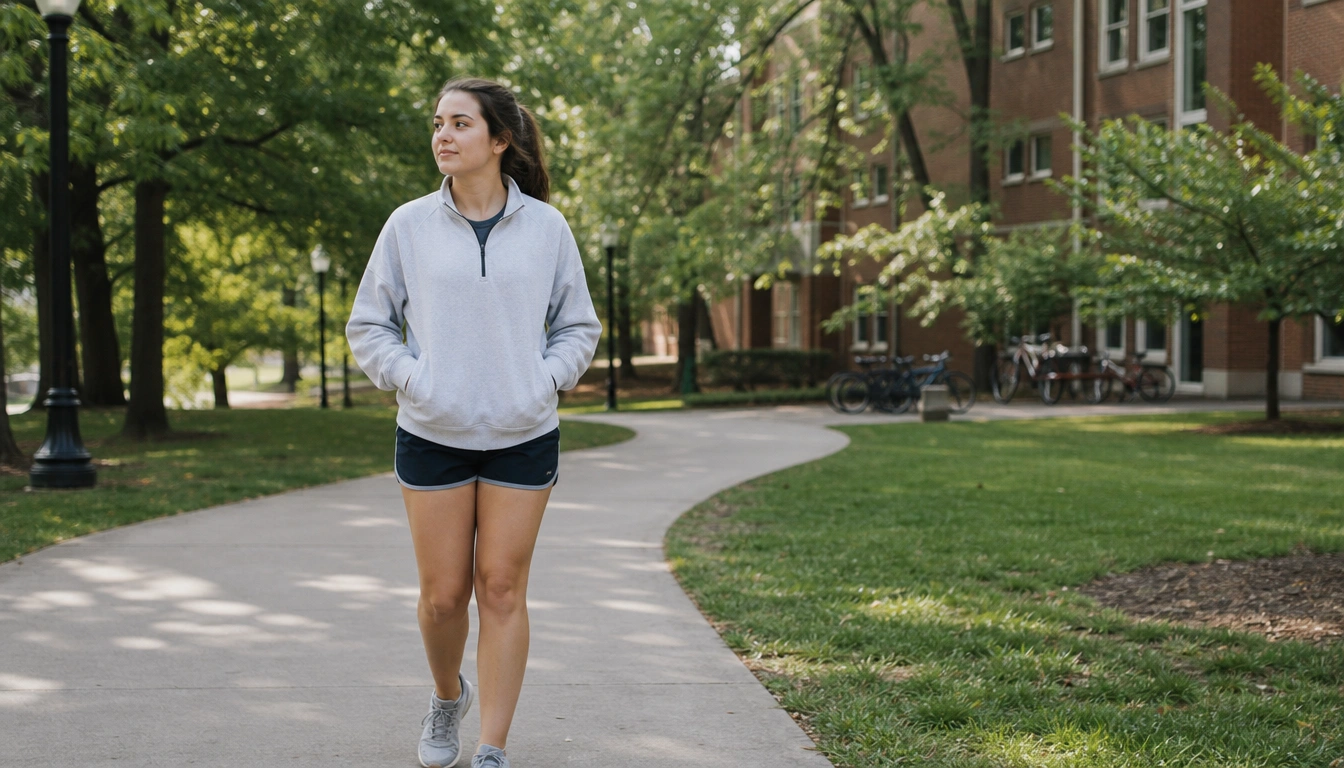
A weekend recovery walk for college students should feel easy, conversational, and restorative—not like a workout you have to push through. For most students, that means a gentle walk on one or both weekend days, long enough to loosen stiffness and reset your mind without adding fatigue. If walking makes pain worse, causes dizziness, or feels like another stressor, rest instead and get medical advice when needed.
Key Takeaways
- Keep the pace conversational: you should be able to talk in full sentences without huffing or burning out.
- A recovery walk can be better than doing nothing after a sedentary or stressful week because it gently boosts circulation and reduces stiffness.
- Use the walk to fit real student life: coffee runs, study breaks, campus loops, and errands all count if the effort stays easy.
- Choose safer routes and timing when possible: good lighting, stable footing, weather-appropriate clothing, and a backup indoor route matter.
- Skip the walk and rest if you have sharp pain, dizziness, chest symptoms, worsening injury pain, or another red flag.
- Students with chronic conditions or recent injuries should personalize activity plans with a clinician instead of guessing.
Weekend recovery walks and why they fit college life
A weekend recovery walk is a low-intensity walk used to help your body and mind recover from a week that was sedentary, mentally demanding, physically hard, or all three. For college students, that often means a lot of sitting in class and at a desk, irregular sleep, rushed meals, and weekend plans that can leave you drained. A recovery walk gives you movement without asking your body to perform.
Compared with complete rest, light movement can help reduce stiffness and keep you from feeling even more locked up after a long week. It also gives your brain a break from screens and deadlines. The goal is not to “earn” exercise or make up for missed workouts. The goal is to create a low-stress reset that leaves you feeling a little looser, calmer, and more awake afterward.
According to the American College of Sports Medicine, brisk walking counts as moderate-intensity aerobic activity. That matters because a weekend walk can help students move toward public health activity goals without requiring a gym session or a full training block. Even if your walk is not enough to meet weekly guidelines by itself, it still supports a more active baseline than staying still all weekend.
How to set the pace, duration, and timing
A recovery walk should usually feel easy enough that you can breathe comfortably and hold a conversation. If you are testing whether the pace is right, use the “talk test”: if you can speak in full sentences without gasping, you are probably in the right zone. If you need to shorten phrases, your pace may be too hard for recovery.
For many students, the most useful version is not a fast lap around campus but a relaxed loop that lasts long enough to warm you up and then settle you down. That might be a short walk after breakfast, between study blocks, or before an afternoon nap. The exact length matters less than the feeling: leave with less stiffness and the same or lower fatigue than when you started.
Weekend scheduling can be simple. If Saturday is packed, a short walk before your first coffee stop may be enough. If Sunday is your reset day, you can pair the walk with a bookstore visit, a campus errand, or a phone call home. The walk works best when it is attached to a habit you already do instead of treated as a separate project.
Students who are already training during the week should keep recovery walks very easy so they do not stack more load onto tired legs. Students who have been sedentary all week may notice that even a short, gentle walk feels surprisingly helpful. In both cases, the recovery version should feel lighter than a fitness walk and should not leave you sweaty, strained, or depleted.
How to fit a recovery walk into a real campus weekend
College schedules are messy, so the best recovery walk is the one that fits naturally into your day. One practical approach is to link it to something already on your calendar. Walk to get coffee, take a loop after brunch, or use a study break to circle the quad before sitting down again. If you have a social plan, you can even make the walk part of the plan by walking with a friend instead of meeting only inside.
Campus terrain can change the feel of the walk more than students expect. Hills, stairs, and uneven sidewalks make a “light” route harder than it looks on paper. If you are trying to recover, choose flatter paths when possible. On hilly campuses, slow down and shorten the route rather than forcing your pace to stay the same.
Weather matters too. Heat, wind, rain, ice, and cold can turn a recovery walk into a stressor. If conditions are rough, move indoors to a hallway loop, indoor track, treadmill, or another safe space. A recovery walk does not need perfect scenery; it needs a manageable environment.
Safety should come before idealism. Walk in well-lit areas when it is dark, tell someone where you are going if you are walking alone late, and wear shoes that support your feet on hard campus surfaces. Bring water if it is hot or if you have been underhydrated. If the walk will happen near a meal, remember that low blood sugar, dehydration, and fatigue can make even gentle activity feel harder than it should.
When a walk is not the right choice
There are times when rest is smarter than a recovery walk. If you have sharp or worsening pain, a new injury, significant joint swelling, or soreness that changes the way you walk, skip the outing and let your body settle. A recovery walk should make you feel better overall, not force you to compensate or limp through it.
Stop and seek medical evaluation if you develop chest pain, unusual shortness of breath, faintness, palpitations, or symptoms that feel out of proportion to the effort. If you are dizzy, feverish, or extremely exhausted, rest may be the safer choice. A low-key walk is not meant to override warning signs.
Students with chronic conditions such as asthma, diabetes, heart problems, or a recent concussion should get individualized guidance from a clinician or campus health professional. The same is true for students recovering from ankle sprains, shin splints, stress injuries, or other lower-extremity problems. A walk may still be possible, but the route, timing, surface, and intensity may need to be adjusted.
One useful question is simple: am I walking to recover, or am I walking because I feel like I “should”? If the answer is pressure rather than benefit, it may be better to rest, eat, hydrate, and try again later.
Examples for different student situations
Very sedentary week: Start with a short campus loop or neighborhood stroll at an easy pace. Keep the first walk comfortable enough that you could repeat it tomorrow. The priority is to reintroduce movement without making your legs feel heavy or tired.
Busy but active week: If you were already on your feet, lifting, or training during the week, treat the weekend walk as unloading time. Go slower than your normal walking pace, choose a flat route, and keep the effort light. You should finish feeling less tight, not more accomplished.
Student-athlete or regular gym-goer: Use the walk as circulation work, not extra conditioning. Stay conversational, avoid hills if your legs are already tired, and keep the outing short if you have another workout coming up. Recovery should support your training, not compete with it.
If you like structure, think of the walk in three parts: a gentle start, a steady easy middle, and a calm finish. That pattern helps you ease into movement, especially if you have been sitting for hours. If walking feels good, you can gradually make the route a little longer over several weekends. If it feels draining, shorten it or switch to rest.
Students who want a mental reset can use the walk as a screen break. Leave your phone in your pocket, or use music only if it helps you unwind without speeding up the pace. The best version is often the one that gives your body a chance to move and your mind a chance to stop multitasking for a while.
Frequently Asked Questions
How long should a recovery walk be on the weekend?
There is no single ideal length. For most college students, a short-to-moderate walk that feels easy and leaves you less stiff is enough. Start with a duration that fits your schedule and recovery needs, then adjust based on how you feel afterward.
How fast should a recovery walk feel?
It should feel conversational and low effort. You should be able to speak in full sentences without breathing hard. If the pace turns into brisk exercise or leaves you noticeably tired, it is no longer functioning as recovery.
Is a recovery walk better than complete rest after a stressful week?
Often yes, if you feel up to moving. Gentle walking can reduce stiffness and help you feel more refreshed than lying still all day. But if you are injured, dizzy, sick, or overly exhausted, complete rest may be the better choice.
What should college students wear or bring on a recovery walk?
Wear comfortable shoes with good support, clothes suited to the weather, and bring water if it is warm or you have not been hydrating well. If you will be out after dark, add something reflective or choose a well-lit route.
Can a recovery walk help with study stress and mental fatigue?
Yes. Easy walking can create a break from screens and study pressure, and many students feel mentally clearer afterward. The effect is usually best when the walk stays relaxed rather than becoming another task to complete.
The Bottom Line
A weekend recovery walk for college students works best when it is easy, flexible, and attached to real life. Keep the pace conversational, choose a route that feels safe, and stop before the walk becomes another source of fatigue.
For many students, a walk can do more than sitting still all weekend: it can ease stiffness, support aerobic activity, and give the mind a reset. But pain, dizziness, chest symptoms, or worsening injury signs mean it is time to rest and get medical advice.
If you make the habit simple enough to repeat, it becomes easier to use weekends for recovery instead of recovery becoming another thing on your to-do list.
Medical disclaimer
Medical disclaimer: This content is for educational and informational purposes only and is not a substitute for professional medical advice, diagnosis, or treatment. Dietary needs and supplement suitability vary by individual.
