
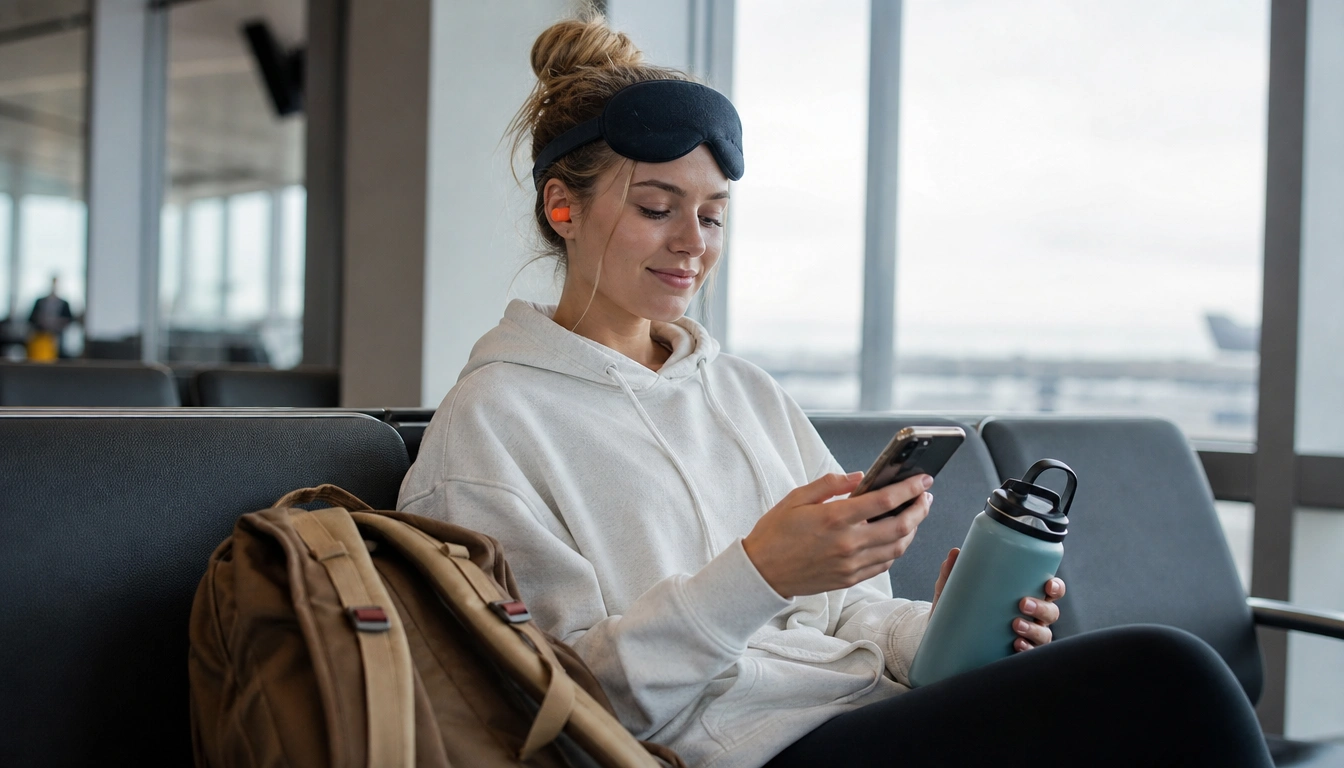
A college student should start adjusting sleep before major time-zone travel, use light and timing strategically during the trip, and return to a local bedtime routine as soon as possible after arrival. For short trips under two days, it is often better to keep the home sleep schedule. Bring practical sleep tools, limit late caffeine and alcohol, and ask campus health about melatonin or sleep aids if timing, medication interactions, or persistent fatigue are concerns.
Key Takeaways
- College students often start with some sleep debt, so travel can worsen an already irregular schedule rather than create a new sleep problem from scratch.
- Eastbound travel usually feels harder than westbound travel because it asks the body to fall asleep earlier than it wants to.
- For trips under two days, keeping your home sleep schedule is often more effective than fully adapting to local time.
- A 3-day gradual shift, plus light exposure, earplugs, and an eye mask, can make travel sleep much easier to manage.
- Short early-afternoon naps can help alertness, but long or late naps may delay your main sleep window.
- Melatonin and OTC sleep aids are not one-size-fits-all; timing, dose, and medication interactions matter, so check with campus health or a clinician when needed.
Why travel disrupts sleep for college students
Travel sleep problems usually start with circadian misalignment: your internal clock is expecting one schedule while the destination demands another. That mismatch is especially common in college, where many students already stay up late, sleep in, or swing between early classes and late-night studying. Travel can add jet lag on top of an existing sleep debt.
The result is not just feeling groggy. Short sleep can make it harder to focus, remember information, regulate mood, and stay physically resilient during a busy trip. The CDC and sleep medicine groups consistently emphasize that most adults need about 7 to 9 hours of sleep, and many younger college-aged people need even more. If your baseline is already uneven, a travel schedule can make the next few days feel much harder.
Students can also be more vulnerable than other travelers because their trip often comes with extra pressure: competition, family expectations, social plans, campus deadlines, or a packed study abroad itinerary. That is why a travel sleep routine for college students works best when it treats sleep as part of performance, not as a luxury after everything else is done.
Build your plan by trip type
Not every trip should be managed the same way. A weekend visit home, a multi-day break, and a semester abroad place different demands on sleep. For a short weekend trip, especially one under two days, it often makes more sense to stay close to your home sleep schedule instead of trying to fully adapt and then readjust again on the way back.
For a longer break or a trip across several time zones, gradual adjustment is more helpful. The general rule from sleep experts is that it can take about one day per time zone crossed to settle in, though individual responses vary. Eastbound travel is usually harder because it requires advancing your clock; westbound travel is usually easier because it lets you delay sleep more naturally.
If you are going abroad for weeks or months, think of the first few days as a transition period. Your goal is not perfect sleep on day one. Your goal is to reduce the size of the mismatch so you can function, attend events, and avoid dragging a sleep deficit through the whole trip.
Before you leave: the 3-day gradual shift plan and what to pack
If your destination is several time zones away, start nudging your bedtime and wake time 30 to 60 minutes closer to the destination schedule for three days before departure. That small shift is easier to sustain than a sudden reset, especially if your current sleep is already irregular.
Use the trip direction to guide your timing. For eastbound travel, an earlier bedtime and earlier wake time can help your body clock move forward. For westbound travel, a later bedtime and later wake time may be easier to maintain. You do not need a perfect transformation before you leave; even partial progress helps.
Pack for sleep the same way you would pack for class or training. A good travel kit usually includes earplugs, an eye mask, a charger for a white-noise app or device, and any comfortable items that make it easier to settle down in unfamiliar places. If you are sensitive to light or noise, those tools can matter as much as a pillow.
It also helps to protect your sleep window before departure. Avoid trying to “bank” sleep by staying up extremely late the night before travel. That often backfires by making the trip day more tiring and increasing the chance that you will nap too long at the wrong time.
During travel: light, timing, hydration, caffeine, and alcohol
Light is one of the strongest signals for your body clock. If you are traveling east, morning light can push you earlier, so it may help to avoid bright light soon after arrival if it would make you wake too early for your target bedtime. Afternoon light is often more useful in that direction. If you are traveling west, morning light is usually helpful for anchoring your schedule after a later bedtime.
Travel day sleep decisions depend on when you land. If you arrive at night, try to sleep as much as possible on the plane or during the trip. If you arrive during the day, do your best to stay awake until local bedtime. Sleeping randomly for many hours in transit can make the first night much harder.
Hydration matters because travel often combines dry cabin air, long sitting periods, and less routine drinking. Drinking water will not cure jet lag, but it can reduce the extra fatigue that comes from being dehydrated. Caffeine can be useful earlier in the day, but late caffeine may make it harder to fall asleep at the local bedtime you are trying to reach. Alcohol may seem relaxing, yet it tends to worsen sleep quality and dehydration, so it is usually a poor travel sleep strategy.
Think of the transit day as a bridge, not a celebration of stamina. Your goal is to arrive with enough alertness to function and enough sleep pressure to fall asleep at the right time.
After arrival: sync meals, movement, naps, and bedtime to local time
Once you arrive, shift as many cues as possible to local time. Eat meals on the destination schedule, get outside during daylight, and add some movement early in the day. Even a brief walk can help reinforce the new rhythm and reduce the fog that follows travel.
Naps need careful handling. A short early-afternoon nap can be useful if you are too tired to function safely or pay attention in class, practice, or meetings. Keep it brief. Long naps, or naps taken too late in the day, can make it harder to fall asleep at night and can stretch jet lag out longer.
Try to protect your first local bedtime even if you are tempted to push through the evening or collapse too early. If you go to bed far outside the destination’s normal night window, you may wake up at 2 or 3 a.m. and spend the rest of the trip chasing sleep. The better move is usually to build a steady evening routine, keep the room dim, and go to bed when local bedtime arrives.
If you are adjusting across several days, the first 48 hours matter most. Consistent light exposure, meals, and sleep timing will do more than trying to force a perfect overnight reset.
Sleep anywhere strategies for dorms, hotels, and family homes
Travel sleep is often disrupted by the room, not just the clock. Noise from roommates, siblings, traffic, hallway conversations, or hotel doors can keep a light sleeper alert long after the destination time says it is bedtime. Darkness also matters, especially if you are trying to sleep earlier than your surroundings want.
Use the tools you packed. Earplugs can cut down on sudden sounds, and an eye mask can help when curtains leak light or someone needs to keep a lamp on. If you use white noise, make it steady rather than loud enough to become another distraction. Keep the room as cool and comfortable as you can, and reduce screen use before bed so your brain gets a clearer signal that sleep is starting.
In a dorm or shared room, negotiate the basics early: where people can keep lights, how late loud conversations will run, and whether someone can switch to headphones for late-night media. In a hotel or relative’s home, a small amount of planning goes a long way. A familiar pillowcase, a consistent wind-down routine, and a set bedtime can help your body recognize that this is still sleep time, even if the room is different.
Melatonin and sleep aids: what to be cautious about
Melatonin and over-the-counter sleep aids are sometimes used for jet lag, but they are not one-size-fits-all solutions. Timing matters, dose matters, and interactions with other medicines matter. What helps one student can leave another student groggy, wired, or simply unchanged.
That is why campus health or a clinician is a smart stop if you take other medications, have a medical condition, or are considering sleep aids for a time-zone change. The goal is not to self-medicate your way through travel. The goal is to use the safest option that fits your schedule and health history.
For many students, behavior-first strategies are enough: gradual sleep shifting, light management, a planned nap if needed, and good travel hygiene. Supplements should be a backup conversation, not the starting point, especially if you are traveling often or have a history of sleep problems.
When sleep problems need medical care
Temporary travel fatigue is common. But if insomnia, severe daytime sleepiness, anxiety, or mood changes keep going after you return to your normal routine, that deserves more attention. Persistent sleep trouble can affect academics, safety, athletic performance, and mental health.
As a practical threshold, if the problem continues for more than a few weeks despite better sleep habits and a regular schedule, schedule an evaluation with campus health or a sleep specialist. Get help sooner if you have loud snoring, gasping during sleep, repeated awakenings, panic symptoms, or sleep loss that is making you unsafe to drive, study, or train.
For students who travel often, repeated jet lag or chronic irregular sleep can become a pattern rather than a one-off issue. A clinician can help sort out whether the problem is mainly schedule-based or whether something else is interfering with sleep.
Travel should not leave you feeling wrecked for the rest of the term. If your sleep keeps falling apart after each trip, it is worth treating the pattern, not just the latest weekend.
Frequently Asked Questions
How can a college student adjust sleep before a time-zone change?
Start shifting bedtime and wake time 30 to 60 minutes closer to the destination schedule for about three days before departure. Use light exposure to support the direction of travel: earlier cues for eastbound trips, later cues for westbound trips. Partial adjustment is still useful.
Is eastbound or westbound travel harder for sleep and why?
Eastbound travel is usually harder because it asks your body to fall asleep earlier than it naturally wants to. Westbound travel is often easier because delaying sleep is more comfortable for many people. The size of the time-zone change also matters.
What should students do on a short weekend trip if they do not want to fully adjust their body clock?
For trips under two days, keep your home sleep schedule as much as possible. That usually means sleeping and waking near your usual times, even if local time is different. Try to schedule important activities when you are normally most alert.
Which sleep hygiene habits matter most in noisy dorms, hotels, or relatives’ homes?
Control the environment as much as you can: use earplugs, an eye mask, steady white noise, and a cool room temperature. Keep screens down before bed and stick to a predictable wind-down routine so your brain gets a consistent sleep signal.
When should a college student use a nap versus push through to local bedtime?
A short early-afternoon nap can help if you are too tired to function safely. Long naps or late naps are more likely to delay nighttime sleep. If you can stay awake without risking safety, pushing through to local bedtime is usually better.
The Bottom Line
A good travel sleep routine for college students is mostly about timing and consistency. Start adjusting before a major time-zone change, use light and meals to reinforce the new schedule, and keep naps short and early if you need them.
For short trips, do not always chase local time immediately. For longer trips, give your body a few days to adapt, especially if you are traveling east. Portable sleep tools, hydration, and calmer caffeine and alcohol habits can make a real difference.
If sleep problems keep going after the trip, or if you are considering melatonin or other sleep aids, campus health is a sensible next step. The goal is to keep you functional now and protect your sleep pattern for the rest of the term.
Medical disclaimer
Medical disclaimer: This content is for educational and informational purposes only and is not a substitute for professional medical advice, diagnosis, or treatment. Dietary needs and supplement suitability vary by individual.
Sources
- National Institutes of Health (NIH) — nih.gov. Accessed October 2026.
- Centers for Disease Control and Prevention (CDC) — cdc.gov. Accessed October 2026.
- Centers for Disease Control and Prevention (CDC) — cdc.gov. Accessed October 2026.
- Centers for Disease Control and Prevention (CDC) — cdc.gov. Accessed October 2026.
- Johns Hopkins Medicine — hopkinsmedicine.org. Accessed October 2026.
- Academic Research Institution — usc.edu. Accessed October 2026.
