
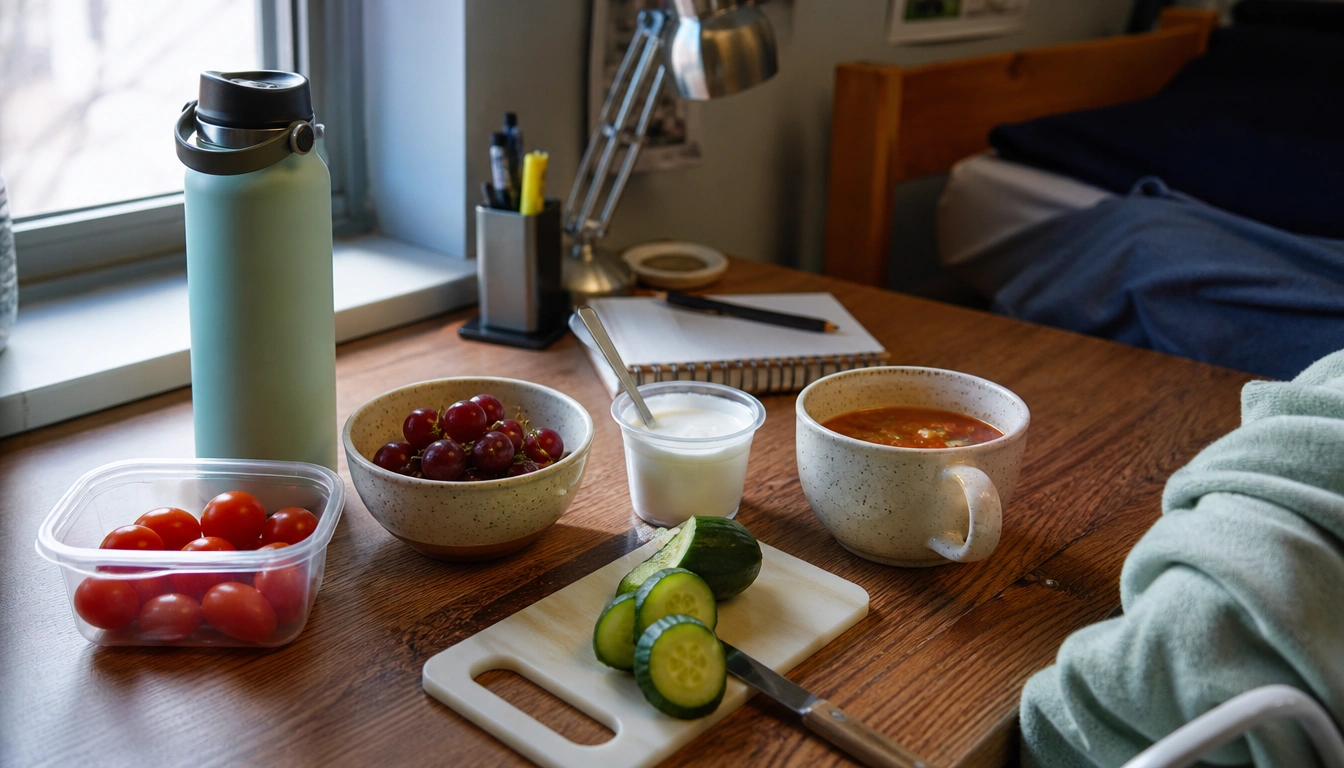
The easiest hydration foods for college students are the ones that need almost no prep and fit into a dorm or backpack: cherry tomatoes, grapes, cucumber slices, yogurt, cottage cheese, soups, melon, and other water-rich fruits and vegetables. These foods can contribute to daily fluid intake, which is helpful when you are busy, but they should support—not replace—regular drinking, especially if you sweat a lot or feel unwell.
Key Takeaways
- About 20% of your daily water intake can come from food, so hydration is not just about drinking from a bottle all day.
- Dorm-friendly foods with a lot of water include cherry tomatoes, grapes, cucumbers, yogurt, cottage cheese, and soup.
- Coffee and tea can count toward fluid intake, but energy drinks and sugary drinks are poor hydration strategies.
- If you are playing sports, walking in hot weather, or studying through a long day, you may need both fluids and electrolytes.
- Early dehydration signs can include headache, dry mouth, fatigue, and darker urine than usual.
Why food-based hydration matters for busy college students
For a student schedule, food-based hydration can be a practical backup plan, not a replacement for water. Public health guidance notes that roughly one-fifth of daily water intake may come from food. That means your meals and snacks are already doing part of the hydration work, even if you are not thinking about it.
This matters on campus because many students rely on snacks between classes, late dinners, and grab-and-go meals. If those foods are all dry and salty, it is easier to fall behind on fluid intake without noticing. Water-rich foods add moisture, and many of them also provide potassium, calcium, protein, or vitamin C. That makes them especially useful when you need energy that lasts through labs, lectures, or long study blocks.
The National Health Service and the CDC both emphasize the bigger picture: hydration is about overall fluid balance. Food can help, but it works best when you are also drinking enough throughout the day.
Best simple hydration foods for dorms and backpacks
The best hydration foods for college students are simple, portable, and forgiving if you do not have a real kitchen. You want foods that do not need cooking, heavy cleanup, or special storage for a few hours.
- Cherry tomatoes — easy to rinse and eat by the handful; they also work in salads, wraps, and grain bowls.
- Grapes — portable, sweet, and naturally hydrating; keep them in a container for class or library sessions.
- Cucumbers — slice once and snack all week, or pair with hummus or yogurt dip.
- Yogurt — useful when you want fluid plus protein, especially at breakfast or after class.
- Cottage cheese — high-moisture and filling, with protein that can help a snack last longer.
- Melon — watermelon, cantaloupe, and similar fruits are high-water options that are easy to buy pre-cut.
- Soups and broths — especially helpful when you want something warm, comforting, and easy to microwave.
These foods are not “hydration hacks.” They are just efficient foods that happen to carry a lot of water. That is why they fit so well into a college routine where convenience matters more than meal prep.
Dorm-friendly fruit and vegetable options
Fruits and vegetables are the easiest place to start because many of them are naturally water-dense and ready to eat. Cherry tomatoes, grapes, cucumber rounds, berries, and melon chunks are all good examples. They do not need much more than a rinse, and some can be eaten straight from a container.
For dorm life, the best options are the ones that last long enough to actually get eaten. Grapes and cherry tomatoes are especially useful because they can sit in the fridge and be grabbed between classes. Cucumbers are inexpensive and versatile, though they are best when you remember to slice them ahead of time. Baby carrots, celery, strawberries, oranges, and bell pepper strips can also help if you want variety.
These foods do more than add water. They can bring fiber and micronutrients to meals that might otherwise be mostly refined carbs or packaged snacks. A small container of fruit or cut vegetables beside a sandwich, wrap, or instant meal can make the whole meal more balanced without much effort.
Dairy-based options that help with protein and satiety
Yogurt and cottage cheese are especially useful for students because they do two jobs at once: they provide fluid and they add protein. That combination can help a snack feel like real food instead of something you eat and forget an hour later.
Plain or lightly sweetened yogurt works well at breakfast, in a smoothie, or with fruit. Cottage cheese is another strong option because it is high in moisture and easy to pair with almost anything: tomatoes, cucumbers, berries, pineapple, or crackers. If you are trying to stay full through a long afternoon of classes, these foods may be more practical than dry granola bars alone.
They are also easy to fit into student budgets if you buy store brands or larger tubs. For many students, the best routine is not a perfect meal plan. It is a few reliable foods that can be repeated without much thought.
Broths, soups, and smoothie shortcuts
Broths and soups are among the simplest hydration foods because they deliver both fluid and salt, which can be helpful if you have been sweating or have not eaten much. Microwaveable soups, canned vegetable soups, ramen with extra vegetables, or prepared broth cups can all work when time is short.
Smoothies are another low-effort option. A basic version can be as simple as frozen fruit, yogurt, and milk or water blended together. Frozen berries, mango, or melon are useful because they store well and reduce waste. If you want more staying power, add yogurt, milk, or nut butter rather than relying only on fruit juice.
These options fit well into campus life because they can replace skipped breakfasts or rushed lunches. They also make it easier to add hydration when eating solid food feels inconvenient, such as after an early class, before a workout, or during a stressful exam week.
How to build hydration into study snacks and campus meals
The easiest way to use hydrating foods is to attach them to habits you already have. Keep a container of grapes or cherry tomatoes near your desk. Add cucumber slices or tomatoes to a cafeteria salad. Choose soup with lunch when it is available. Put yogurt in the fridge where you can see it, not buried behind other groceries.
When you need a study snack, aim for a mix of fluid and staying power. For example, yogurt and fruit, cottage cheese and tomatoes, or soup and a sandwich are usually more useful than a dry snack alone. If you are at the dining hall, look for foods that add moisture to the rest of your plate: melon, salad greens, cucumbers, tomatoes, or broth-based dishes.
These small choices matter because hydration is easier when it happens in the background. You do not need a special “hydration meal.” You need a pattern of foods that naturally contain water and are easy to repeat on busy days.
When hydrating foods are not enough
High-water foods help, but they are not enough by themselves in every situation. Students who play sports, walk long distances in hot weather, work outside, or have long practices lose more fluid through sweat. In those settings, foods support hydration, but you still need to drink deliberately and may need electrolytes too.
Caffeine is another nuance. Coffee and tea can count toward your daily fluid intake, according to public health guidance, especially when used in normal amounts. But heavily caffeinated energy drinks are not a smart hydration strategy. They can be high in sugar, may make you feel jittery, and do not replace actual fluid balance. If you want a beverage for studying, water, milk, plain coffee, or tea is generally a better option than an energy drink.
Illness changes things too. If you have vomiting, diarrhea, fever, or trouble keeping fluids down, food alone is not enough. That is a situation where you need to focus on fluids and seek medical advice if symptoms are ongoing or severe.
How to spot early dehydration and when to get help
College students often notice dehydration only after it starts to affect focus. Common early signs include thirst, dry mouth, headache, fatigue, trouble concentrating, and urine that looks darker than usual. A practical self-check is urine color: pale yellow is generally a better sign than dark amber.
Watch for how you feel during a normal day, not just after exercise. If you are getting headaches in class, feeling unusually tired during study sessions, or realizing you have not urinated in a while, those can be clues that your fluid intake is lagging. If you have been sweating a lot, those clues matter even more.
Seek medical care if dehydration symptoms become severe or you also have dizziness, confusion, a racing heart, heat exhaustion, persistent vomiting, or a fever that is not improving. The CDC and NHS both treat severe dehydration as a problem that should not be managed casually.
Budget, storage, and convenience tips for student life
The best hydration foods are the ones you will actually keep around. Budget matters, so buy foods that are affordable in the form you can realistically use. Grapes, cucumbers, yogurt, cottage cheese, and bananas are often easy to find at grocery stores or campus markets. Frozen fruit can be a good value if you use it for smoothies.
Storage matters too. If your dorm fridge is small, choose foods that keep for several days and do not require lots of prep. Cherry tomatoes, whole cucumbers, apples, oranges, shelf-stable soup cups, and sealed yogurt cups are all easier than complicated recipes. If you have only a shared fridge, label your containers and keep them visible so they are not forgotten.
Convenience matters most when your schedule gets chaotic. A smart routine might be: keep one hydrating snack in your backpack, one in your fridge, and one option in your cafeteria rotation. That could be grapes for class, yogurt for breakfast, and soup for late-night studying. The goal is not perfection. It is having a few reliable foods that make hydration easier without adding work.
Frequently Asked Questions
How much of daily hydration can realistically come from food?
Public health guidance suggests that about 20% of daily water intake can come from food. That is why fruits, vegetables, yogurt, and soups matter. They help fill the gap, but they are not a substitute for drinking enough fluids across the day.
Which hydrating foods are easiest to keep in a dorm or take to class?
Cherry tomatoes, grapes, cucumbers, yogurt, cottage cheese, and pre-cut melon are among the easiest options. They need little prep and travel well in a container or small insulated bag.
Do fruit, vegetables, yogurt, soup, and cottage cheese all count toward hydration?
Yes. Water-rich fruits and vegetables, yogurt, cottage cheese, broths, and soups all contribute to total fluid intake. They also add nutrients that plain water does not provide, such as protein, potassium, and calcium.
When do caffeine, sports, or hot weather mean foods alone are not enough?
If you are sweating heavily, doing long practices, spending time in heat, or using a lot of caffeine, you usually need to be more intentional about drinking fluids. Hydrating foods still help, but they do not fully replace water and may not cover electrolyte losses.
How can students tell if they may be dehydrated?
Early signs can include headache, dry mouth, fatigue, trouble focusing, thirst, and darker urine. If symptoms become severe or you also have dizziness, confusion, a rapid heartbeat, fever, or vomiting, you should get medical help.
The Bottom Line
For college students, the easiest hydration foods are the ones that fit real life: grapes, cherry tomatoes, cucumbers, yogurt, cottage cheese, soup, and similar high-water foods. They are cheap enough to repeat, easy to pack, and helpful when your schedule makes regular meals irregular.
These foods can meaningfully support hydration, especially because a portion of daily water intake comes from food. Still, they work best alongside regular drinking, especially during sports, hot days, caffeine-heavy study periods, or illness.
If you want the simplest approach, keep one fruit, one vegetable, and one dairy or broth-based option around most days. That small habit can make hydration easier without adding much prep, cost, or time.
Medical disclaimer
Medical disclaimer: This content is for educational and informational purposes only and is not a substitute for professional medical advice, diagnosis, or treatment. Dietary needs and supplement suitability vary by individual.
Sources
- Centers for Disease Control and Prevention (CDC) — cdc.gov. Accessed October 2026.
- National Health Service (NHS) — wchc.nhs.uk. Accessed October 2026.
- National Health Service (NHS) — www.nhs.uk. Accessed October 2026.
- Academic Research Institution — osu.edu. Accessed October 2026.
