
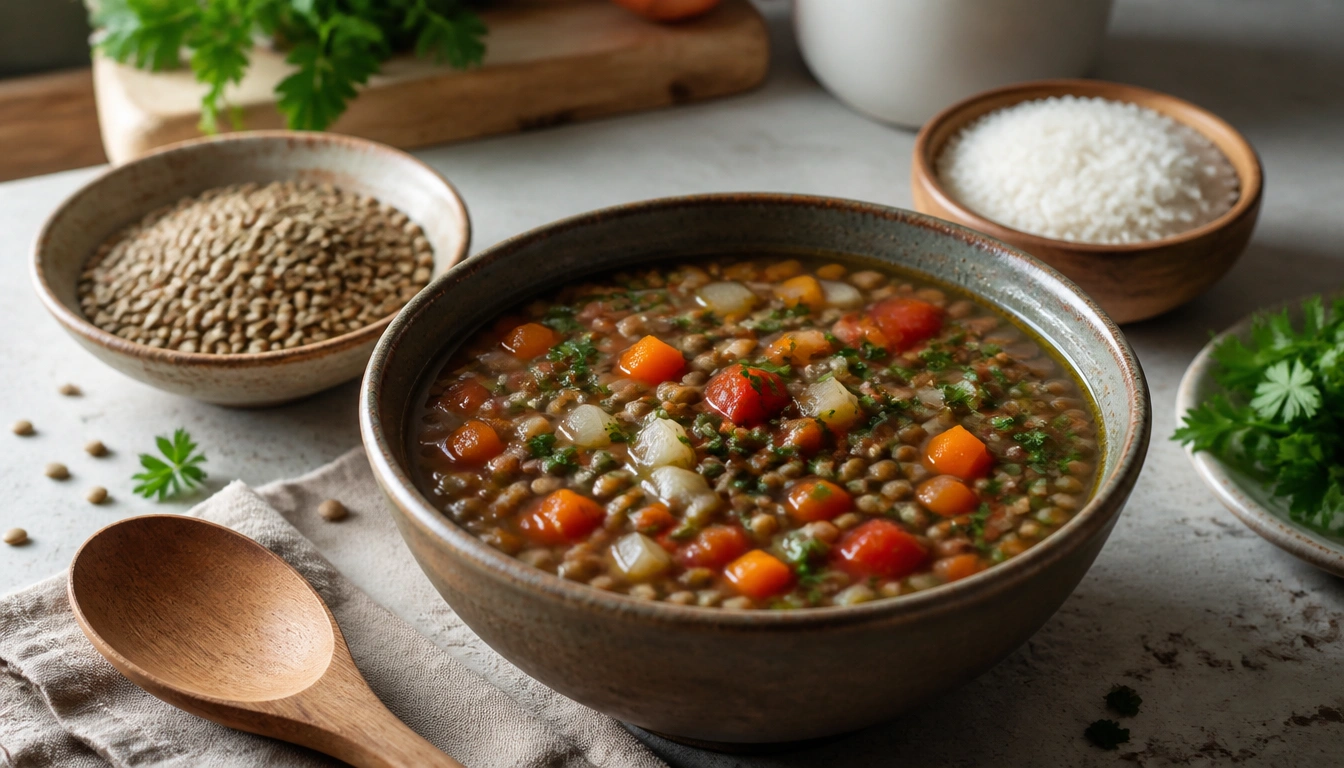
The easiest affordable lentil meals are simple soups, rice-and-lentil bowls, taco-style fillings, and salads made with pantry staples like onions, garlic, tomatoes, cumin, and broth. Choose red or yellow lentils for fast-cooking soups and dals, and brown or green lentils for meals that need shape. Rinsing well, starting with small portions, and pairing lentils with vitamin C-rich foods can help with digestion and iron use.
Key Takeaways
- Red and yellow lentils break down fast, so they work best for soups, dals, and creamy purées.
- Brown and green lentils hold their shape better for salads, grain bowls, taco fillings, and meal prep.
- Lentils can help stretch a food budget because they bring protein, fiber, and volume without expensive add-ins.
- Pair lentils with rice, barley, or bread for a more filling meal and a more complete amino acid pattern across the day.
- Rinse lentils well, start with smaller servings, and increase gradually if your gut is not used to higher-fiber meals.
- Tomatoes, bell peppers, and lemon juice can help your body absorb more of the iron in lentils.
Why lentils are a budget-friendly meal base
Lentils are one of the most practical foods for budget shoppers because they do several jobs at once. They add protein, fiber, and bulk to a meal, so a small amount can turn a thin soup or plain grain bowl into something filling. Public health guidance from the USDA and MyPlate also treats lentils as flexible enough to count as either a protein food or a vegetable, which makes them easy to fit into low-cost meal planning.
That flexibility matters when grocery money is tight. Instead of buying a separate protein and a separate vegetable for every meal, lentils can cover part of both roles. They also store well, cook into a large volume, and work in meals that can be built from low-cost pantry items. For many households, that means less waste, fewer last-minute takeout orders, and more dinners built from ingredients already on hand.
Lentils are also naturally satisfying. Their mix of complex carbohydrates, fiber, and plant protein helps meals feel substantial without requiring expensive meat substitutes or specialty products. That makes them a strong base for anyone trying to eat well while keeping the grocery bill in check.
Easy lentil meal ideas and the best type to buy
Different lentils behave differently in the pot, so buying the right type saves time and disappointment. Red and yellow lentils cook quickly and soften into a creamy texture, which makes them best for soup, dal, and smooth purées. Brown and green lentils keep their shape better, so they are better for salads, taco fillings, grain bowls, and dishes where you want visible lentils instead of a soft mash.
If you want a few dependable meal formulas, start here:
- Quick lentil soup: Cook red lentils with onions, garlic, carrots, tomatoes, and broth until tender.
- Lentil and rice bowl: Simmer brown lentils with rice, cumin, and a little onion for a filling, low-cost dinner.
- Taco-style lentils: Cook brown lentils with chili powder, cumin, garlic, and tomato paste, then spoon into tortillas or over rice.
- Warm lentil salad: Toss cooked green lentils with chopped vegetables, vinaigrette, and herbs if you have them.
- Simple lentil stew: Add lentils to a pot with potatoes, canned tomatoes, and broth for a one-pot meal.
These meals work because they rely on inexpensive staples instead of premium add-ins. You do not need a long ingredient list to make lentils taste good. You mainly need the right texture choice, a reliable seasoning base, and a plan for what the lentils will do in the finished dish.
How to keep lentil meals flavorful without raising cost
Flavor on a budget usually comes from a few repeat ingredients, not from expensive extras. Onions, garlic, canned tomatoes, cumin, and broth can do most of the work in lentil cooking. The USDA food pattern and many extension-style cooking guides favor this kind of simple pantry cooking because it is affordable, flexible, and easy to repeat.
Start with onions cooked in a little oil if you have it, then add garlic and spices before the liquid goes in. That short step builds a deeper base than simply boiling lentils in water. Cumin gives lentils a warm, savory note. Tomatoes add acidity and body. Broth, even a modest amount, makes the finished dish taste fuller than plain water alone. If you only have water, a spoonful of tomato paste, a bouillon cube, or leftover vegetables can help carry the flavor.
Use salt thoughtfully, but do not rely on it alone. A little acid at the end, such as lemon juice or vinegar, can brighten the whole pot. Herbs, chili flakes, curry powder, and black pepper are also useful if they are already in your pantry. The goal is not a complicated recipe; it is a dependable flavor pattern you can repeat with different lentil types and whatever vegetables are cheapest that week.
Budget protein-and-fiber pairing ideas with grains and vegetables
Lentils become even more useful when you pair them with low-cost grains and vegetables. Rice, barley, oats, bulgur, and whole-wheat bread are all affordable options that stretch a lentil dish and make it more filling. The idea is not that lentils alone must somehow be “perfect.” Instead, a day of mixed plant foods can provide a full spread of essential amino acids, especially when lentils are paired with grains across meals.
This is why lentil-and-rice dishes are so common in many food traditions. The grain adds another texture, more calories for energy, and a different amino acid pattern. You can also use vegetables to add volume without much cost. Cabbage, carrots, onions, frozen spinach, peas, and canned tomatoes are especially useful because they are usually inexpensive, store well, and work in soups, stews, and bowls.
MyPlate-style planning makes lentils especially convenient because they can count as either a protein or a vegetable. That means a lentil soup with bread and a side salad can help cover more of the plate without expensive ingredients. If your meal feels too light, add a cheap grain. If it feels too dense, add more vegetables or broth. The point is to build a meal that is balanced, affordable, and satisfying enough to keep you from snacking later because dinner was too small.
Simple prep and batch-cooking workflow for weeknight use
Lentils are one of the easiest batch-cooking foods because they do not usually need soaking. Rinse them, sort out any tiny stones or debris, and cook them in a pot with water or broth. Red lentils cook fastest and can be ready in a short simmer, while brown and green lentils take longer but still fit into a weeknight schedule.
A smart workflow is to cook a larger batch once, then split it into two or three meals. For example, plain cooked brown lentils can become soup one night, taco filling another night, and a salad topping later in the week. This reduces both prep time and food waste. If you know the lentils will be used in several recipes, keep the seasoning mild during cooking so you can change the flavor later.
If you are cooking for one or two people, canned lentils can be helpful when time is tighter than money. They are already cooked and easy to rinse and add to soups, grain bowls, and skillet meals. Dry lentils are still usually the cheapest option, but canned lentils can save time and prevent the common mistake of cooking more than you can use.
How to adapt lentil meals for digestion and first-time eaters
If you are not used to eating a lot of fiber, lentils may cause temporary gas or bloating. That does not mean they are a bad food; it usually means your gut needs time to adjust. A sensible approach is to start with a smaller portion, rinse dry or canned lentils well, and increase the amount gradually over several meals. Drinking enough fluids also helps the fiber move through the digestive system more comfortably.
Texture matters too. Red lentils are often easier for first-time eaters because they cook soft and are less likely to feel heavy. If you are worried about discomfort, a soup or dal can be easier to tolerate than a thick bowl of whole lentils. Cooking them until tender, not underdone, may also make them easier to eat.
Some people with active digestive conditions, such as severe IBS or IBD flare-ups, may need to adjust legumes more carefully and should follow personalized medical advice. For most home cooks, though, the best strategy is simple: small portions first, gradual increases, and plenty of liquid in the meal.
Iron-boosting meal pairings with vitamin C-rich ingredients
Lentils contain iron, but plant iron is not absorbed as efficiently as the iron from animal foods. One easy way to improve that is to pair lentils with vitamin C-rich ingredients in the same meal. Tomatoes, bell peppers, and lemon juice are convenient options because they are inexpensive, familiar, and easy to use in both hot and cold dishes.
That means a lentil soup with tomatoes can be a better choice than plain lentils and rice alone. A taco bowl with salsa and chopped peppers works the same way. Even a squeeze of lemon over lentil salad can help. You do not need a supplement or a complicated nutrition strategy; a practical food pairing is enough for most people.
If you are cooking for someone with higher iron needs, such as a teen or someone who avoids meat, this pairing becomes even more useful. It is a low-cost habit that can fit into everyday meals without changing the entire recipe.
Cost-saving shopping and storage tips for dry and canned lentils
Dry lentils are usually the best value if you have room to store them and enough time to cook them. They keep well in a cool, dry pantry and can be bought in bulk or smaller bags depending on your space. Canned lentils cost more per serving, but they may still be worth it for busy weeks because they reduce cooking time and keep a meal from being skipped.
When shopping, choose the lentil type that matches your most common meals rather than buying several kinds at once. If you mainly make soup, buy red or yellow lentils. If you want bowls, salads, or tacos, buy brown or green lentils. That keeps pantry clutter down and makes it more likely you will actually use what you buy.
Store opened canned lentils in a covered container in the refrigerator and use them quickly. For dry lentils, keep the bag sealed tightly or move them to a container that protects against moisture and pests. Before cooking, give them a quick rinse and check for debris. These small habits save money by preventing spoilage, reducing waste, and making lentils easier to cook well the first time.
Frequently Asked Questions
Which type of lentils is best for soup, salads, or taco fillings?
Red or yellow lentils are best for soups and creamy dishes because they soften quickly. Brown or green lentils are better for salads, taco fillings, and bowls because they hold their shape after cooking.
How do I cook lentils cheaply and avoid overcooking them?
Use dry lentils, rinse them, and simmer them in water or broth until just tender. Red lentils cook the fastest, while brown and green lentils need more time. Check them near the end so they do not turn mushy if you want a firmer texture.
How can I make lentil meals taste better with pantry ingredients?
Onions, garlic, tomatoes, cumin, broth, chili powder, and a little acid such as lemon juice or vinegar can make lentils taste much better without much cost. Build flavor early in the pot instead of relying only on salt at the end.
How can I boost iron absorption from lentil meals?
Pair lentils with vitamin C-rich foods such as tomatoes, bell peppers, or lemon juice in the same meal. That can help your body absorb more of the iron in the lentils.
How do I reduce bloating or gas when I eat more lentils?
Start with a small portion, rinse lentils well, cook them thoroughly, and increase the amount gradually over time. Drinking enough fluids and choosing softer lentil dishes at first can also help.
The Bottom Line
Lentils are one of the cheapest foods that can still make a meal feel complete. They give you protein, fiber, and volume, and they work in soups, grain bowls, tacos, salads, and stews.
If you choose the right lentil type, use pantry staples for flavor, and pair lentils with grains and vitamin C-rich foods, you can make affordable meals that are filling, practical, and easier on digestion. Start small if your system is not used to legumes, then build up as your body adjusts.
For most budget cooks, the simplest win is also the most useful: keep one quick-cooking lentil, one shape-holding lentil, and a few low-cost flavor basics on hand. That gives you a lot of dinner options without a crowded pantry or a bigger grocery bill.
Medical disclaimer
Medical disclaimer: This content is for educational and informational purposes only and is not a substitute for professional medical advice, diagnosis, or treatment. Dietary needs and supplement suitability vary by individual.
Sources
- U.S. Government / Health Authority — usda.gov. Accessed October 2026.
- Academic Research Institution — msu.edu. Accessed October 2026.
- myplate.food — myplate.food. Accessed October 2026.
