
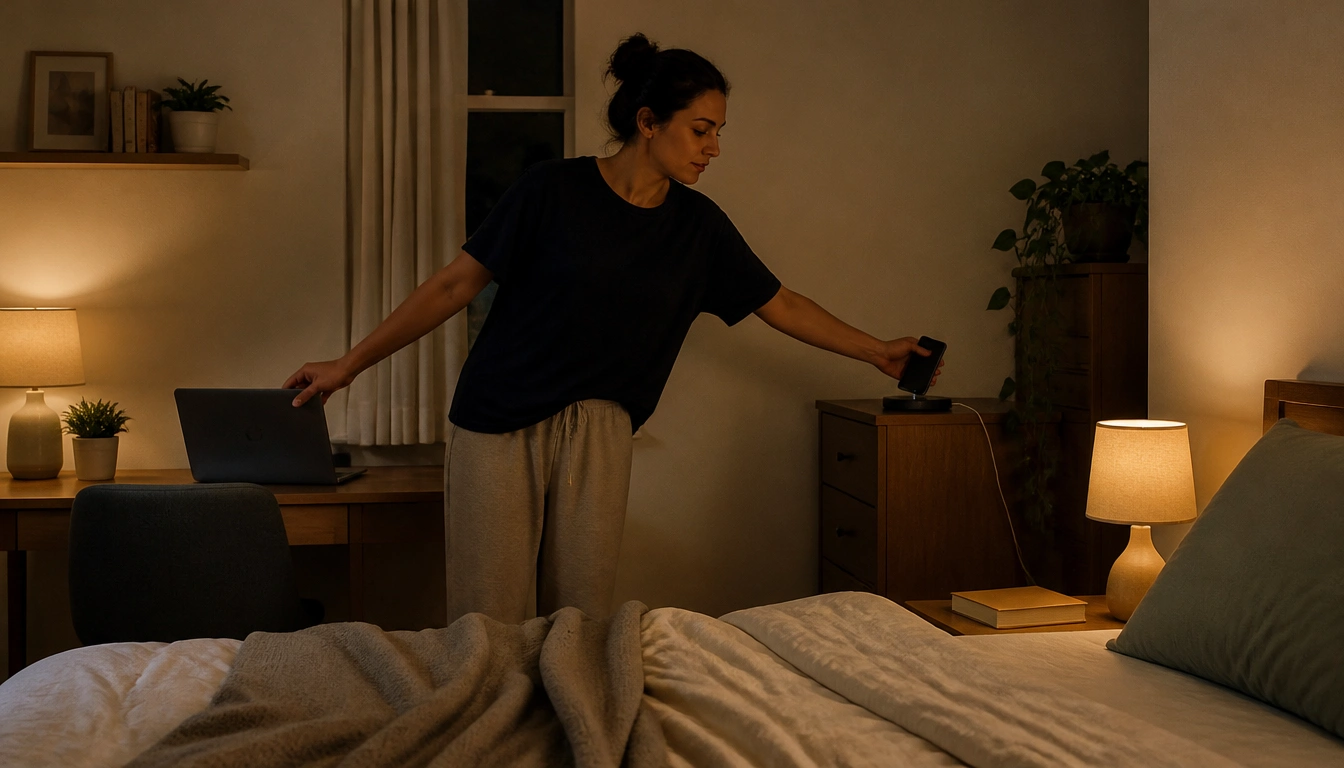
A healthy evening routine should help you shut work down, reduce stimulation, and make sleep easier without requiring a full lifestyle overhaul. Start with one or two changes: set a work cutoff, dim screens 30 to 60 minutes before bed, finish heavier meals 2 to 3 hours before lying down, and keep the bedroom quiet, dark, and cool. The best routine is the one you can repeat most nights.
Key Takeaways
- Evening habits matter because they shape sleep timing, stress recovery, and whether healthy routines feel automatic or hard to maintain.
- You do not need a perfect routine. A small, repeatable shutdown, wind-down, and sleep cue sequence is usually enough to restart momentum.
- For most adults, screens should stop 30 to 60 minutes before bed, and the sleep space should be dark, quiet, and comfortably cool.
- Finishing heavier meals 2 to 3 hours before bed can reduce reflux and sleep disruption; some people with GERD or blood sugar issues may need more time.
- Shift workers should focus on cumulative sleep and a pre-sleep ritual, not a fixed clock bedtime.
- If poor sleep comes with snoring, gasping, restless legs, or major daytime sleepiness, habits alone may not be enough and a clinician should evaluate it.
Why a healthy evening routine is the easiest place to restart healthy habits
If you are trying to get back into healthy habits, the evening is often the most practical place to start. By late day, many people are tired of making decisions, juggling work spillover, and trying to stay disciplined. A simple evening routine lowers the number of choices you have to make and creates a repeatable signal that the day is ending.
That matters for more than sleep. A stable evening routine can support stress recovery, reduce late-night snacking, and make it easier to follow through on healthy choices the next morning. It also helps anchor broader behavior change because your brain starts linking a few familiar cues with “shutdown mode” instead of “still working, still scrolling, still eating, still reacting.”
Public health guidance from the CDC and NIH emphasizes that adults generally need 7 or more hours of sleep a night, and many people do better when they build habits that protect that sleep. The routine itself is not the goal. The goal is a realistic structure you can keep repeating even when motivation is low.
A useful mindset shift is to start with consistency, not optimization. One or two steady steps at night can do more for your overall routine than a long plan you quit after three evenings.
A simple step-by-step evening reset: shutdown, unwind, and sleep cues
A helpful evening routine usually has three parts: a shutdown from work and problem-solving, a wind-down from stimulation, and sleep cues that tell your body it is time to rest. You do not need a strict ritual with many steps. You need a sequence that is easy enough to repeat on ordinary nights.
Shutdown
Pick a time when work ends, even if the day was messy. That can mean closing your laptop, sending your last email, or writing down the tasks that are waiting for tomorrow. The point is to stop carrying the workday in your head. A brief list for the next day often helps your mind let go more easily than trying to “remember everything.”
Wind-down
After shutdown, shift toward low-stimulation activities. Reading a physical book, light stretching, gentle mobility work, breathing exercises, or quiet music can all help the nervous system settle. If you like podcasts, choose audio only and keep the volume low. The activity matters less than the fact that it is calm, predictable, and not demanding.
Sleep cues
Make the bedroom feel different from the rest of the evening. Dim the lights, lower the temperature if you can, and prepare the room for sleep before you are exhausted. Keeping your phone out of reach and using the same sequence most nights can train your body to associate those cues with sleep. According to the NHS and NIH, a cool, dark, quiet environment is part of good sleep hygiene.
If you are rebuilding habits from zero, it is enough to use a short version of this sequence: close work, wash up, dim the room, and get in bed at roughly the same time. The order creates structure even when the details are simple.
Screen use, light exposure, and the 30 to 60 minute digital curfew
Screen use in the evening is one of the most common reasons healthy routines fall apart. Phones and tablets are convenient, but they keep the brain engaged and expose you to light that can interfere with melatonin release. That can delay sleepiness, push bedtime later, and make the next morning feel rougher.
For most adults, a practical target is to stop using screens 30 to 60 minutes before bed. That guidance appears in recommendations from major health organizations and is realistic enough to follow without restructuring your whole evening. If a full hour feels impossible, start with 30 minutes and build from there.
You do not have to ban screens completely to make progress. The bigger issue is the kind of use. Passive scrolling, work email, argument threads, news spirals, and video streams tend to keep the nervous system activated. If you need your phone nearby for alarm or messaging, switch to do-not-disturb, lower the brightness earlier, and avoid content that keeps your attention “on.”
In small living spaces, it helps to create a physical boundary. Put the phone on a charger across the room, use a lamp instead of overhead light, and keep the bed for sleep rather than for endless browsing. Those changes may seem small, but they reduce the number of cues that pull you back into wakefulness.
Screen rules are a tool, not a moral test. If your schedule truly requires later device use, aim for the least stimulating option and be consistent. The goal is to protect sleep, not to chase perfection.
What to do about food, caffeine, and alcohol at night
Food timing matters because digestion slows in the evening and late meals can interfere with sleep. A good general guideline is to finish heavier meals 2 to 3 hours before bed. That gives your body time to digest before you lie down and may reduce reflux, fullness, and nighttime awakenings.
Some people need more separation from bedtime than others. If you have GERD, notice heartburn at night, or feel sensitive to blood sugar swings, you may do better with an even earlier meal cutoff. The exact timing is individual, but the pattern is the same: the closer a large meal is to bedtime, the more likely it is to cause discomfort for some people.
If you are hungry late in the evening, try to keep it light. A small snack is usually easier on sleep than a heavy plate of food. The main idea is to avoid making bedtime compete with digestion. A calm, routine evening should help you feel comfortable, not overly full or uncomfortably hungry.
Caffeine is best avoided later in the day and evening because it can keep you alert when you are trying to wind down. Alcohol is a little more complicated: it may make you feel sleepy at first, but it can fragment sleep later in the night and reduce sleep quality. If you drink, think of it as something that can change how sleep feels, not as a sleep aid.
If you are returning to healthy habits, you do not need to overhaul every food choice at once. Start with the easiest win: stop late heavy meals, keep caffeine earlier, and notice whether sleep becomes more predictable.
How to adapt the routine for shift workers and other non-traditional schedules
Shift workers often need a different mindset from people with a conventional day-night schedule. The most important goal is not a fixed clock bedtime. It is getting enough cumulative sleep and using a pre-sleep ritual that helps the body switch off when sleep time arrives.
If you work nights or rotating shifts, protect sleep by making your “night” as consistent as your job allows. A dark sleep space, blackout curtains, a cool room, and a predictable wind-down routine matter more than forcing yourself into a bedtime that does not fit your work pattern. Many sleep experts and public health organizations emphasize that consistency and total sleep time are especially important when schedules are irregular.
For some shift workers, a short post-shift routine helps the most: get home safely, eat lightly if needed, reduce light exposure, and sleep in a protected environment. If your schedule changes often, focus on repeatable cues rather than an ideal bedtime that keeps moving.
Older adults may need a slightly different approach as well. Sleep can become lighter with age, and naps can make it harder to sleep at night if they are long or late in the day. Some medications also affect alertness or sleep timing, so it is worth paying attention to whether a prescription or over-the-counter product is part of the problem. Adults 65 and older often still need 7 to 8 hours of sleep, but the timing and pattern may look different from earlier adulthood.
The main adjustment for both groups is flexibility. Build a routine around the sleep you can realistically protect, not around a single perfect bedtime.
How to make the routine stick when you are starting from zero
The easiest way to lose momentum is to try to change everything at once. A better approach is to choose one or two habits that feel almost too small to fail. When people are restarting after inconsistency, a gradual plan is usually more sustainable than a full lifestyle overhaul.
Start with the biggest pain point. If work follows you into the evening, begin with a shutdown step. If your phone keeps you up, begin with a screen cutoff. If late meals are common, start by moving dinner earlier when you can. You do not need to fix sleep, food, movement, and stress all in the same week.
It also helps to attach the new routine to something already familiar. For example: after the kitchen is cleaned, dim the lights. After you brush your teeth, set out the next day’s items. After your last screen check, switch to a non-digital activity. Habit stacking makes the routine feel less like a separate chore.
Use your environment to reduce willpower demands. Put chargers away from the bed, keep a book nearby, set out your morning items before sleep, and make the room as restful as possible. The fewer choices left for nighttime, the easier it is to follow through when you are tired.
Most importantly, treat imperfect nights as part of the process. A routine that works five nights out of seven is more useful than an ideal plan that only lasts three. Returning to healthy habits usually works best when you aim for repeatable, not perfect.
When an evening routine is not enough and you should get checked by a clinician
An evening routine can improve sleep habits, but it is not a cure for chronic sleep disorders. If your sleep problems are persistent or severe, it is better to look for an underlying cause than to keep changing bedtime habits and hoping for the best.
See a healthcare professional if you have trouble falling asleep or staying asleep multiple times a week for more than a month, especially if it is affecting work, mood, or safety. Loud snoring, gasping, or witnessed breathing pauses can point to obstructive sleep apnea and should be evaluated. An irresistible urge to move the legs, especially with uncomfortable sensations, may suggest restless legs syndrome.
Excessive daytime sleepiness is another red flag, particularly if it affects driving or daily functioning. If you are still exhausted after trying a reasonable routine, the issue may be medical, medication-related, or related to a sleep disorder rather than a simple habit problem.
That does not mean the routine was wasted. Good evening habits can still help, even when a clinician is involved. They often make treatment more effective and daily life more manageable. The difference is that lifestyle steps should complement care, not replace it when symptoms keep showing up.
If you are unsure, a practical rule is to treat the routine as your first step and medical evaluation as the next one when symptoms are ongoing, disruptive, or concerning.
Frequently Asked Questions
How long before bed should I stop using screens?
A practical target is 30 to 60 minutes before bed. If that feels hard at first, start with 30 minutes and build up. The goal is to reduce stimulation and light exposure enough that your brain can shift toward sleep more easily.
What should I avoid eating or drinking at night to sleep better?
Avoid heavy meals close to bedtime, especially large or high-fat meals. Try to finish dinner 2 to 3 hours before bed, and leave even more time if you have reflux or notice blood sugar-related sleep issues. Keep caffeine earlier in the day and be cautious with alcohol.
What is a realistic 30-minute wind-down routine for adults?
A realistic version might be: stop work, put your phone away, wash up, dim the lights, stretch for a few minutes, and read or listen to something calming. The routine should be simple enough to repeat most nights, not so long that it becomes another task to manage.
How can shift workers adapt an evening routine when they do not have a normal bedtime?
Shift workers should focus on cumulative sleep and a consistent pre-sleep ritual rather than a fixed bedtime. Blackout curtains, a cool room, reduced light, and a repeatable wind-down sequence matter more than the clock time. The goal is to protect sleep whenever your schedule allows it.
When should poor sleep become a reason to see a doctor instead of just changing habits?
If poor sleep keeps happening several times a week for more than a month, or if you have loud snoring, gasping, breathing pauses, restless legs, or major daytime sleepiness, you should get checked. Those signs can point to a sleep disorder or another medical issue.
The Bottom Line
A healthy evening routine works best when it is simple, repeatable, and tied to a clear shutdown from the day. For many adults, the highest-value changes are cutting screens before bed, finishing heavy meals earlier, and making the sleep space quieter, darker, and cooler.
If you are starting over, do not try to rebuild everything at once. Choose one or two habits you can keep, then add more only after the first pieces feel natural. That approach is more realistic for busy adults and more likely to support better sleep over time.
If sleep problems are persistent or come with snoring, gasping, restless legs, or severe daytime sleepiness, a routine alone is not enough. In that case, the next step is medical evaluation, not just more self-discipline.
Medical disclaimer
Medical disclaimer: This content is for educational and informational purposes only and is not a substitute for professional medical advice, diagnosis, or treatment. Dietary needs and supplement suitability vary by individual.
Sources
- National Institutes of Health (NIH) — nih.gov. Accessed October 2026.
- Centers for Disease Control and Prevention (CDC) — cdc.gov. Accessed October 2026.
- National Health Service (NHS) — uhb.nhs.uk. Accessed October 2026.
- National Health Service (NHS) — www.nhs.uk. Accessed October 2026.
- National Institutes of Health (NIH) — nih.gov. Accessed October 2026.
