
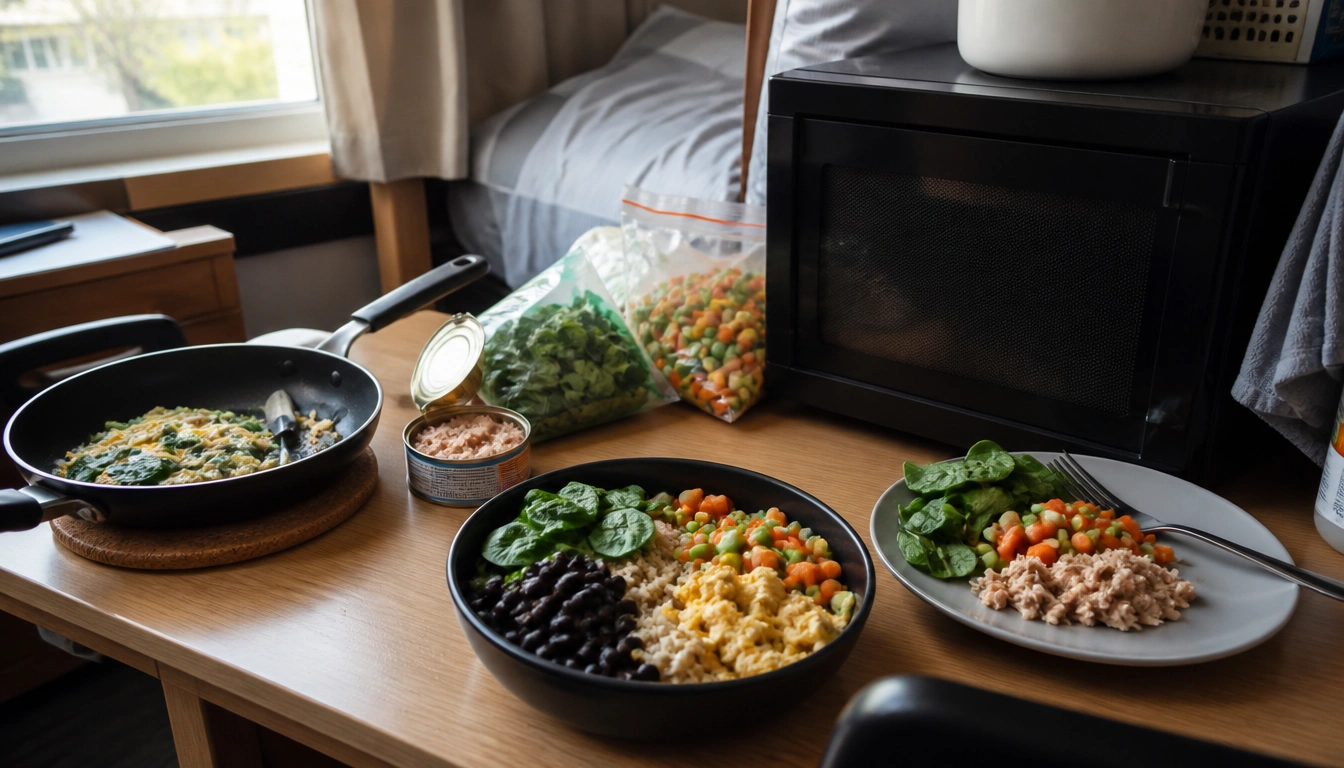
A cheap, quick, filling college dinner is usually a simple plate built from a grain, a protein, and vegetables. Think microwave grain bowls, egg scrambles, tuna pasta, or tofu with roasted vegetables. Frozen, canned, and pre-washed foods can make those meals realistic in a dorm or small apartment, while also reducing waste, cleanup, and the chance that food spoils before you use it.
Key Takeaways
- Use the plate-balance model: half vegetables or fruit, a quarter protein, and a quarter whole grains for dinners that feel more complete.
- Frozen, canned, and pre-washed foods can be just as practical as fresh produce for dorm cooking, especially when time, space, and storage are limited.
- A microwave, one skillet, or a toaster oven is enough to make several balanced dinners if you keep a few flexible staples on hand.
- Shelf-stable foods like beans, tuna, pasta, rice, oats, salsa, and olive oil help you build multiple meals from the same small grocery haul.
- Shared kitchens need extra food safety care: label leftovers, refrigerate them promptly, and be cautious with foods that sit out too long.
- Vegetarian, vegan, gluten-free, and higher-protein versions are easy to make by swapping the protein, grain, or sauce—not the whole meal.
College student dinner challenges and the balance formula that helps
The best low-prep dinner ideas for college students are the ones that work when your schedule, budget, and kitchen are all working against you. Many students are cooking after class, after work, or between study sessions, often with a mini-fridge, a microwave, and maybe one shared burner. That means dinner needs to be cheap, fast, filling, and low-risk if plans change.
A reliable way to build that kind of meal is the plate balance model used in public health guidance: fill about half your plate or bowl with vegetables or fruit, a quarter with protein, and a quarter with whole grains or another high-fiber starch. According to the CDC, that pattern helps meals feel more satisfying and gives you a better mix of energy, fiber, and nutrients than a snacky dinner built mostly from chips, noodles, or sweets.
This is not about making everything from scratch. It is about using a structure. If you already have one grain, one protein, and one produce item, you can make dinner with very little skill. The rest is usually flavor: salsa, soy sauce, pesto, seasoning blends, olive oil, lemon juice, or hot sauce. That is enough to keep meals from getting boring without turning dinner into a project.
Dorm-friendly pantry and fridge staples to keep on hand
A small set of ingredients can cover a surprising number of dinners. The goal is to buy foods that last, travel well, and can be mixed and matched without much prep. For a dorm or small apartment, a practical starter list includes:
- Grains: microwave brown rice, instant quinoa, whole-grain pasta, oats, whole-grain bread, tortillas
- Protein: canned beans, canned tuna or salmon, eggs, tofu, Greek yogurt, shelf-stable lentil packs, pre-cooked chicken strips if you eat meat
- Vegetables: frozen mixed vegetables, frozen broccoli, pre-washed greens, bagged slaw, canned tomatoes, canned corn
- Flavor and fat: olive oil, peanut butter, salsa, pesto, broth, mustard, soy sauce, garlic powder, chili flakes
- Extras that help meals feel complete: cheese, nuts, seeds, fruit, hummus, avocado when you know you will use it quickly
Frozen and canned foods matter here. They are often picked at peak ripeness, stored safely, and ready when you are. Harvard nutrition guidance notes that frozen produce can be a very practical way to keep vegetables around without watching them rot in a mini-fridge. Canned beans and fish also make it easy to build a meal with protein and fiber in minutes.
Microwave grain-and-bean bowl and skillet egg scramble
Microwave grain-and-bean bowl: Start with a pouch of brown rice or quinoa, or any pre-cooked grain you can heat quickly. Add rinsed canned black beans, chickpeas, or lentils. Top with frozen vegetables microwaved until hot, or a handful of pre-washed spinach that wilts from the heat. Add salsa, hot sauce, olive oil, or a spoonful of yogurt if you want it creamier. This works because the grain gives you steady carbs, the beans add protein and fiber, and the vegetables make the meal feel like dinner instead of a side dish.
Skillet egg and vegetable scramble: If you have one skillet, eggs are one of the easiest dinner proteins available. Cook frozen peppers and onions, frozen spinach, or leftover vegetables first, then add beaten eggs and stir until set. Serve with toast, tortillas, or leftover rice. This is one of the simplest ways to get a filling meal with very little cleanup. If your dorm only allows a microwave, eggs can still work in a microwave-safe mug or bowl, though they need careful cooking and stirring to avoid uneven texture.
Both meals are flexible. If you are hungrier, add more vegetables, another egg, or more beans. If you have more time, add cheese, avocado, or a side of fruit. The point is not gourmet cooking; it is making a dinner that is cheap, balanced, and repeatable.
Canned tuna or salmon pasta and tofu or chicken with roasted vegetables
Upgraded canned tuna or salmon pasta: Cook whole-grain pasta, then stir in canned tuna or salmon, frozen peas, or another quick-cooking vegetable. A little olive oil, lemon, black pepper, garlic powder, or pesto can make the dish taste intentional instead of improvised. If you only have a microwave, use microwaveable pasta cups or heat a pasta bowl in stages. If you have a skillet, you can toss everything together in one pan after the pasta drains. This meal works well because the pasta gives you energy, the fish adds protein, and salmon or tuna can bring in omega-3 fats without extra prep.
Tofu or chicken with roasted vegetables: If you have a toaster oven or standard oven, toss tofu cubes or pre-cooked chicken strips with broccoli, carrots, cauliflower, or bell peppers. Use a little oil and seasoning, then roast on a foil-lined tray. If you only have a microwave, use frozen vegetables and pre-cooked tofu or chicken instead, then season after heating. The flavor changes, but the structure stays the same: protein plus vegetables plus a carb if you want one, such as rice, bread, or tortillas.
These dinners are useful because they can be made from the same small set of groceries. A bag of frozen broccoli, a box of pasta, a can of fish, and a block of tofu may sound plain, but together they can cover several meals across the week.
How to mix and match ingredients across the week without getting bored
Students often get stuck because they buy ingredients for one recipe and then stop there. A better approach is to buy components that can shift between meals. One grain, one or two proteins, two or three vegetables, and a few sauces can create many combinations.
For example, rice can become a grain bowl one night, a side for eggs another night, and a base for a quick stir-fry later in the week. Beans can go into a bowl, a quesadilla, or a salad. Frozen vegetables can appear in pasta, scrambled eggs, soup, or a microwaved rice bowl. Tofu can be pan-seared, baked, or cubed into a broth-based meal. Tuna can be pasta, a sandwich filling, or mixed into a grain bowl.
Small changes in flavor help too. Use salsa and cumin for one dinner, soy sauce and sesame oil for another, or pesto and lemon for a third. If you keep the building blocks stable and rotate the seasonings, the meals feel different even when the ingredient list is short.
Budget and food-waste tips for fresh, frozen, and canned ingredients
Fresh produce is great when you will eat it quickly, but it is not always the smartest choice for a student schedule. If you have a tiny fridge, irregular meal times, and busy weekends, fresh vegetables can spoil before you use them. Frozen, canned, and pre-washed foods often make more sense because they last longer and are ready when you are. That reduces waste and usually reduces total cost over time.
Some good budget strategies are simple:
- Buy one or two versatile proteins instead of several specialty items.
- Choose frozen vegetables when you know your week will be busy.
- Pick canned beans and tuna for meals that need no cooking at all.
- Use pre-washed greens only if you will eat them soon.
- Keep a few shelf-stable sauces so bland ingredients do not get wasted.
According to the CDC and Harvard nutrition guidance, minimally processed staples can be a practical way to reduce reliance on ultra-processed convenience foods. That does not mean every meal must be from scratch. It means your shortcut foods should still support the same basic pattern: protein, fiber, and produce. For college cooking, convenience is not the enemy. Poorly planned convenience is.
Dorm kitchen safety and leftover storage basics
Shared kitchens and mini-fridges create extra food safety problems. Crowded shelves, warm fridge zones, and unlabeled containers make it easy to forget what you cooked or how long it has been there. The NHS and CDC both recommend basic temperature and timing habits to keep leftovers safer.
Use these habits consistently:
- Refrigerate cooked food soon after eating, rather than leaving it out while you study.
- Do not let perishable food sit at room temperature for more than two hours.
- Label leftovers with the date so they do not become mystery containers.
- Store food in shallow containers so it cools faster.
- Keep raw meat, seafood, and ready-to-eat foods separated when possible.
In a shared fridge, place your food where it is less likely to be knocked over, spilled, or forgotten. If a container smells off, looks strange, or has been sitting too long, discard it. Food poisoning can derail a week more than a skipped dinner can.
Mini-fridges are useful, but they are not spacious or always evenly cold. That is another reason frozen vegetables, shelf-stable grains, and canned proteins are so helpful. They reduce how much perishable food you need to manage at once.
Easy swaps for vegetarian, vegan, gluten-free, or high-protein needs
The same dinner template can fit many dietary needs if you swap the protein or grain instead of rebuilding the whole meal.
- Vegetarian: use eggs, Greek yogurt, beans, lentils, tofu, or cheese.
- Vegan: use beans, lentils, tofu, edamame, nut butter, and plant-based yogurt or cheese if you like them.
- Gluten-free: use rice, quinoa, corn tortillas, potatoes, or gluten-free pasta instead of wheat-based grains.
- Higher-protein: add eggs, tuna, salmon, chicken, tofu, cottage cheese, Greek yogurt, or an extra serving of beans.
If you have a serious food allergy, celiac disease, or another medical restriction, ingredient labels matter more than convenience. University health services or a registered dietitian can help with individualized advice if your situation is more complex than a basic swap. For most students, though, the same meal ideas still work: grain, protein, vegetables, and flavor. The details just shift to match your needs.
Frequently Asked Questions
What are the best low-prep dinners with only a microwave?
Microwave grain-and-bean bowls, instant rice with frozen vegetables, mug eggs, and reheated pasta with canned tuna or salmon are all realistic options. The best microwave dinners combine a grain, a protein, and a vegetable so they feel more filling than a snack.
How can college students build a balanced dinner without much cooking skill?
Use a simple plate structure: half vegetables, a quarter protein, and a quarter grains or starchy food. Then rely on shortcuts like frozen vegetables, canned beans, microwave grains, eggs, or pre-cooked proteins. You are mostly assembling, not cooking from scratch.
What shelf-stable foods work best for fast student meals?
Canned beans, tuna, salmon, tomatoes, corn, pasta, rice, oats, tortillas, nut butter, olive oil, salsa, and seasoning blends are especially useful. They last well, require little prep, and can be combined into several different dinners.
How do frozen and canned foods compare with fresh produce for dorm cooking?
Frozen and canned foods can be very practical for students because they reduce spoilage, save time, and still provide useful nutrients. Fresh produce is great when you will use it quickly, but frozen vegetables and canned beans are often more realistic in a mini-fridge setup.
What are the safest ways to store leftovers in a shared fridge?
Put leftovers away soon after eating, keep them in labeled containers, and avoid leaving them out longer than two hours. Store them where they will not be forgotten or knocked over, and throw them out if they smell off, look strange, or have been stored too long.
The Bottom Line
Cheap student dinners do not need to be elaborate to be useful. If you keep a few grains, proteins, vegetables, and sauces on hand, you can turn a microwave, one skillet, or a toaster oven into a workable dinner system.
Frozen, canned, and pre-washed foods are not second-rate shortcuts in this setting; they are often the most realistic way to eat well on a student schedule. They help you waste less, clean less, and still build meals that satisfy.
The most sustainable approach is to repeat a few balanced templates and change the flavors. That keeps shopping simple, protects your budget, and makes dinner easier to manage during busy weeks.
Medical disclaimer
Medical disclaimer: This content is for educational and informational purposes only and is not a substitute for professional medical advice, diagnosis, or treatment. Dietary needs and supplement suitability vary by individual.
Sources
- Centers for Disease Control and Prevention (CDC) — cdc.gov. Accessed October 2026.
- Centers for Disease Control and Prevention (CDC) — cdc.gov. Accessed October 2026.
- National Health Service (NHS) — gloshospitals.nhs.uk. Accessed October 2026.
- Academic Research Institution — rochester.edu. Accessed October 2026.
- Academic Research Institution — harvard.edu. Accessed October 2026.
