
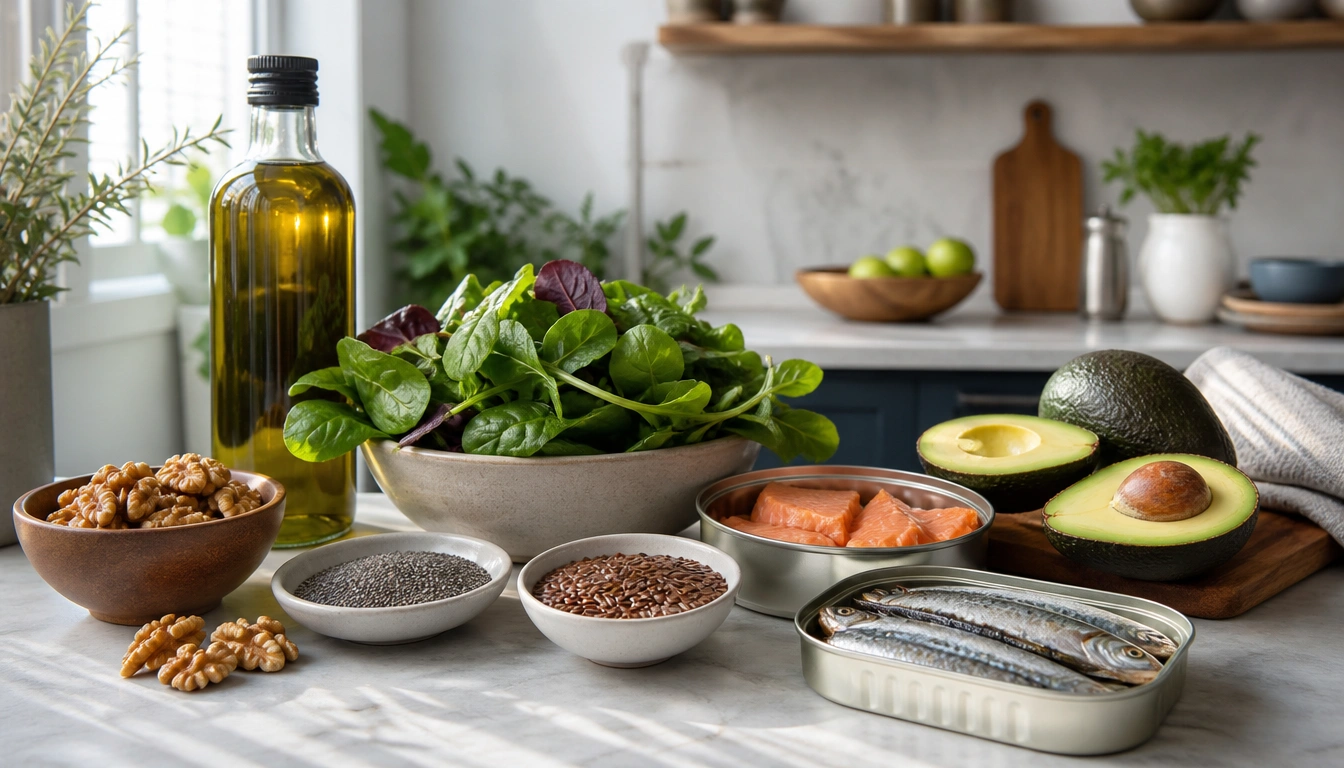
Adults over 50 should prioritize unsaturated fats at the grocery store: olive oil, canola oil, avocados, nuts, seeds, and fatty fish such as salmon or sardines. These choices can help replace saturated fats that raise LDL cholesterol, while also supporting fullness, vitamin absorption, and overall cardiometabolic health. The main goal is not to eat more fat, but to choose better fat sources and keep portions sensible.
Key Takeaways
- Choose whole-food fats first: fish, nuts, seeds, avocados, and liquid plant oils are the most useful grocery staples for adults over 50.
- Fat quality matters more than total fat. Replacing saturated fat with unsaturated fat can help lower LDL cholesterol and support heart health.
- Healthy fats can help with satiety and blood sugar control, but older adults still need portion awareness because calorie needs often decline with age.
- Fat helps absorb vitamins A, D, E, and K, so very low-fat eating can work against nutrient status in some older adults.
- Food should usually come before supplements; omega-3 supplements deserve medication review if you take blood thinners or have complex medical conditions.
- Budget-friendly options like canned salmon, sardines, store-brand oils, frozen fish, and pantry nuts make healthy-fat eating more realistic.
A grocery-first shopping framework for healthy fats
For adults over 50, the easiest way to shop for healthy fats is to think by grocery store section rather than by diet trend. Start in the produce aisle, where avocados add monounsaturated fat plus fiber. In the seafood case or canned-fish aisle, choose salmon, sardines, trout, mackerel, or herring. In the nuts and seeds aisle, buy walnuts, almonds, chia, flax, and pumpkin seeds. In the oil section, look for extra virgin olive oil, canola oil, avocado oil, and other liquid plant oils.
This approach works because it keeps the focus on foods that bring more than just fat. As the Dietary Guidelines for Americans and the American Heart Association emphasize, the best fats usually come packaged with other useful nutrients, not refined starch, added sugar, or excess sodium. If a fat source also offers protein, fiber, or omega-3s, it is usually doing more work for your health.
For a simple weekly cart, build meals around one or two fat sources you will actually use. For example: olive oil for cooking, a bag of walnuts for snacks, canned salmon for lunches, and avocados for toast or salads. That small list covers most of the practical needs without turning shopping into a specialty project.
Why adults over 50 need a different fat strategy
After 50, many people see a shift in cholesterol patterns, calorie needs, and cardiovascular risk. LDL cholesterol often rises with age, and heart disease risk becomes more common over time. That makes fat quality especially important. Research and guideline-based advice consistently support replacing saturated fats with unsaturated fats to help improve lipid patterns, especially LDL cholesterol.
At the same time, older adults often need fewer calories than they did in midlife. Fat is energy dense, so even healthy fats can add up quickly. A handful of nuts, a generous pour of oil, and half an avocado can make a meal more satisfying, but all of them count toward daily calories. That is why the goal is balance, not restriction for its own sake.
Healthy fats also matter because they support the absorption of vitamins A, D, E, and K. That becomes more relevant if appetite is lower, food variety is limited, or micronutrient status is a concern. In other words, fats are not only a source of calories. They help the body use other nutrients well.
Best healthy fats to buy
Avocados are one of the simplest grocery wins. They provide monounsaturated fat, fiber, and a creamy texture that can replace butter, mayonnaise-heavy spreads, or creamy toppings. Use them on toast, in salads, or as a side with eggs or beans.
Fatty fish such as salmon, sardines, trout, mackerel, and herring are among the best food sources of EPA and DHA omega-3 fats. The NIH and major heart organizations support eating fish as part of a heart-healthy pattern. These fats are linked to cardiovascular benefits and support brain structure and function.
Nuts and seeds are useful because they are shelf-stable, easy to portion, and versatile. Walnuts are a standout for omega-3 fats. Flax and chia offer plant-based omega-3s, while almonds and pumpkin seeds add crunch, minerals, and healthy unsaturated fats. Ground flax or chia can be stirred into oatmeal, yogurt, or smoothies.
Liquid plant oils such as extra virgin olive oil and canola oil are practical everyday cooking fats. Use them for sautéing, roasting, salad dressings, and simple pan cooking. They are usually better choices than butter, lard, or tropical oils when the goal is to lower saturated fat intake.
What to limit or swap out
Some of the biggest saturated-fat sources in a typical cart are not obvious. Butter-heavy spreads, processed meats, cream-based sauces, commercial baked goods, and many ultra-processed snack foods can raise saturated fat while adding little nutritional value. Coconut oil and palm oil also contain more saturated fat than many people realize, so they are best treated as occasional ingredients rather than everyday staples.
Look at what these foods displace. A buttery croissant, sausage-heavy breakfast sandwich, or creamy frozen entrée may crowd out foods that support heart and metabolic health. You do not have to avoid every item forever, but making them routine choices works against the goal of lowering LDL cholesterol.
Swaps help more than subtraction. Try olive oil instead of butter for roasting vegetables, hummus or avocado instead of cream cheese on toast, and tuna or salmon salad made with olive oil-based dressing instead of deli meats and heavy mayo. The point is to move toward fats that fit a more protective eating pattern.
How to use healthy fats without overdoing calories
Healthy fats can help with fullness, which is useful if appetite is smaller or meals leave you hungry soon after. They also slow digestion enough to make meals feel more satisfying. But because fats are calorie dense, portion size still matters. A few practical cues help: a small handful of nuts, a spoonful or two of seeds, a quarter to half avocado, or a measured drizzle of oil is often enough.
Pair fats with protein and fiber for better balance. For example, add walnuts to plain yogurt, olive oil to beans and vegetables, or avocado to eggs and whole-grain toast. This combination can help with satiety and may soften blood sugar spikes after meals. That matters for adults managing prediabetes, type 2 diabetes, or metabolic syndrome.
Simple substitutions are often easier than major recipe changes. Use olive oil in place of butter in cooking, replace croutons with seeds on salads, choose fish instead of processed meat for dinner, and swap pastry snacks for nuts and fruit. These changes are small enough to repeat and big enough to matter over time.
Label-reading guide: Check the ingredient list first. If the package starts with refined flour, sugar, or a long list of oils, it is probably not the best fat choice. Look for lower saturated fat grams when comparing similar foods, but also pay attention to serving size. A small serving can make a product look healthier than it really is. Better clues include whole-food ingredients, minimal processing, and a fat source that is clearly plant-based or marine-based rather than hydrogenated or heavily processed.
Budget and convenience strategies
Healthy fats do not have to mean specialty products. Canned salmon and sardines are some of the best budget options because they are shelf-stable, fast to use, and rich in omega-3 fats. Frozen salmon, trout, or mixed seafood can also be more affordable than fresh fish and reduces food waste. Store-brand olive oil and canola oil are usually solid everyday picks, and plain nuts or seeds from bulk bins can stretch further than flavored snack packs.
Pantry staples make the biggest difference when energy is limited. Keep walnuts, ground flax, chia, canned fish, olive oil, and a few jars of unsalted nut butter on hand. Then build quick meals around them: sardines on whole-grain toast, yogurt with chia and walnuts, beans with olive oil and herbs, or canned salmon mixed into a salad.
If chewing is difficult, choose softer options such as avocado, nut butters, canned fish, or finely ground seeds. If cooking feels tiring, lean on foods that require little preparation. The best healthy-fat grocery list is the one you will actually use week after week.
Safety and special situations
Food should usually come before supplements, especially for adults who want a practical way to improve diet quality. Whole foods provide fat along with protein, fiber, minerals, and other nutrients that supplements do not replace. Omega-3 supplements may be useful in certain situations, but they should not be treated as automatic upgrades over eating fish.
If you take warfarin, other anticoagulants, or antiplatelet medications, ask a clinician before using fish oil or other concentrated omega-3 supplements. Higher-dose omega-3 supplements can affect bleeding risk and may need medication review. This is especially important if you already have a complex medication list.
Personalized advice is also important if you have gallbladder disease, pancreatic disease, exocrine pancreatic insufficiency, or fat malabsorption. In those cases, the right amount and type of fat may be different from general advice. If you have a history of severe high LDL cholesterol, familial hypercholesterolemia, or established heart disease, use grocery changes as support for your treatment plan, not as a replacement for it. The same applies if digestive symptoms worsen after adding more fat.
Optional comparison table: healthy-fat grocery picks and common swaps
| Choose more often | Swap from | Why it helps |
|---|---|---|
| Olive oil or canola oil | Butter or lard | Usually lowers saturated fat and supports heart-friendly cooking |
| Salmon or sardines | Processed meats | Provides omega-3 fats without the same saturated-fat load |
| Avocado | Cream cheese or butter spreads | Adds monounsaturated fat and fiber |
| Walnuts, chia, flax | Croutons or snack chips | Adds healthy fats with more nutrients and better satiety |
| Frozen fish or canned fish | Fast-food fried seafood | More practical, often cheaper, and usually less saturated fat |
Use the table as a shopping shortcut, not a strict rulebook. The best choice is the one that fits your budget, digestion, and cooking routine.
Frequently Asked Questions
What are the best food sources of healthy fats for adults over 50?
The most useful food sources are fatty fish, olive oil, canola oil, avocados, walnuts, chia, flax, and other unsalted nuts and seeds. These foods provide unsaturated fats and, in the case of fish, omega-3s that support heart and brain health.
How much saturated fat should older adults limit in their daily diet?
General guidance from major heart and nutrition organizations is to keep saturated fat under 10% of daily calories. For people with high LDL cholesterol or established cardiovascular disease, a lower target is often advised by clinicians.
Are fish oil or omega-3 supplements better than eating fatty fish?
For most people, eating fatty fish is the better first choice because it provides omega-3s plus protein and other nutrients. Supplements may be considered in specific situations, but they should be reviewed with a clinician if you take blood thinners or have medical conditions that affect fat handling.
How can I spot hidden saturated fats on a food label?
Check both the ingredient list and the nutrition panel. Watch for butter, cream, coconut oil, palm oil, lard, and processed meat ingredients. Also compare serving sizes, because a product can appear low in saturated fat if the serving is very small.
What budget-friendly healthy fat foods can I buy each week?
Canned salmon, sardines, store-brand olive oil, canola oil, frozen fish, peanuts or walnuts, chia, flax, and plain nut butter are all practical options. They are shelf-stable, versatile, and usually cheaper than specialty products.
The Bottom Line
For adults over 50, the smartest grocery move is to buy more unsaturated fats and fewer foods that hide saturated fat. That means leaning on fish, nuts, seeds, avocados, and liquid plant oils while limiting butter-heavy spreads, processed meats, commercial baked goods, and creamy sauces.
Healthy fats can support LDL management, fullness, vitamin absorption, and overall heart and metabolic health, but portions still matter because calorie needs often decline with age. Budget-friendly staples such as canned salmon, sardines, frozen fish, and store-brand oils make this pattern much easier to maintain.
If you take blood thinners, have gallbladder or pancreatic problems, or suspect fat malabsorption, get individualized advice before making major changes or starting omega-3 supplements.
Medical disclaimer
Medical disclaimer: This content is for educational and informational purposes only and is not a substitute for professional medical advice, diagnosis, or treatment. Dietary needs and supplement suitability vary by individual.
Sources
- U.S. Government / Health Authority — dietaryguidelines.gov. Accessed October 2026.
- National Institutes of Health (NIH) — nih.gov. Accessed October 2026.
- Academic Research Institution — harvard.edu. Accessed October 2026.
- Academic / Medical Research Institution — heart.org. Accessed October 2026.
