
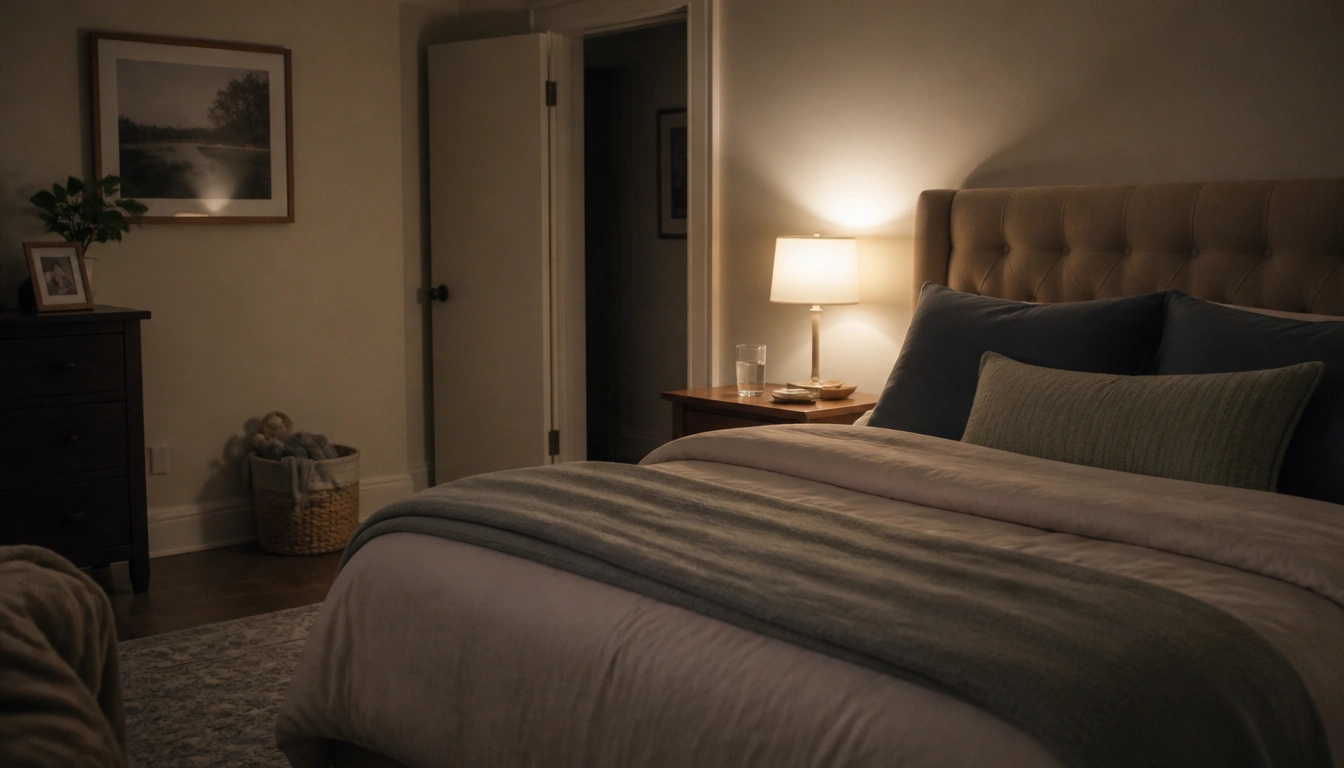
If you only have a few minutes, start by clearing the bed, the floor path, and the nightstand. Then move work items, kids’ gear, laundry piles, and charging devices out of sight or out of the bedroom. A calmer, darker, cooler sleep space can reduce bedtime arousal and make it easier to fall asleep, but it will not fix chronic insomnia or sleep apnea on its own.
Key Takeaways
- Begin with the sleep zone, not the whole room: bed surface, floor path, and nightstand essentials.
- Remove the biggest wakefulness cues first—work materials, kid clutter, laundry, and charging devices.
- A small, consistent reset is more realistic for busy parents than a full-room organizing project.
- Darkness, cooler temperature, and less noise can help sleep even if storage is limited.
- If snoring, gasping, restless legs, or persistent insomnia are present, decluttering is not enough and medical follow-up matters.
Why bedroom clutter affects sleep
A bedroom declutter plan for sleep works because clutter is not just a storage problem. It is also a sleep cue problem. Visual clutter acts like low-grade mental background noise. Piles of laundry, paperwork, toys, and half-finished tasks can remind the brain of what still needs to be done, which makes it harder to shift into a calmer state at night.
Sleep medicine and public health guidance also emphasize stimulus control: the bed and bedroom should train the brain to expect sleep, not work, problem-solving, or scrolling. When a bedroom becomes a place for laptops, toy sorting, or late-night catch-up tasks, the room starts to signal alertness instead of rest. That association can make sleep onset slower and bedtime feel more effortful.
There is also a practical physical side. Clutter can trap dust, narrow walking paths, and create more visual activity in the room. For parents already running on low sleep, even small sources of friction can matter. The goal is not design perfection. The goal is to reduce the cues that keep the brain “on” when it needs to power down.
The 80/20 rule for busy parents
Busy parents do not need a perfect bedroom to sleep better. They need the few changes that give the biggest return tonight. The 80/20 version of bedroom decluttering is simple: clear the area closest to where you sleep, remove obvious wakefulness cues, and make the room feel less busy to the eyes.
If your energy is limited, do not start with closets, drawers, or decorative projects. Start with the items you see every night. The fastest wins usually come from taking out work materials, getting laundry off visible surfaces, moving kid clutter elsewhere, and stopping device charging at the bedside. Those changes are small, but they directly reduce the signals that tell your brain to stay alert.
Parents often feel pressure to “reset the whole room” before bed. That can backfire when you are exhausted. A better rule is to improve the sleep zone first and leave the rest for another day. A room that is 30 percent calmer is useful; a room that is 100 percent organized but never happens is not.
Clear the sleep zone first
Start with the space you use most: the bed, the floor path beside it, and the nightstand. If the bed is covered with clothes, toys, folded towels, or mail, clear it first. A visually clear bed is one of the strongest signals that the room is ready for sleep.
Next, open a safe walking path from the door to the bed and from the bed to the bathroom or child’s room if needed. This matters for middle-of-the-night wakeups, especially in homes with small children. Fewer items on the floor also means fewer chances to trip when you are half-asleep.
Finally, limit the nightstand to essentials. Most parents do best with just a lamp, water, and perhaps a book or sleep aid that is not a screen. If the nightstand has become a dumping spot, treat it as a tiny surface with a strict purpose rather than a catchall. A smaller surface is easier to keep calm, and it helps the room look and feel less active.
If you only do one thing tonight, make the sleep zone look finished. That one reset can change how the room feels when you lie down.
Remove the biggest sleep saboteurs
Some objects are more disruptive than others because they reinforce daytime thinking. Work items are usually the first thing to remove. A laptop, briefcase, invoices, or a phone charger with work notifications can keep the brain in problem-solving mode. Even if you do not use them after hours, seeing them can be enough to keep the room mentally tied to work.
Kids’ gear is another common culprit in parent bedrooms. Diapers, toys, books, spare pajamas, baby monitors, and developmental clutter can all make the room feel active rather than restful. If the item is needed for nighttime care, keep only what is truly necessary within reach. Everything else should live elsewhere.
Laundry piles are especially common because they seem temporary. But “temporary” clutter still affects the room visually. A chair covered with clean clothes, a basket that never gets emptied, or folded laundry waiting for the next step all send unfinished-task cues. If laundry has to stay in the bedroom at all, keep it contained, hidden, and out of sight rather than spread across surfaces.
Charging devices are worth special attention. Phones, tablets, and digital clocks can pull focus and encourage checking behavior. Move chargers away from the bed if possible, or charge devices outside the room. The less the bedside feels like a command center, the easier it is for the brain to disconnect.
Improve the sensory environment
Decluttering works best when the room also feels physically sleep-friendly. Light is one of the most important variables. A darker room supports melatonin release and helps the body move toward sleep. Use room-darkening curtains, close blinds fully, and turn clock faces away from the bed if glowing numbers catch your eye.
Temperature matters too. Sleep usually comes easier in a cool room, and public health guidance often recommends keeping the bedroom on the cooler side rather than warm and stuffy. If the room feels too hot, start with low-effort changes: lighter bedding, a fan, or lowering the thermostat if that is practical for your home.
Noise is the other common sleep disruptor. If household sounds, traffic, pets, or early-morning child wakeups interrupt your sleep, a steady background sound can help mask sudden noise changes. That does not require a perfect soundproof bedroom. It just means reducing the contrast between silence and abrupt disruptions.
If your room is cluttered because it is also a nursery or shared family space, sensory changes may matter even more than storage solutions. Darkness, predictable sound, and a cooler feel can improve sleep even when the room still has a practical family setup.
Create a low-effort maintenance system
The best decluttering plan is one you can keep doing while tired. A good maintenance system should be simple enough to work on the worst week, not just the best one. One of the easiest rules is one-in, one-out: when a new item comes into the bedroom, something else leaves. That works for books, decorative items, and especially kid gear that tends to multiply quickly.
Another useful rule is to keep surfaces limited to essentials. Nightstands, dressers, and window ledges become clutter magnets when they are allowed to hold everything. Decide in advance what belongs there and remove the rest. Fewer items on surfaces means less to sort later.
A nightly 10-minute reset can help maintain progress without turning bedtime into a project. The goal is not a full cleaning routine. It is a short sweep: put away obvious items, clear the bed, return objects to their home, and collect anything that belongs outside the room. If you are too exhausted, do the smallest version possible. Consistency matters more than intensity.
Families often do better when the bedroom has one or two “landing spots” for items that would otherwise spread. A basket outside the room or a small bin for next-day items can keep the room from becoming a permanent holding zone. The win is not zero clutter. The win is keeping clutter from taking over the sleep zone.
Parent-specific exceptions
Parents of infants and toddlers rarely live in a magazine-ready bedroom, and that is fine. A fully minimalist room may not be realistic when you are managing night feeds, diapers, co-sleeping, or a nursery setup next to the main bedroom. In those seasons, prioritize the immediate sleep zone instead of the entire room.
For co-sleeping or bedside care, keep only the essentials within arm’s reach and make the rest of the room as calm as possible. That might mean accepting some nursery gear, a bassinet, or a baby monitor in the room while still clearing unrelated clutter. The goal is not to remove every child-related object. The goal is to keep the room from feeling busy all over.
Postpartum reality deserves special care. When sleep is fragmented and emotions are more sensitive, ambitious organizing can feel impossible. That is not a failure. In that phase, focus on the changes that require the least effort and offer the most relief: remove visible clutter from the bed and nightstand, improve darkness, and reduce device use in bed.
Shared bedrooms also call for compromise. If a partner needs a book, medical device, or work item nearby, try to confine it to one small section rather than letting it spread. A small, clearly defined sleep zone works better than trying to control the entire room at once.
When decluttering is not enough
Bedroom changes can support sleep, but they cannot solve every sleep problem. If you have trouble falling asleep, staying asleep, or waking unrefreshed for weeks on end, the issue may be more than the room. Chronic insomnia often needs behavioral treatment such as cognitive behavioral therapy for insomnia, along with a broader review of habits, stress, and health factors.
Certain symptoms deserve medical follow-up rather than more organizing. Loud snoring, gasping, choking, or witnessed breathing pauses can point to sleep apnea. An urge to move the legs at night, uncomfortable crawling sensations, or persistent restlessness can suggest restless legs syndrome. If postpartum anxiety or depression is affecting sleep, that also needs professional care.
Seek evaluation if sleep problems are severe, persistent, or affecting daytime safety and functioning. Decluttering can make the room more sleep-friendly, but it should not be used as a substitute for diagnosis when symptoms suggest a medical sleep disorder or a mood-related issue. The right next step may be treatment, not another organizing session.
Frequently Asked Questions
How does bedroom clutter affect sleep quality and sleep onset?
Clutter can keep the brain alert by signaling unfinished tasks and making the room feel active instead of restful. That visual noise can increase bedtime arousal and slow sleep onset. It can also reinforce the idea that the bedroom is for work or sorting rather than sleep.
What are the fastest decluttering changes that make the biggest sleep difference?
The fastest wins are clearing the bed, removing items from the floor path, and stripping the nightstand down to essentials. After that, move work materials, laundry piles, kid clutter, and charging devices out of the immediate sleep area. Those changes reduce the strongest wakefulness cues first.
What should busy parents keep in the bedroom versus move out?
Keep only what supports sleep or necessary nighttime caregiving: a bed, basic lighting, water, and any truly needed child-care items. Move out work items, extra toys, overflow laundry, paperwork, and devices that encourage scrolling or email checking. Aim for a room with a clear sleep purpose.
How can I reduce bedroom clutter if I have toddlers, a nursery setup, or co-sleeping needs?
Use a sleep-zone approach. Keep the immediate area around the bed calm and clear, and accept that some child-related gear may need to stay nearby. Store nonessential items elsewhere, limit what sits on surfaces, and focus on darkness, quiet, and a safe path through the room.
Which bedroom changes matter more than decluttering if I’m too tired to organize tonight?
If you have no energy for organizing, prioritize darkness, a cooler room, and fewer screens or charging devices by the bed. Those changes can help sleep even when clutter remains. A short reset of the bed and floor path is still useful if you can manage it.
The Bottom Line
For busy parents, the best bedroom declutter plan for sleep is small, targeted, and repeatable. Clear the bed, open the floor path, remove work and kid clutter from the sleep zone, and keep the nightstand simple.
The biggest improvements usually come from reducing visual noise and removing cues that keep the brain in “day mode.” Darkness, a cooler room, and less device use can strengthen that effect without requiring a full-room makeover.
If sleep problems persist despite a calmer bedroom, or if you have snoring, gasping, restless legs, or postpartum mood symptoms, get medical help. Decluttering supports sleep, but it is not a substitute for evaluation when a sleep disorder may be present.
Medical disclaimer
Medical disclaimer: This content is for educational and informational purposes only and is not a substitute for professional medical advice, diagnosis, or treatment. Dietary needs and supplement suitability vary by individual.
Sources
- National Health Service (NHS) — uhb.nhs.uk. Accessed November 2026.
- Centers for Disease Control and Prevention (CDC) — cdc.gov. Accessed November 2026.
- National Health Service (NHS) — www.nhs.uk. Accessed November 2026.
- National Health Service (NHS) — www.nhs.uk. Accessed November 2026.
- Academic Research Institution — harvard.edu. Accessed November 2026.
