
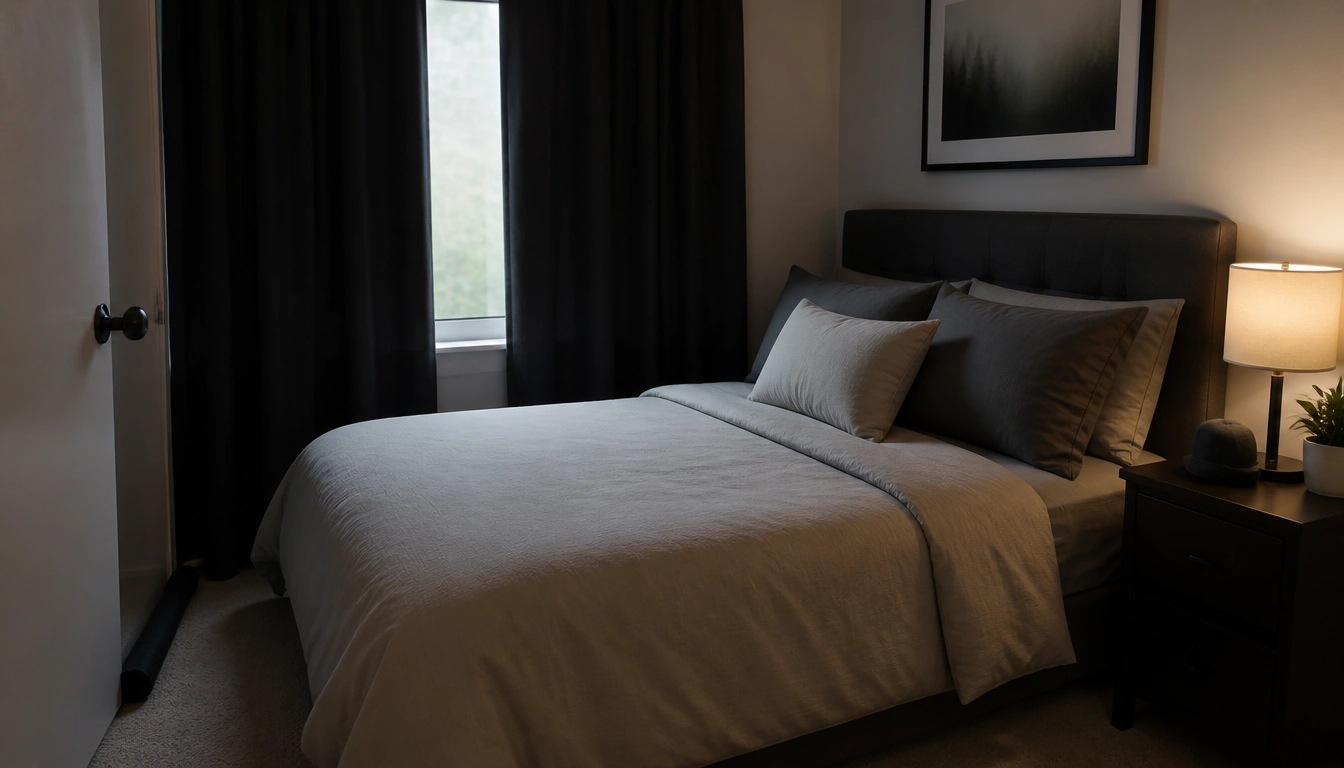
For shift workers, the fastest way to improve daytime sleep is to declutter the bedroom in a way that reduces light, noise, and mental stimulation. Start with blackout and door-gap fixes, then clear glowing electronics, work materials, and visual clutter from near the bed. Keep the room cool and make the bed a sleep-only space whenever possible. If sleep stays poor despite these changes, a medical evaluation may be needed.
Key Takeaways
- Shift workers face daytime sleep challenges from both circadian alertness and household/environmental disruption, so bedroom decluttering has an outsized effect.
- Start with the biggest sleep disruptors first: window light leaks, door gaps, glowing devices, and work items near the bed.
- A calm room is not just about looks; hard surfaces, clutter, and blocked airflow can worsen noise, heat, and discomfort.
- Keep phones, paperwork, and shift-related gear out of arm’s reach so the bed stays linked to sleep instead of alertness.
- Shared homes and rotating schedules can still work with a protected sleep window, clear communication, and a simple routine after each shift.
Why a decluttered bedroom matters more for shift workers than for daytime sleepers
After a night shift or rotating shift, your bedroom is not just a place to rest. It becomes the main defense against the body’s internal daytime alerting signals. According to the CDC and NIH, shift work can make sleep harder because light exposure, irregular schedules, and timing misalignment all push the brain toward wakefulness.
That is why decluttering matters more for shift workers than for someone who sleeps at night. Daytime sleep is already more vulnerable to sunlight, traffic, household movement, and the pressure to “stay alert a little longer.” Visual clutter, bright surfaces, and work reminders can keep the brain engaged just long enough to delay sleep onset and shorten recovery time.
Think of the bedroom as a recovery zone, not a multipurpose room. The less the room signals “activity,” the easier it is for the nervous system to downshift into sleep.
Start with the highest-impact changes first: light leaks, window coverings, and door gaps
If you only have time or money for a few changes, begin with light control. Light is one of the strongest signals to the circadian system, and the NIH notes that it can suppress melatonin and make daytime sleep harder.
Focus first on the places where light sneaks in:
- Cover windows with blackout curtains, blackout shades, or layered coverings that reach beyond the frame.
- Close gaps around curtain edges and remove objects from windowsills that prevent a tight seal.
- Block light under the bedroom door with a draft stopper or rolled towel.
- Check for tiny LEDs from chargers, printers, clocks, humidifiers, or power strips.
If the room is still too bright, add a sleep mask as a backup. For shift workers, this is not a luxury item; it is a practical way to protect the sleep window when daylight cannot be fully controlled.
Remove visual and electronic clutter that keeps the brain alert
Clutter works on the brain in two ways. It increases visual stimulation, and it gives the mind more unfinished “to-do” cues. That matters after a shift, when sleep pressure may already be fighting daytime alertness. A clean floor and a clear bedside area do not magically create sleep, but they reduce friction at the exact moment you need your body to power down.
Start with the visible field around the bed. Put away laundry piles, spare bags, receipts, medication boxes, and paperwork that do not need to be there. Store clothes behind closet doors or in drawers rather than in open stacks. Keep only sleep essentials near the bed, such as earplugs, water, or an alarm if needed.
Then remove electronic glow. Small lights on chargers, monitors, TVs, and devices can be surprisingly disruptive in a dark room. If a device must remain plugged in, reduce the light it gives off or move it out of view. The goal is not a perfect aesthetic; the goal is fewer cues that tell the brain to stay engaged.
Set up the room for quiet sleep: surfaces, soft materials, and sound masking
Shift workers often sleep when the rest of the household is active, so noise control is part of decluttering. Hard, empty rooms reflect sound. That can make hallway conversation, traffic, or appliance noise seem sharper than it would in a softer room.
Where possible, add materials that absorb sound rather than bounce it around. A thick rug, heavy curtains, a fabric headboard, or even extra soft furnishings can help reduce sharp noise. If the room is sparse, one or two well-placed soft items often help more than adding more furniture. The point is to make the room less echo-prone, not more crowded.
Check the practical details too. Make sure vents, radiators, fans, or air returns are not blocked by boxes or clothing. Clutter can limit airflow and make the room feel warmer, and a cool bedroom is one of the basic sleep supports emphasized by public health guidance. If outside noise is unpredictable, a fan or consistent white noise can help mask sudden spikes without making the room feel busy.
Create a dedicated sleep-only zone by removing work materials and limiting phone access
One of the most effective bedroom changes for shift workers is symbolic as well as practical: stop using the bed as a work surface. The bed should signal sleep, not emails, forms, texts, or planning. The CDC and NIH both support keeping the bed reserved for sleep and intimacy when possible.
Remove work-related items from the bedside and, ideally, from the bedroom itself. That includes uniforms, laptops, notebooks, shift schedules, badges, and paperwork. If those items stay within sight, they can keep the brain in “on duty” mode even when the body is tired.
Phones are the hardest exception because many people need them as an alarm. Keep the phone nearby only if necessary, but not within easy reach of the pillow. If you wake up, being able to grab the phone and scroll can fully reset alertness. A simple physical barrier, such as placing the phone across the room, can reduce that reflex without making you miss the alarm.
Adapt the plan for shared homes, rotating schedules, and limited budgets
Not every shift worker has a private room or a stable schedule. That does not make bedroom decluttering useless; it means the plan has to be more specific.
In shared homes, communicate your sleep window clearly. Let housemates or family members know when the bedroom needs to be dark and quiet, and ask for a closed-door rule during that period. A protected sleep window can be more helpful than trying to control the entire house. If your schedule changes often, create a repeating core block of sleep that stays as consistent as possible, even on days off, so your body has at least one anchor.
On a tight budget, start with the cheapest high-yield fixes: towel under the door, taped LED lights, rearranged furniture to reduce glare, and a sleep mask or earplugs if needed. In a small apartment, less furniture is often better than more storage. The aim is to remove what interferes with sleep, not to buy a perfect bedroom makeover.
Common mistakes that undo daytime sleep, including hidden light, noisy devices, and bed-as-workspace habits
Some problems are easy to miss because they do not look like “clutter” at first glance. A room can appear tidy and still sabotage sleep.
One common mistake is hidden light. Sunlight reflecting off mirrors, glossy furniture, light-colored walls, or electronics can keep the room brighter than it seems. Another is forgetting about noise sources such as vibrating chargers, humming appliances, or devices that click on and off during the day. If a fan or white noise machine helps, make sure it is placed so it masks sound rather than adding another distraction.
Another issue is the bed becoming a work zone by default. Folding laundry on the bed, answering messages from under the blanket, or paying bills there can weaken the brain’s association between bed and sleep. If hunger interrupts sleep after a shift, a light snack before bed may help some people avoid waking later; choose something simple rather than turning the bedroom into a second kitchen. If commute light is part of the problem, reducing morning light exposure on the way home can also help preserve your ability to fall asleep once you get back.
When decluttering is not enough and a medical sleep evaluation may be needed
A better bedroom can improve sleep, but it cannot fix every sleep problem. If you continue to have trouble falling asleep, staying asleep, or feeling alert after rest even after making environmental changes, it may be time to talk with a healthcare professional.
This is especially important if you have persistent excessive sleepiness, loud snoring, gasping during sleep, morning headaches, or repeated near-misses while driving after work. The CDC and NIH both emphasize that shift workers face real safety risks when sleep debt builds up. A sleep specialist or primary care clinician can look for shift work sleep disorder, insomnia, sleep apnea, or another condition that needs treatment.
Get help sooner if poor sleep is affecting work performance, mood, memory, or driving safety. Environmental changes are a strong first step, but they are not a substitute for medical care when symptoms are ongoing or severe.
Frequently Asked Questions
What should I remove from my bedroom first to improve sleep?
Start with anything that adds light, noise, or mental stimulation near the bed. That usually means glowing electronics, work papers, uniforms, laundry piles, and clutter on the nightstand. If you can only do one thing, make the area around the bed simpler and darker.
How do I make a bedroom dark enough for daytime sleep?
Use blackout curtains or blackout shades, close door gaps, and remove or cover small LED lights from devices. A sleep mask can help when sunlight still gets in. The goal is to reduce both direct light and reflected light.
What bedroom changes help block noise for shift workers?
Soft materials help most: rugs, curtains, upholstered furniture, and sound masking from a fan or white noise. Also check for noise leaks through doors and windows. If you share walls, moving the bed away from the noisiest side can help a little.
Why does keeping work stuff out of the bedroom matter for sleep?
Work items act like reminders to stay alert. When the bed is associated with emails, planning, or unfinished tasks, it is harder for the brain to switch into sleep mode. Keeping the bedroom sleep-focused supports a stronger mental boundary between work and rest.
What if I live with family or roommates and can’t control the whole house?
Focus on what you can control inside the bedroom and communicate a protected sleep window. Ask for a closed-door rule, reduce light leaks, and use a mask or earplugs if needed. Small, consistent boundaries often work better than trying to change everything at once.
The Bottom Line
For shift workers, a good sleep bedroom is less about decoration and more about removing barriers. Start with darkness, then quiet, then the visual and mental clutter that keeps the brain alert. Even a few targeted changes can make daytime sleep more efficient.
If you share space or rotate schedules, do not wait for a perfect setup. Protect a sleep window, ask for help from housemates, and keep the bed tied to sleep rather than work. If your sleep remains poor despite these changes, get evaluated for an underlying sleep disorder.
Environmental changes are a strong first step, but ongoing insomnia, severe sleepiness, or safety concerns deserve medical attention. The goal is not a flawless room; it is a room that gives your body the best chance to recover after a hard shift.
Medical disclaimer
Medical disclaimer: This content is for educational and informational purposes only and is not a substitute for professional medical advice, diagnosis, or treatment. Dietary needs and supplement suitability vary by individual.
Sources
- Centers for Disease Control and Prevention (CDC) — cdc.gov. Accessed November 2026.
- National Institutes of Health (NIH) — nih.gov. Accessed November 2026.
- National Health Service (NHS) — tims.nhs.uk. Accessed November 2026.
