
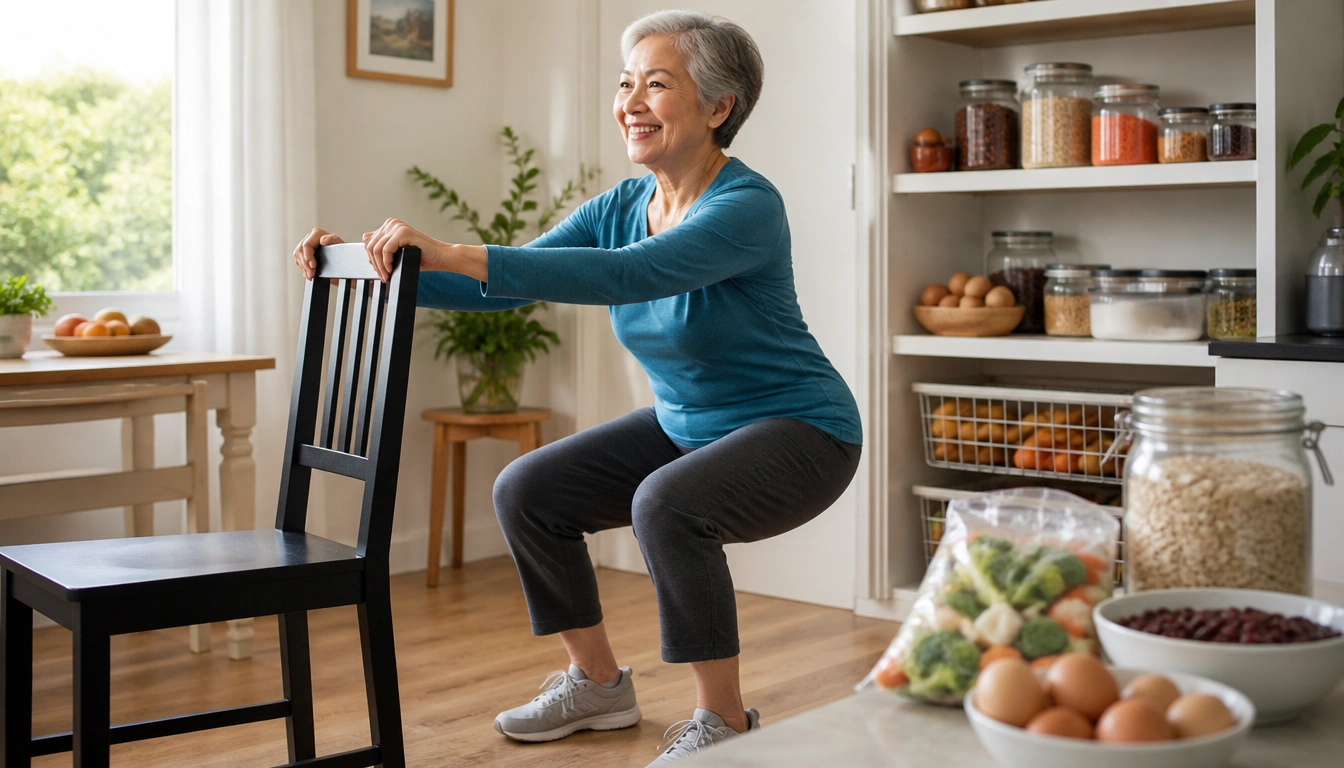
The most effective low-cost healthy habits for adults over 60 are regular walking or other safe aerobic movement, twice-weekly strength work, simple balance practice, budget-conscious meals built around beans, eggs, oats, frozen produce, and canned foods, and steady sleep and social routines. The safest place to start is with your current ability, not your age: begin at home, use support when needed, and progress gradually.
Key Takeaways
- Walking, chair squats, wall-supported balance drills, and household items for resistance can improve strength and stability without a gym.
- Start from your current function level. A frail 75-year-old and an active 75-year-old should not begin with the same routine.
- Frozen vegetables, canned beans, lentils, eggs, oats, and bulk grains can improve nutrition on a tight budget.
- Sleep often improves with free changes: a fixed wake time, morning daylight, less evening screen time, and a cool, dark room.
- If pain, dizziness, chest symptoms, unstable chronic disease, or repeated falls are issues, get medical guidance before pushing exercise harder.
Budget-friendly healthy aging priorities
The best low-cost healthy habits for adults over 60 are the ones that protect mobility, strength, heart health, sleep, and independence at the same time. According to the CDC and the National Institute on Aging, the biggest return usually comes from a small group of habits rather than from expensive products or complicated programs. For most people, the priorities are moving more, keeping muscles strong, eating enough protein and fiber, staying hydrated, sleeping consistently, and keeping socially connected.
It helps to choose a starting point based on function, not age. A person who already walks daily and does chores without much trouble can begin with longer walks, more repetitions, or a little more resistance. Someone with pain, frailty, balance problems, or long periods of sitting may need a shorter, slower, seated, or supported start. That is not “too late”; it is the right way to begin safely.
A low-cost movement plan can stay very simple. Walking is the easiest aerobic option for many people, but indoor hallway laps, mall walking, or marching in place can work too. For strength, chair squats, wall push-ups, step-ups on a sturdy step, or lifting filled water bottles can challenge major muscles. For balance, hold a counter while standing on one foot, shift weight from side to side, or practice heel-to-toe walking across a room.
If you are helping an older adult, choose one habit that feels doable this week rather than trying to rebuild everything at once. The goal is consistency, not intensity.
How to meet activity guidelines without a gym or equipment
The CDC recommends at least 150 minutes a week of moderate-intensity aerobic activity for older adults who can do it safely, plus muscle-strengthening activity on two days a week. That sounds like a lot, but it can be split into short pieces. Ten-minute walks after meals, a few laps inside the house, or several brief movement breaks across the day all count.
Moderate intensity does not need special tracking devices. A useful guide is whether you can talk but not sing during the activity. If walking outdoors is difficult because of weather or safety, try an indoor route in a community center, shopping mall, school hallway, or large home space. On bad days, seated marching, repeated sit-to-stands from a chair, or gentle stair use may be enough to keep momentum going.
Strength work can be built from ordinary household items. Soup cans, detergent bottles, or water bottles can serve as light weights. A sturdy chair can support repeated rises and sits. A wall can stand in for equipment during push-up style movements. These options are especially useful when money is tight or when a person is not ready for a formal exercise class.
Balance practice should be easy to repeat and easy to stop if it feels unsafe. A hand on the counter, a clear floor, and supportive shoes make the practice safer. Small amounts done often are more useful than rare, intense sessions.
Budget nutrition swaps that support protein, fiber, hydration, and bone health
Healthy eating after 60 does not require specialty foods. The most useful budget swaps usually come from the same grocery aisle as everyday staples. Frozen vegetables and fruits are often cheaper than fresh produce, last longer, and still provide valuable nutrients. Canned vegetables, beans, fish, and fruit can also be practical, especially when you choose lower-sodium or no-sugar-added options when possible.
For protein and fiber, dried beans, lentils, chickpeas, eggs, yogurt if tolerated, peanut butter, oats, and bulk whole grains are often among the least expensive choices. They can help support muscle maintenance and steadier energy. If chewing is difficult, soft foods such as oatmeal, scrambled eggs, soups with beans, or lentil dishes may be easier to manage.
Hydration matters more than many people realize because thirst can be less obvious with age. Water is usually the best low-cost option. Keeping a cup nearby, sipping with meals, or drinking when taking medications can help make hydration more routine. For bone health, low-cost foods that provide calcium or vitamin D may help, but food needs vary, and some people may need individualized advice from a clinician or dietitian.
A useful budget rule is to build meals around the least expensive nutrient-dense foods you already tolerate. That may mean oats for breakfast, beans in soup at lunch, and eggs with frozen vegetables at dinner.
Practical meal ideas using frozen, canned, and pantry staples
Simple meals are often the easiest to repeat. A bowl of oatmeal topped with peanut butter and thawed frozen berries can be a low-cost breakfast that includes fiber and staying power. For lunch, bean soup made from canned or dried beans, frozen vegetables, and broth can stretch for several meals. For dinner, eggs scrambled with frozen spinach and served with whole-grain toast or brown rice is inexpensive and filling.
Another easy option is a pantry stir-fry: canned chickpeas or beans, frozen mixed vegetables, and cooked rice or pasta, seasoned with herbs or a small amount of oil. Tuna or sardines with crackers, canned tomatoes over whole-grain pasta, or lentils cooked with carrots and onions are also practical choices when fresh groceries are limited.
Shopping habits matter as much as recipes. Buying store brands, using bulk bins for oats or rice, choosing frozen produce in plain bags, and comparing unit prices can reduce cost without lowering quality. If fresh produce spoils too quickly, frozen can reduce waste and stretch the budget further.
For many older adults, the easiest nutrition change is not a complicated diet plan. It is simply keeping a few dependable foods on hand that can be turned into a meal with very little effort.
Sleep habits that improve recovery at no cost
Sleep quality often improves with routine. A fixed wake time is one of the strongest free tools available because it anchors the body clock. According to public health guidance, older adults generally benefit from about seven to eight hours of sleep, though individual needs differ. Getting up at the same time every day, even after a poor night, can make bedtime more predictable over time.
Morning daylight exposure helps signal the body that the day has started. A short walk outside, sitting near a bright window, or opening the curtains soon after waking can help. In the evening, dimming lights and limiting screens before bed may make it easier to fall asleep. A dark, quiet, cool room also supports rest.
Movement during the day can improve sleep pressure at night. That does not mean hard exercise late in the evening. It means steady daytime activity, such as walking, light strength work, or household tasks, so the body has a clearer day-night rhythm.
If someone naps often, dozes off early, or wakes frequently, it may help to look first at routines before spending money on sleep aids. Persistent sleep problems, loud snoring, breathing pauses, or daytime sleepiness should be discussed with a healthcare professional.
Social and mental activity on a budget
Healthy aging is not only about exercise and food. Social contact and mental activity also matter for mood, memory, and daily motivation. The National Institute on Aging notes that regular social engagement can support well-being and may help protect cognitive health. The best part is that many useful options cost little or nothing.
Public libraries are a strong low-cost resource. They often provide books, large-print materials, audiobooks, puzzles, classes, and community notices. Community centers may offer walking groups, chair exercise classes, or low-fee events. Volunteering can add a reason to leave the house, talk with others, and keep a routine.
If transportation is a barrier, start smaller. Phone calls with family, sitting outside to greet neighbors, joining a walking route that begins near home, or attending one library event a month can still reduce isolation. For some people, social habits are easiest to keep when they are attached to another routine, such as a weekly walk after church or a library visit after grocery shopping.
Social activity does not need to be large to be useful. The habit itself matters more than the size of the event.
Safety section: pain, falls, hydration, heat, and when to get medical advice
Safety matters most when someone is starting from a low baseline, has pain, or has not been active for a while. If walking outside is unsafe because of neighborhood conditions, weather, or vision concerns, indoor movement is a reasonable substitute. If joints hurt, reduce impact by using seated exercise, shorter bouts, slower pace, or support from a wall or counter. Stable osteoarthritis or high blood pressure does not automatically rule out activity, but the plan may need to be gentler.
Older adults can be more vulnerable to dehydration and heat. Drink water regularly, especially during warm weather or after activity. On hot days, move indoors, choose cooler hours, and avoid trying to “make up” missed exercise with a sudden long session. Falls are another major concern, so remove loose rugs, improve lighting, wear supportive shoes, and keep walkways clear.
Medical advice is important before starting a new vigorous routine if there is unstable heart, lung, or metabolic disease, unexplained chest pain, shortness of breath at rest or with mild effort, sudden dizziness, or pain that does not settle. Recurrent falls, new weakness, swelling, or a major change in walking ability also deserve attention. A healthcare professional can help decide whether home exercise, supervised therapy, or another approach is safest.
Progress should feel steady, not punishing. Mild effort and mild fatigue are normal; warning signs are not.
Simple 1-week starter plan for someone beginning from a low baseline
A starter plan works best when it is small enough to repeat. On day one, choose a safe walking route in the home or outside and walk for five to ten minutes at an easy pace. Add one set of five chair rises, using hands if needed. Finish with a few supported balance stands while holding the counter.
On day two, repeat the walk and add one upper-body movement with light household items, such as curling water bottles or pressing them overhead if comfortable. On day three, try a slightly longer walk or two short walks, and include a simple meal built from pantry foods, such as oats, beans, or eggs.
On day four, focus on recovery habits: a fixed wake time, morning daylight, and a screen break before bed. On day five, repeat strength and balance work. On day six, add a social step, such as a call, a library visit, or a community group notice. On day seven, review what felt easiest and what got in the way.
If the week went well, progress by one small step the next week: a few more minutes of walking, one extra chair rise, or one more day of movement. If it felt too hard, scale back and make the routine simpler. The best plan is the one that fits real life and can be repeated.
Frequently Asked Questions
What free or low-cost exercises are safest for adults over 60 with limited mobility?
Walking at an easy pace, seated marching, chair rises, wall push-ups, and counter-supported balance drills are common low-cost options. The safest choice depends on the person’s current ability, pain level, and fall risk. Start with support and short sessions, then build gradually.
How can adults over 60 improve their diet on a tight budget?
Build meals around inexpensive staples such as oats, dried or canned beans, lentils, eggs, frozen vegetables, canned fish, and bulk grains. These foods can improve protein and fiber intake without relying on specialty products. Frozen and canned produce can be very practical when fresh food is costly or spoils quickly.
What inexpensive balance exercises help reduce fall risk?
Supported single-leg stands, heel-to-toe walking, side-to-side weight shifts, and standing up from a chair are useful. Always use a counter, wall, or sturdy chair nearby at first. If falls have happened recently, ask a clinician before trying balance work alone.
How much activity do older adults need each week according to guidelines?
The CDC recommends at least 150 minutes of moderate-intensity aerobic activity each week for older adults who can do it safely, plus muscle-strengthening work on two days a week. Short bouts count, so the total can be spread across the week.
What sleep habits can older adults improve without buying supplements or devices?
Keep a fixed wake time, get daylight soon after waking, reduce screen time before bed, keep the room dark and cool, and stay active during the day. These routine changes can support a steadier body clock without supplements or gadgets.
The Bottom Line
The most effective low-cost habits for adults over 60 are usually the simplest: walk or move most days, strengthen muscles twice a week, eat budget-friendly whole foods, sleep on a steady schedule, and stay socially connected. You do not need a gym or expensive products to make real progress.
Start from your current function, not your age. If pain, falls, dizziness, chest symptoms, or unstable chronic disease are part of the picture, get medical guidance first. Otherwise, choose one small habit you can repeat this week and build from there.
Medical disclaimer
Medical disclaimer: This content is for educational and informational purposes only and is not a substitute for professional medical advice, diagnosis, or treatment. Dietary needs and supplement suitability vary by individual.
Sources
- Centers for Disease Control and Prevention (CDC) — cdc.gov. Accessed November 2026.
- National Institutes of Health (NIH) — nih.gov. Accessed November 2026.
- Centers for Disease Control and Prevention (CDC) — cdc.gov. Accessed November 2026.
- U.S. Government / Health Authority — medlineplus.gov. Accessed November 2026.
