
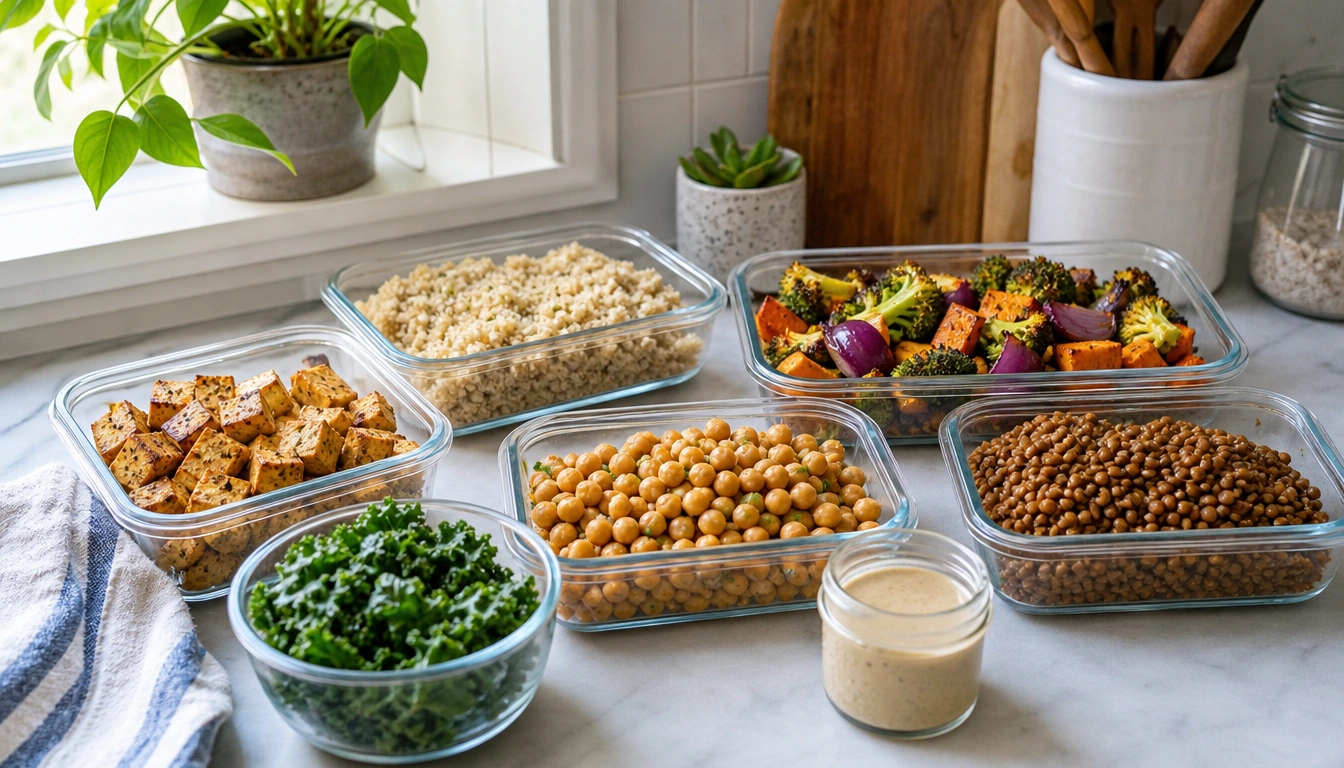
The simplest way for a vegetarian beginner to meal prep enough protein is to build meals from a few repeatable parts: a protein source such as tofu, beans, lentils, Greek yogurt, eggs, or edamame; a grain or starchy base; vegetables; and a sauce or seasoning. You do not need to combine complementary proteins in every meal, as long as you eat a varied mix across the day.
Key Takeaways
- Start with modular meals, not full recipes: batch-cooked grains, prepped proteins, vegetables, and a sauce are easier to repeat all week.
- Beans, lentils, tofu, tempeh, edamame, Greek yogurt, cottage cheese, eggs, quinoa, nuts, and seeds are beginner-friendly protein anchors.
- Plant proteins do not need to be “perfect” at every meal; the body can pool amino acids across the day.
- Increase beans and lentils gradually and hydrate well to reduce bloating, gas, and the temptation to quit too soon.
- Cooked vegetarian meal prep is safest when refrigerated promptly and used within a few days, or frozen for later.
- Protein matters, but vegetarian meal prep should also account for B12, iron, zinc, and vitamin D.
Why high-protein vegetarian meal prep matters for beginners
If you are new to vegetarian eating, meal prep solves a practical problem: protein-rich vegetarian foods often take more planning than grabbing convenience foods on the fly. When you have a few ready-to-eat components in the fridge, it becomes much easier to assemble lunches and dinners that actually keep you full.
The most useful starting point is a simple formula: base + protein + produce + sauce. A base could be quinoa, brown rice, farro, potatoes, or whole-grain pasta. The protein might be tofu, beans, lentils, eggs, Greek yogurt, cottage cheese, tempeh, or edamame. Add vegetables for color and volume, then finish with a sauce, dressing, spice blend, or salsa so the meal tastes finished rather than repetitive.
This approach works because it is flexible. You can swap ingredients based on budget, preference, and time. It also reduces decision fatigue: instead of cooking a new recipe every night, you are just mixing and matching parts you already made.
Best beginner-friendly high-protein vegetarian staples to stock
Begin with foods that are easy to store, easy to portion, and forgiving if you are still learning how to cook. Canned beans and lentils are especially useful because they require little preparation beyond rinsing and draining. Chickpeas, black beans, kidney beans, and lentils can be turned into bowls, wraps, soups, salads, and pasta dishes with minimal effort.
Tofu and tempeh are also strong beginner choices. Extra-firm tofu is adaptable because it absorbs marinades well and can be baked, pan-seared, or crumbled. Tempeh has a firmer texture and a slightly nuttier flavor, which some beginners enjoy because it feels more substantial in a meal. Edamame, whether frozen or shelled, is another easy option that can be tossed into grain bowls or eaten as a side.
If you eat dairy and eggs, Greek yogurt, cottage cheese, eggs, and paneer can make protein goals easier to reach with very little cooking. For grains, quinoa is especially helpful because it adds more protein than many other grains and works well in batches. Hemp seeds, pumpkin seeds, chia seeds, and nuts are less about being the main protein source and more about helping meals become more filling and nutrient-dense.
How to prep plant proteins for the week without cooking from scratch every day
The easiest meal-prep routine is not “cook everything.” It is “prepare a few building blocks.” Spend one block of time making enough components for several meals, then assemble them in different combinations.
A practical weekend setup might look like this: cook one grain, prep one or two proteins, roast or wash vegetables, and make one sauce. For example, you could cook a pot of quinoa, bake a tray of tofu, rinse a few cans of beans, and mix a tahini-lemon dressing. During the week, that same set of ingredients can become grain bowls, wraps, salads, tacos, or warm lunch boxes.
Flavor matters more than many beginners expect. Tofu, beans, and lentils taste much better when they are seasoned well before storage or finished with a flavorful sauce. Think soy sauce, curry paste, salsa, pesto, vinaigrette, yogurt-based dressings, chili crisp, or simple garlic and lemon. These small additions make meal prep feel less repetitive and help you actually eat the food you prepared.
It also helps to prep at two levels: some ingredients ready to eat, and some ready to finish quickly. A tray of roasted vegetables and cooked grains may be ready for the fridge, while tofu might be marinated in advance and cooked on the day you want the best texture. That hybrid method gives you convenience without bland results.
How much protein to aim for and how to handle protein quality
For many adults, the baseline recommended protein intake is about 0.8 grams per kilogram of body weight per day. That is a general reference point, not a rigid target for every person. Some people need more, especially if they are older, very active, recovering from illness, or trying to preserve muscle during weight loss. If you have a medical condition that affects protein needs, individualized care matters more than generic advice.
For beginners, the most useful strategy is to spread protein across meals instead of saving it all for dinner. A breakfast with yogurt and seeds, a lunch with beans or tofu, and a dinner with lentils or eggs is usually more practical than trying to force one very large protein-heavy meal. This can also make vegetarian eating feel more stable and satisfying through the day.
Do not get stuck on the old idea that complementary proteins must be paired in the same meal. Rice and beans, toast and peanut butter, or hummus and whole-grain pita do not need to appear as perfect pairings on every plate. The body maintains an amino acid pool over the course of the day, so a varied pattern of grains, legumes, soy, nuts, and seeds generally covers amino acid needs without obsessive planning.
Protein quality still matters, but for most vegetarian beginners the larger issue is consistency, not perfection. If you regularly include legumes, soy foods, dairy, eggs, or a mix of plant protein sources, you are usually doing more than enough to support adequacy.
Beginner digestion tips when increasing beans, lentils, and soy
Many people feel some gas or bloating when they suddenly eat more fiber-rich foods. That does not mean beans or lentils are a bad fit. It often means the change was too fast.
Start small and increase gradually. A few spoonfuls of beans in a salad, soup, or bowl can be enough at first. Over time, build up the portion as your gut adapts. This is especially helpful if you were previously eating a lower-fiber diet. Drinking enough fluids can also make the transition more comfortable.
Rinse canned beans and lentils well before using them. This can improve texture and may help some people tolerate them better. For dry beans, soaking and cooking them thoroughly can also make them easier to digest. With soy foods, many beginners do well with tofu and edamame because they are versatile and usually easy to fit into meals without a huge fiber jump.
If a food consistently causes uncomfortable symptoms, adjust the amount, the cooking method, or the timing rather than abandoning vegetarian meal prep altogether. A slow ramp-up is often more successful than an all-at-once change.
Food safety, fridge life, and freezer planning for meal prep
Meal prep is only useful if it stays safe to eat. The basic rule is to refrigerate cooked food promptly and not leave perishable items at room temperature for too long. According to public health guidance summarized in the research brief, cooked foods should not sit out for more than two hours, or one hour in very warm conditions.
Store meals in airtight containers in the refrigerator and plan to eat them within a few days. For the most reliable quality and safety, cook only what you can reasonably use in that window, or freeze portions you know you will not eat soon. Freezing is especially helpful for beans, lentils, soups, chili, cooked grains, and portions of tofu dishes.
A smart freezer habit is to portion food before freezing. That way you can thaw only what you need rather than defrosting an entire batch. Label containers with the date if you are making several dishes at once. This makes it easier to rotate food and avoid waste.
Vegetarian meal prep is not automatically safer than other meal prep. Cooked rice, beans, grains, tofu, and dairy-based items all need the same attention to time and temperature. Good storage habits are part of the recipe.
Optional adaptations for older adults or higher-protein needs
Older adults may need to pay more attention to protein distribution because of anabolic resistance, a reduced muscle-building response to protein at meals. In plain language, that means a small protein serving may not be as effective as it once was. For this group, meals often work better when protein is more concentrated rather than scattered too thinly.
That can look like combining Greek yogurt with nuts at breakfast, building lunch around tofu or beans, and including eggs, cottage cheese, tempeh, or soy foods at dinner. The goal is not extreme protein intake; it is making each meal count. If appetite is lower, softer foods such as yogurt bowls, lentil soup, scrambled eggs, or tofu scrambles may be easier to eat than very bulky meals.
Higher-protein needs can also come up if you are very active. In that case, food volume, recovery needs, and meal timing may matter more. A registered dietitian can help translate general protein guidance into a realistic plan.
Common mistakes vegetarian beginners make with meal prep
One common mistake is trying to build every meal around a complicated recipe. That burns people out fast. A simpler pattern usually works better: prepare a few components once, then change the flavor profile across the week. A Mediterranean bowl, taco bowl, curry bowl, and sesame noodle bowl can share the same tofu or bean base.
Another mistake is focusing only on protein and forgetting the rest of the diet. Vegetarian meal prep should also account for nutrients that can need more attention, especially vitamin B12, iron, zinc, and vitamin D. That may mean choosing fortified foods, dairy or eggs if you eat them, or using supplements when clinically appropriate.
Beginners also often underestimate texture and variety. Eating plain beans every day is not a sustainable plan. Rotate between tofu, lentils, chickpeas, edamame, yogurt, eggs, and different sauces so the routine stays interesting. Small changes in seasoning, crunch, and acidity can make the same base feel completely different.
Finally, do not assume that a meal is “failing” if it is not perfectly balanced on the first try. Meal prep improves through repetition. Start with one or two reliable lunches, notice what you actually enjoy, and build from there.
Frequently Asked Questions
What are the easiest high-protein vegetarian foods to meal prep?
The easiest options are canned beans, lentils, tofu, tempeh, edamame, Greek yogurt, cottage cheese, eggs, and quinoa. They hold up well in the fridge, work in many recipes, and can be portioned ahead without advanced cooking skills.
How much protein do vegetarian beginners actually need per day?
A common baseline for adults is about 0.8 grams of protein per kilogram of body weight per day, but individual needs vary. Older adults, very active people, and anyone with a medical condition may need a different target.
Do vegetarian proteins have to be combined in the same meal to be complete?
No. The body can pool amino acids across the day, so you do not need to force complementary proteins into every single meal. A varied pattern of legumes, grains, soy foods, nuts, seeds, eggs, or dairy is usually enough.
How long can meal-prepped vegetarian foods stay safe in the fridge?
Cooked vegetarian meal-prep foods should be refrigerated promptly and generally eaten within a few days. If you will not use them soon, freeze portions instead of leaving them in the fridge too long. Keep hot food out of the danger zone as little as possible.
What should vegetarian beginners watch besides protein when meal prepping?
Protein matters, but so do vitamin B12, iron, zinc, and vitamin D. Meal prep is also easier to sustain when you think about flavor, texture, and food safety, not just grams of protein.
The Bottom Line
Vegetarian meal prep does not have to be complicated. The easiest system is to batch-cook a few bases, prep a few protein sources, add vegetables, and keep one or two sauces on hand so you can mix meals through the week.
If you are just starting, focus on consistency over perfection. Build protein around beans, lentils, tofu, tempeh, eggs, dairy, or edamame, increase fiber gradually, and store food safely so your prep actually supports your routine.
As your confidence grows, you can make the meals more varied and tailored to your needs. If you have a medical condition or are unsure how much protein is right for you, personalized guidance from a qualified professional is the safest next step.
Medical disclaimer
Medical disclaimer: This content is for educational and informational purposes only and is not a substitute for professional medical advice, diagnosis, or treatment. Dietary needs and supplement suitability vary by individual.
Sources
- National Institutes of Health (NIH) — nih.gov. Accessed November 2026.
