
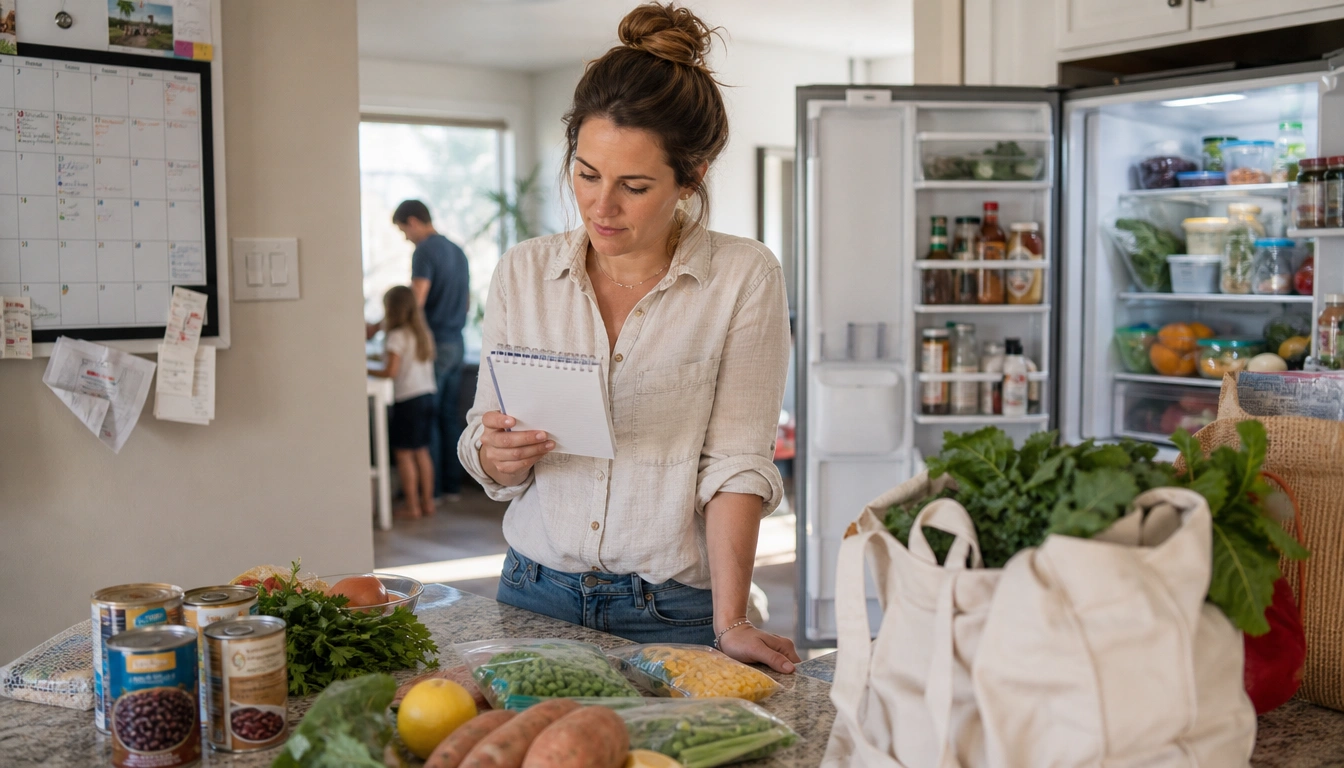
The easiest grocery planning routine for busy parents is a 10-minute weekly reset: check the family calendar, scan the fridge, freezer, and pantry, then choose 3 to 4 flexible dinners plus a few breakfast, lunch, and snack staples. Build the list by store department, use convenience foods when they save time, and shop with a clear plan so healthier choices are easier to follow.
Key Takeaways
- Plan around 3 to 4 flexible dinners instead of a full 7-day menu so the routine survives busy nights, sports, and late meetings.
- Use frozen vegetables, canned beans, pre-washed greens, and rotisserie chicken as valid shortcuts, not failures of healthy eating.
- Organize your grocery list by department to cut backtracking, reduce impulse buys, and make shopping faster.
- Check the fridge, freezer, and pantry before shopping so you buy less duplicate food and waste fewer perishables.
- Match convenience to your schedule: a slightly pricier shortcut can be cheaper than takeout or spoiled groceries.
- Make the system family-friendly with a snack station, kid input, and online pickup or delivery when stores are stressful.
Start with a 10-minute weekly reset
The easiest healthy grocery planning routine for busy parents starts before anyone gets hungry or tired. Pick one day each week and spend about 10 minutes looking at the family calendar, then your fridge, freezer, and pantry. Mark the nights that are already crowded with activities, late work, or long commutes. Those are the nights to plan for simple meals, leftovers, or backup options.
Next, write down what is already on hand, especially foods that need to be used soon. This quick home inventory helps you avoid buying duplicates and keeps older food from getting forgotten. The USDA encourages this kind of planning because it reduces waste and makes healthier choices easier to follow. A short reset is usually enough. Parents do not need a perfect meal plan; they need a plan that works when the week changes.
If it helps, keep the notes in your phone using the same template every week: busy nights, meals, missing items, and snacks. Repeating the same structure lowers decision fatigue, which is often the real barrier to healthier shopping.
Build the grocery routine around a few flexible meals
Instead of trying to map out seven exact dinners, choose 3 to 4 anchor meals for the week. This gives you structure without trapping you in a rigid plan that falls apart when plans change. A flexible dinner might be tacos, a sheet-pan meal, soup, pasta with vegetables, or a grain bowl that can be adjusted based on what is available.
The idea is to overlap ingredients so one shopping trip supports several meals. For example, one bag of salad greens can work as a side, a lunch base, or a topping. Rice, pasta, tortillas, beans, eggs, and a simple protein can stretch across multiple meals. The CDC and USDA both support building meals around vegetables, fruits, whole grains, and protein foods, but that does not require expensive or elaborate recipes.
After the main dinners, add a few breakfast, lunch, and snack staples that fit your routine. Busy families often do better with a short list of reliable foods than with a long menu that sounds healthy but is hard to use. The goal is to make the easiest option at home still reasonably nourishing.
Organize the list by grocery department
A department-organized shopping list saves time and makes it less likely that you miss items or double back through the store. Group items by produce, meat or seafood, dairy, frozen foods, pantry staples, and household needs. If your store has a predictable layout, match the list to that order. That small step can shorten the trip and reduce impulse buys.
This matters because grocery shopping is rarely just about food. It is also about attention. When you move through the store without a plan, you are more likely to grab extras that were not on your list. A department format helps you stay focused, especially when you are shopping with kids or after a long workday.
Here is a simple example of how the list can look:
| Department | Examples |
|---|---|
| Produce | Apples, bananas, salad greens, baby carrots, onions |
| Protein | Chicken, eggs, beans, yogurt, tuna |
| Frozen | Frozen vegetables, berries, whole-grain waffles |
| Pantry | Brown rice, pasta, oats, canned tomatoes, tortillas |
| Dairy or alternatives | Milk, cheese, plain yogurt, fortified alternatives |
That structure is simple, but it works because it follows the way stores are arranged and the way families actually cook during a busy week.
Use convenience foods without losing nutrition
Healthy grocery planning does not require everything to be fresh or made from scratch. Frozen vegetables, canned beans, canned fish, pre-washed greens, pre-cut produce, and rotisserie chicken can all support a nutritious family routine. These foods are often easier to use on tired weeknights, and in some cases they may be more practical than fresh foods that sit in the fridge until they spoil.
The nutritional value of frozen and canned foods can be very good, especially when you choose lower-sodium or no-sugar-added options when possible. Frozen vegetables are especially helpful because they are already washed and chopped. Canned beans add fiber and protein with almost no prep. Pre-cut produce can be worth the extra cost if it keeps you from skipping vegetables altogether or ordering takeout instead.
A useful way to think about convenience is this: if a shortcut helps you cook at home more often, it is serving the family. A prepped item is not a cheat if it keeps dinner on the table. The best shortcut is the one you will actually use.
Balance budget, waste, and time
Busy parents often feel pressure to choose between healthy food and a manageable budget, but the real choice is usually between planned spending and waste. A grocery routine works better when it includes budget-friendly staples that can be used in multiple ways, such as oats, eggs, beans, rice, pasta, frozen vegetables, apples, bananas, and plain yogurt. These foods tend to be flexible, filling, and easier to combine into different meals and snacks.
Repeat ingredients are especially useful. If you buy chicken, tortillas, and salad greens, you can turn them into wraps one night and bowls or salads another night. If you buy rice and frozen vegetables, they can support stir-fries, side dishes, or quick lunch leftovers. This kind of overlap keeps the list shorter and cuts down on half-used ingredients that go bad before you can finish them.
FIFO, or first in, first out, is a simple way to reduce waste at home. Put older items at the front of the fridge or pantry and newer items behind them so the older food gets used first. That practice lowers spoilage and also makes it easier to grab something quickly when time is tight. A slightly more expensive convenience item can also make sense if it prevents a bigger cost later, such as spoiled groceries or an unplanned takeout order. The cheapest option is not always the best value if it goes unused.
Make the plan work for the whole family
Healthy grocery planning gets easier when the routine fits the family instead of fighting it. Kids can help in small, age-appropriate ways, such as choosing one fruit, one vegetable, or one snack item from a short list. That small bit of involvement can increase buy-in without turning the shopping trip into a negotiation.
A snack station can also reduce chaos after school or sports practice. Use an easy-to-reach shelf or drawer in the fridge and pantry with ready-to-grab options like washed fruit, baby carrots, string cheese, yogurt, hummus, popcorn, or whole-grain crackers. When the snack setup is visible and predictable, it becomes easier for kids to make a decent choice and for parents to avoid last-minute scrambling.
Online pickup or delivery can be a smart tool when the store is stressful, crowded, or hard to manage with children. It may also help when you are trying to stick to a list and avoid impulse buying. For many families, the time saved is worth the small added fee, especially if it prevents extra purchases or a rushed second trip.
Use food safety and health needs as guardrails
Shopping hungry tends to increase impulse buying, especially of snack foods that do not help the weekly plan. If possible, shop after a meal or with a snack beforehand. It is a small change, but it can make the list much easier to follow.
Once you get home, refrigerate perishables promptly. Leaving cold foods out too long raises food safety concerns and increases the chance of spoilage. This is another place where a routine helps: unpack cold items first, then put shelf-stable groceries away, then sort produce into the fridge or counter as needed.
Some families also need individualized nutrition guidance. If a child has a medical condition such as diabetes, severe food allergies, growth concerns, or another diet-related issue, the grocery routine may need to be adjusted with help from a registered dietitian or primary care clinician. General planning advice is useful, but it should not replace medical nutrition care when a condition changes what the family should buy and serve.
Frequently Asked Questions
How can busy parents plan healthy groceries on a tight budget?
Start with a short list of low-cost staples that work in several meals, such as oats, eggs, beans, rice, pasta, frozen vegetables, and fruit. Plan around a few flexible dinners, use what you already have, and compare the cost of convenience items against takeout or wasted groceries.
What should a parent buy first when trying to build a healthier grocery routine?
Begin with a fridge, freezer, and pantry check so you know what is already available. Then buy produce, a few proteins, whole grains, and easy snack options that fit your family’s most common meals. A shorter, repeatable list is easier to keep up with than a big overhaul.
How do you make a grocery list that actually matches a busy family schedule?
Use the weekly calendar first. Put quick meals or leftovers on the busiest nights and save more involved meals for calmer days. Then build the list by store department so the food you buy matches the meals you actually have time to cook.
Are frozen, canned, or pre-cut foods healthy enough to rely on?
Yes. Frozen vegetables, canned beans, pre-washed greens, and pre-cut produce can be nutritious and practical, especially for busy families. They are often easier to use consistently than fresh foods that may spoil before you cook them.
What should parents do when children are picky eaters or want different foods?
Keep the meal plan simple and predictable, and let children help choose a fruit, vegetable, or snack from a short list. Offering one or two familiar options alongside the main meal is often more realistic than making separate dinners for everyone.
The Bottom Line
A healthy grocery planning routine does not need to be complicated. For most busy parents, the simplest approach is a weekly 10-minute reset, 3 to 4 flexible meals, a department-based list, and a short set of reliable staples that fit the family’s schedule.
Convenience foods, curbside pickup, snack stations, and repeated ingredients are not shortcuts that undermine healthy eating. Used well, they are tools that make healthier choices more realistic during a busy week and help reduce waste, stress, and last-minute takeout.
Medical disclaimer
Medical disclaimer: This content is for educational and informational purposes only and is not a substitute for professional medical advice, diagnosis, or treatment. Dietary needs and supplement suitability vary by individual.
Sources
- Centers for Disease Control and Prevention (CDC) — cdc.gov. Accessed October 2026.
- U.S. Government / Health Authority — usda.gov. Accessed October 2026.
- U.S. Government / Health Authority — usda.gov. Accessed October 2026.
- healthychildren.org — healthychildren.org. Accessed October 2026.
