
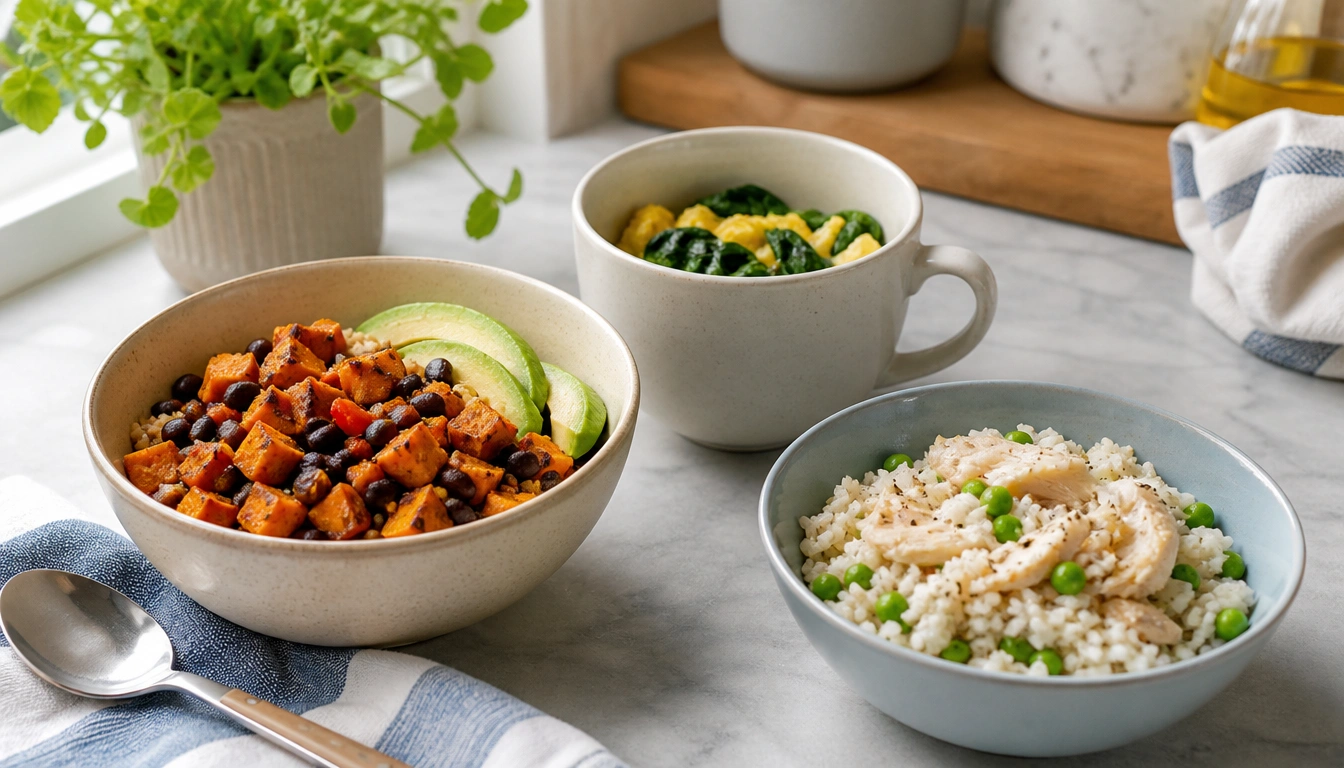
Yes—healthy microwave meals can be a practical and nutritious choice for adults over 50. The best options combine protein, fiber, and produce with foods that stay tender, such as eggs, fish, beans, tofu, yogurt, and soft grains. They can also be lower in sodium than many frozen ready meals when you season with herbs, citrus, garlic, ginger, salsa, and vinegar instead of relying on salt.
Key Takeaways
- Adults over 50 often need fewer calories, but they still need strong nutrition from protein, fiber, calcium, vitamin D, and vitamin B12.
- Soft, easy-to-chew ingredients like eggs, flaky fish, beans, tofu, and tender vegetables work especially well in microwave meals.
- Homemade microwave meals can be lower in sodium than many commercial frozen meals while still tasting good.
- Microwaving can help preserve texture and reduce cleanup, which matters when energy or mobility is limited.
- Use microwave-safe containers, stir during cooking, and let food stand briefly to reduce hot spots and burn risk.
Why microwave meals can work well after 50
Healthy microwave meal ideas for adults over 50 are useful for more than convenience. As people age, appetite, energy, and cooking stamina can change, yet the need for nutrient-dense meals remains. The National Institute on Aging notes that older adults often do better with meals that are easy to prepare, easy to chew, and built around foods that deliver real nutrition without a lot of extra effort.
Microwave cooking fits that goal. It can turn out a hot meal quickly, use fewer dishes, and make it easier to cook just one portion at a time. Short cooking times also help vegetables stay bright and tender, and they can be enough for foods like eggs, fish, grains, and beans. That makes the microwave a practical tool for living alone, low-energy days, or anyone who does not want to stand over a stove.
For many adults over 50, the best meals are not elaborate. They are balanced, soft enough to eat comfortably, and built from pantry or freezer staples that can be combined in minutes. When the ingredients are chosen well, a microwave meal can be both simple and satisfying.
What to prioritize in an over-50 microwave meal
The main goal is not just speed. It is getting enough of the nutrients that matter most with age. The Dietary Guidelines for Americans and NIH resources emphasize protein, fiber, calcium, vitamin D, and vitamin B12 as especially important pieces of the meal pattern for older adults.
Protein helps maintain muscle and strength, which matters because muscle loss can accelerate with age. Fiber supports digestion, fullness, and heart health. Calcium and vitamin D support bone health, while vitamin B12 is important because absorption can become less efficient over time. Hydration also matters, especially if thirst is less noticeable than it used to be.
Sodium deserves attention too. Many commercial frozen meals are convenient, but they may be heavily salted. A homemade microwave meal gives you more control, and flavor can come from herbs, spices, citrus, vinegar, garlic, ginger, salsa, and mustard instead of extra salt.
A good rule is to build each meal around three parts: a protein food, a plant food, and a soft starch or grain. That combination supports nutrition without making the meal complicated.
Best ingredient building blocks for senior-friendly microwave meals
The most useful ingredients are the ones that heat evenly, stay tender, and do not require much prep. Eggs are a strong option because they cook quickly and can be scrambled, mug-cooked, or folded into rice bowls. Canned salmon or tuna can bring protein and, in the case of salmon, helpful omega-3 fats. Beans and lentils add fiber and plant protein while staying soft after heating.
Tofu is another good choice because it absorbs flavor well and can be gently warmed without becoming tough. Tender poultry, such as cooked chicken breast pulled into small pieces, works best when mixed into soups, grain bowls, or vegetable dishes rather than served dry. Whole grains like brown rice, quinoa, oats, and barley add staying power and can be bought in microwave-ready pouches for convenience.
Soft vegetables are especially useful: spinach, peas, carrots, zucchini, cauliflower, green beans, and tomatoes all microwave well. For calcium, include yogurt, milk, kefir, cottage cheese, or a fortified plant alternative. These ingredients make it easier to assemble meals that are nourishing and easier to eat.
Simple microwave meal ideas that fit real life
Sweet potato and black bean bowl. Pierce a medium sweet potato, microwave until soft, then split it open and fill it with rinsed black beans, salsa, and a spoonful of plain yogurt. Add cumin or smoked paprika for flavor. This meal works well because it is soft, filling, inexpensive, and rich in fiber and plant protein.
Egg and spinach mug scramble. Beat eggs in a microwave-safe mug or bowl with chopped spinach, a little cheese, and black pepper. Heat in short bursts, stirring between intervals, until just set. This is a fast breakfast or light dinner that provides high-quality protein and is easy to chew.
Fish, peas, and grain bowl. Warm a piece of flaky fish, such as cod or salmon, with a splash of water and a cover that allows steam to escape. Serve it over brown rice or quinoa with peas and a squeeze of lemon. The fish stays tender, and the grain bowl offers a balanced mix of protein, fiber, and texture.
Bean and vegetable soup mug. Combine low-sodium canned beans, chopped tomatoes, frozen vegetables, and enough broth or water to loosen the mixture. Microwave until hot, then finish with garlic powder, basil, or a little vinegar. This is especially helpful when appetite is low because warm, spoonable foods can be easier to manage than a dry plate meal.
Tofu vegetable rice bowl. Cube soft tofu and warm it with frozen mixed vegetables, microwave rice, and a splash of low-sodium soy sauce or tamari. Ginger and sesame oil add flavor without much effort. It is a good option for people who want a plant-forward meal that still feels substantial.
These meals all share the same pattern: easy protein, a soft produce component, and a grain or starchy vegetable that makes the meal more satisfying.
How to adapt meals for softer textures, chewing comfort, and low appetite
Texture matters. Some adults over 50 prefer foods that are softer because of dental changes, dry mouth, or swallowing discomfort. The microwave can help here because it steams food gently rather than drying it out.
To make meals easier to chew, choose eggs, flaked fish, well-cooked beans, tofu, and vegetables that have been steamed until tender. Cut food into smaller pieces before heating. Add moisture with broth, tomato sauce, yogurt, salsa, or a little olive oil. Tender grains such as oatmeal, quinoa, or well-cooked rice are easier to manage than dry, crusty starches.
If appetite is smaller than usual, a few practical touches can help. Serve smaller portions on a smaller plate, add a flavor boost such as lemon or herbs, and include foods that provide nutrition without requiring a large volume. A soup, grain bowl, or soft casserole-style meal may feel more appealing than a large plate of separate items. High-water foods like melon, tomatoes, cucumbers, oranges, broth-based soups, and cooked vegetables can also help support hydration when drinking enough is hard to remember.
How to keep microwave meals flavorful without excess salt
Lower-sodium meals do not have to taste flat. In fact, many older adults find that bright, aromatic flavors are more appealing than heavy salt. Citrus juice can wake up beans, fish, and vegetables. Vinegar adds a sharper note to grain bowls and soups. Garlic, onion powder, black pepper, cumin, paprika, rosemary, dill, and turmeric all work well in microwave meals.
Salsa is especially useful because it adds moisture and flavor to eggs, sweet potatoes, beans, and rice. Ginger pairs well with fish, tofu, and vegetables. Fresh or dried herbs can make a simple meal taste fresh without adding much work. A small amount of cheese, mustard, or pesto can also improve flavor if used lightly.
The goal is not to eliminate salt entirely. It is to make salt only one seasoning among many. That approach helps homemade microwave meals compare well with commercial frozen meals, which are often much higher in sodium and less flexible on flavor. If you are buying packaged ingredients, choose low-sodium beans, broth, and sauces when possible.
Microwave safety basics for older adults
Microwave meals are convenient, but safety still matters. Use containers labeled microwave-safe, especially glass, ceramic, or approved plastic. Avoid metal, foil, and containers that are cracked, warped, or not meant for heating food. Cover food loosely so steam can escape, but do not seal it tightly.
Microwaves heat unevenly, so stirring is important. Stop halfway through cooking when possible, stir or rotate the food, and then finish heating. Let the meal stand for a minute or two before eating so the heat distributes more evenly. This reduces the chance of a hot center and cooler edges, which is one reason people get burned by microwaved food.
For proteins like eggs, fish, or poultry, heat until the food is fully cooked and steaming hot throughout. If a dish contains mixed ingredients, check the temperature in more than one spot. Standing time is part of the cooking process, not an extra step to skip.
Budget and convenience swaps that still keep meals balanced
Healthy microwave meals do not need to be expensive. Pantry staples such as canned beans, canned fish, oats, rice, and tomatoes can be the base of many meals. Frozen vegetables are often just as useful as fresh ones, especially when you want less chopping and less waste. Microwaveable grain pouches can save time when energy is low, though bulk-cooked grains can stretch the budget further.
For the easiest setup, keep a few single-serve options on hand: plain yogurt, cottage cheese, tuna packets, eggs, frozen vegetables, and low-sodium soup. These can be combined in different ways without much planning. A bowl of oatmeal with yogurt and fruit can work as a breakfast-for-dinner meal; a rice bowl with beans and vegetables can become lunch; eggs with spinach and toast can become a fast supper.
If you care for someone over 50, it can help to prep a few building blocks in advance: wash fruit, portion grains, rinse beans, and keep seasoning blends ready. That small amount of prep makes healthy microwave meals much easier to repeat during busy weeks.
Frequently Asked Questions
What nutrients matter most for adults over 50 in quick meals?
Protein, fiber, calcium, vitamin D, and vitamin B12 are especially important. Quick meals should also include produce for vitamins and hydration support, plus enough fluid or high-water foods to help meet daily needs.
How can I make microwave meals lower in sodium and still flavorful?
Use herbs, spices, citrus, vinegar, garlic, ginger, salsa, and mustard for flavor. Choose low-sodium beans, broth, and sauces when you can, and rely less on packaged seasoning mixes or heavily salted ready meals.
Which microwave ingredients are best for older adults who need softer textures?
Eggs, flaky fish, beans, tofu, yogurt, well-cooked grains, and steamed vegetables are all good choices. They stay tender, are easy to portion, and can be moistened with broth, salsa, or sauce if needed.
Are microwave meals safe and nutritious compared with frozen ready meals?
Yes, home-made microwave meals can be just as nutritious and often lower in sodium. The nutrition depends on the ingredients you choose. Using whole foods, protein, vegetables, and whole grains makes a big difference.
What are the best microwave-safe containers and reheating practices?
Use glass, ceramic, or containers clearly labeled microwave-safe. Heat food in short bursts, stir or rotate it, and let it stand briefly before eating so hot spots can even out and burns are less likely.
The Bottom Line
Healthy microwave meals for adults over 50 work best when they are built around protein, fiber, and soft vegetables, with enough moisture to stay easy to chew. Eggs, beans, fish, tofu, yogurt, and tender grains are especially practical.
Home-cooked microwave meals can also be lower in sodium than many frozen ready meals, while still tasting good when you use herbs, spices, citrus, vinegar, garlic, salsa, or ginger. For older adults with lower appetite, smaller portions and hydrating foods can make meals easier to finish.
If swallowing becomes difficult, appetite drops for a long time, or weight loss is unexplained, it is worth checking in with a healthcare professional.
Medical disclaimer
Medical disclaimer: This content is for educational and informational purposes only and is not a substitute for professional medical advice, diagnosis, or treatment. Dietary needs and supplement suitability vary by individual.
