
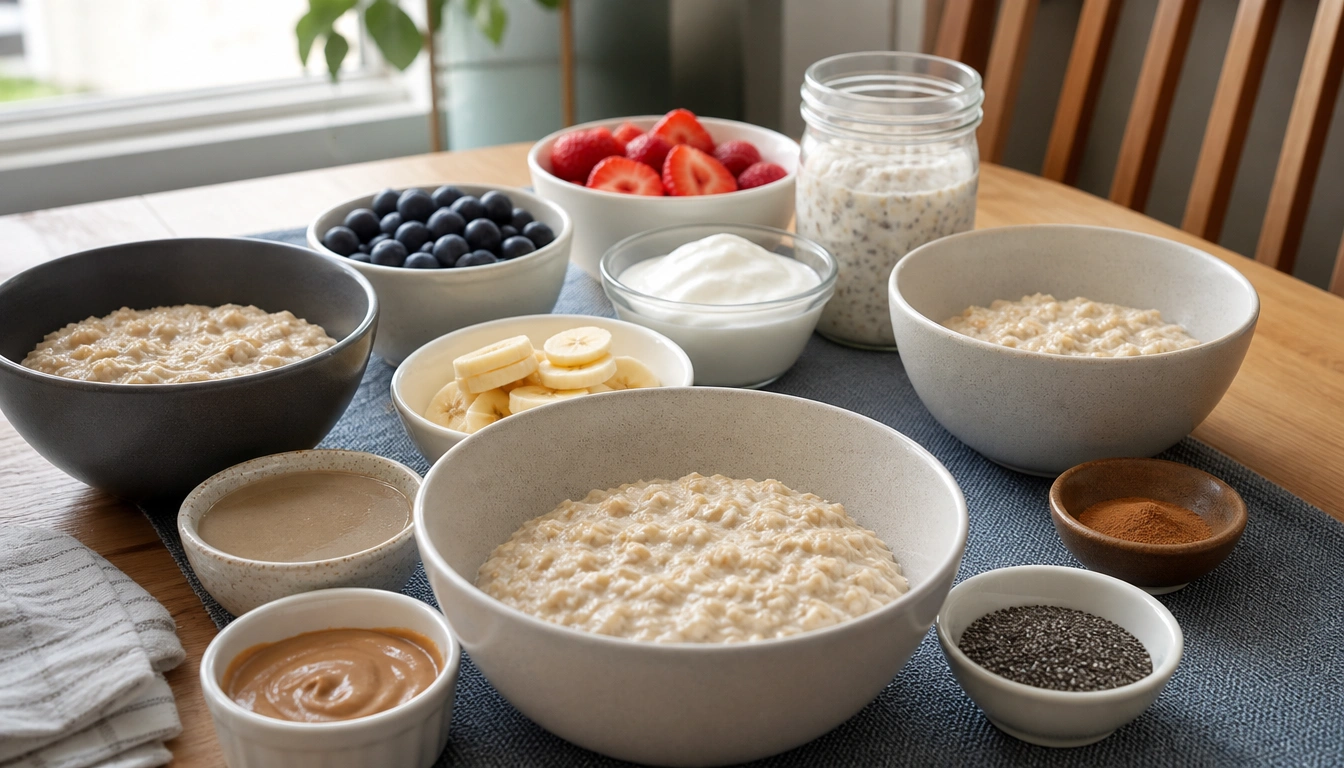
The fastest healthy oatmeal toppings are the ones that add protein, fiber, and healthy fat without extra prep: nut or seed butter, Greek yogurt, chia or ground flax, berries, banana, applesauce, and cinnamon. Those combinations help plain oats feel more filling and steady energy better than oats alone. For young children and allergy-sensitive households, use smooth spreads, ground seeds, and school-safe swaps like sunflower seed butter.
Key Takeaways
- Build oatmeal around the protein-fiber-fat trio so breakfast keeps kids fuller for longer and feels more balanced.
- Keep a few shelf-stable and freezer-friendly toppings within arm’s reach so assembly takes less than two minutes.
- For toddlers, avoid whole nuts and large chunks; use smooth nut butter, ground seeds, or soft fruit instead.
- Choose fresh or frozen fruit and spices over flavored packets or sweetened dried fruit to keep added sugar lower.
- Allergy-friendly swaps like sunflower seed butter and pumpkin seeds work well for school or shared kitchens.
- If mornings are too rushed, overnight oats can give you a ready-to-eat option with no cooking at all.
A 30-second framework for a balanced oatmeal bowl
Quick oatmeal toppings work best when you stop thinking in single ingredients and start thinking in a simple pattern: fiber-rich oats + protein + healthy fat + fruit or spice. Oats bring the slow-digesting base, while protein and fat help the meal feel more satisfying. Fruit adds flavor, color, and natural sweetness, and spices make plain oats taste finished without needing a packet.
This is why oatmeal can be a strong breakfast choice for busy families. Oats contain soluble fiber, including beta-glucan, which helps support steadier energy and can help you stay full longer than a bowl of carbs alone. According to the NHS, oats are a whole grain that can be part of a healthy, filling breakfast. The “trio” of fiber, protein, and fat is what makes the difference between a plain bowl and a breakfast that carries kids to lunch.
A fast formula looks like this: warm oats, one protein topping, one fat source, and one fruit or spice. For example, peanut butter plus banana and cinnamon, or Greek yogurt plus berries and chia. You do not need a long list. A few well-chosen toppings do more work than a crowded bowl of extras.
Fast oatmeal toppings you can mix and match in under 2 minutes
The easiest way to keep oatmeal fast is to use topping combinations, not separate ingredients you have to think about every morning. Keep one or two “go-to bowls” in rotation and repeat them through the week. That reduces decision fatigue and makes grocery shopping simpler.
Try these quick combinations:
- Peanut butter, banana, and cinnamon: stir in a spoonful of nut butter, then top with sliced banana and a dusting of cinnamon. It feels sweet without needing syrup.
- Greek yogurt and berries: add a dollop of plain Greek yogurt and a handful of fresh or frozen berries for creaminess and tang.
- Apple sauce and seed sprinkle: spoon on unsweetened applesauce, then add ground flax or chia for texture and staying power.
- Sunflower seed butter and sliced strawberries: a school-friendly swap that still gives richness and fruit flavor.
- Cocoa and banana: add unsweetened cocoa powder, sliced banana, and a little milk for a chocolate-like bowl without a packet.
- Raisins and walnuts for older kids and adults: a classic mix, though it is better for older eaters than toddlers because of texture and choking risk.
If your family likes variety, keep the base the same and rotate one fruit, one seed, or one spread. That makes oatmeal feel different without requiring a new recipe every day.
Pantry and freezer staples that reduce morning friction
The best quick oatmeal toppings are the ones you can reach for without opening three containers. Create a small “oatmeal zone” in the pantry and freezer so breakfast becomes automatic. This is especially helpful on school mornings, when every extra step slows you down.
Useful shelf-stable staples: natural peanut butter or sunflower seed butter, chia seeds, ground flaxseed, cinnamon, unsweetened cocoa powder, plain nuts for older kids and adults, and unsweetened shredded coconut. These keep well and add flavor or nutrition with almost no prep.
Freezer-friendly staples: berries, diced mango, cherries, and sliced bananas. Frozen fruit is one of the easiest ways to keep oatmeal interesting because it can go straight into the hot oats and thaw in minutes. It also avoids the pressure to use fresh fruit before it spoils.
For even less effort, portion toppings into small jars or bins. If the peanut butter, cinnamon, seeds, and frozen fruit all have visible places, breakfast moves faster. The goal is not fancy cooking; it is removing the tiny barriers that make plain oatmeal feel boring or inconvenient.
How to make oatmeal safe and satisfying for toddlers and young children
Children can eat oatmeal in very practical ways, but texture matters. For toddlers and young children, avoid toppings that can pose a choking risk, including whole nuts, large clusters of seeds, hard granola chunks, and big spoonfuls of sticky nut butter. The safest approach is to keep textures soft, smooth, and easy to swallow.
Use smooth nut butter thinned into warm oatmeal, or choose ground seeds such as milled flax or chia. Soft fruit is also a good choice: mashed banana, applesauce, or very soft berries work well. If you use pieces of fruit, keep them small and well softened. The American Academy of Pediatrics and child health guidance commonly advise extra caution with whole nuts and similar hard foods for young children.
Kids often do better when oatmeal tastes familiar. A little cinnamon, vanilla, or mashed banana can help without loading the bowl with sugar. For toddlers, full-fat dairy or fortified alternatives can also make the meal more satisfying because little stomachs need energy-dense foods in smaller volumes. When in doubt, keep the texture simple and the pieces small.
Allergy-friendly oatmeal toppings for school and shared kitchens
If your family is dealing with peanut or tree nut restrictions, oatmeal can still be very flexible. Sunflower seed butter is one of the easiest swaps because it delivers a creamy, rich texture that works much like nut butter. Pumpkin seeds, chopped if needed for younger children, can add crunch and a savory note for older kids and adults.
Other helpful options include tahini if sesame is allowed, plain yogurt, chia, ground flax, shredded coconut, and fruit. These choices work well in shared kitchens because they are easy to portion and do not depend on a specialty product. For school breakfasts, always check classroom and school allergy rules before packing anything with seeds or spreads.
When you are building a nut-free oatmeal bowl, think about texture first. Sunflower seed butter plus banana, or yogurt plus berries and cinnamon, gives you the same satisfying balance without relying on peanuts or tree nuts. A school-safe breakfast does not need to feel like a compromise.
How to flavor oatmeal without relying on added sugar
Flavored packets are convenient, but they often lean heavily on added sugar and can make oatmeal taste more dessert-like than breakfast-like. Sweetened dried fruit can create the same problem. A better strategy is to let fruit and spices do most of the flavor work.
Try fresh or frozen berries, sliced banana, diced pear, applesauce, or thawed cherries. These add natural sweetness with more texture and fewer ingredients than sweetened mixes. Spices are another easy fix: cinnamon, nutmeg, ginger, cardamom, and vanilla can make plain oats taste warm and appealing without sugar.
If your family prefers a sweeter bowl, start with fruit and a creamy topping such as yogurt or nut butter before reaching for sweeteners. The natural combination of fiber, protein, and fat can make a bowl feel complete without needing a flavored packet. That is often enough to keep kids happy and parents from making a second breakfast later.
Make-ahead options for mornings when cooking is not realistic
Some mornings do not allow for stove time at all. That is where overnight oats and other make-ahead versions earn their place. The basic idea is simple: mix oats with milk or a fortified dairy alternative, then add a protein source and a topping that softens overnight. By morning, breakfast is ready to grab from the fridge.
A practical overnight oats mix might include rolled oats, milk, a spoonful of plain yogurt, chia seeds, and fruit. You can assemble several jars at once for the next few mornings, which helps on the busiest school days. Frozen berries work especially well because they thaw in the fridge and flavor the oats as they sit.
Overnight oats are also easy to adapt for different tastes. Some kids like banana and cinnamon, while others prefer berries and yogurt or apple and peanut butter. If your child dislikes cold oats, you can warm them briefly in the microwave. The benefit is the same: the breakfast is already made, and you skip the morning scramble.
A simple school-week rotation to keep oatmeal from getting boring
The easiest way to keep oatmeal in the rotation is to use a weekly pattern instead of making a brand-new breakfast every day. Pick one or two fast base combinations and rotate flavors around them. That gives variety without extra planning.
For example, you might use peanut butter and banana on Monday, berries and yogurt on Tuesday, applesauce and cinnamon on Wednesday, sunflower seed butter and strawberries on Thursday, and overnight oats on Friday. Older kids and adults can add nuts or extra crunch on the side, while younger children stay with softer textures and safer shapes.
If you want even more simplicity, choose one fruit, one spread, and one spice to keep on repeat for the week. That way, oatmeal stays affordable, filling, and quick enough for real life. Consistency is a feature, not a failure, when the goal is to get breakfast on the table before the school bell.
Frequently Asked Questions
What oatmeal toppings are best for keeping kids full until lunch?
The most filling toppings usually combine protein, fiber, and healthy fat. Good examples include peanut or sunflower seed butter, Greek yogurt, chia or ground flax, and fruit. That mix helps plain oats feel more satisfying than oats alone and can reduce the mid-morning crash that comes from a carbohydrate-only breakfast.
How can I add protein and healthy fat to oatmeal without making it complicated?
Use one spoonful-style topping that is easy to grab: nut or seed butter, plain Greek yogurt, or chia seeds. You can also use milk, soy milk, or fortified dairy alternatives in the oats. The goal is to add one or two simple ingredients, not a complicated recipe.
Which oatmeal toppings are safe for toddlers and young children?
Choose soft, smooth toppings such as thinned nut butter, sunflower seed butter, mashed banana, applesauce, yogurt, or ground seeds. Avoid whole nuts, large seed clusters, and hard crunchy toppings for young children because they can be a choking risk. Keep textures soft and pieces small.
How do I avoid added sugar in flavored oatmeal and toppings?
Skip sweetened packets when you can and use fruit, cinnamon, vanilla, nutmeg, or cocoa powder for flavor instead. Fresh or frozen berries, banana, or applesauce add sweetness naturally. Unsweetened dried fruit is better than candy-like mixes, but even that should be used thoughtfully if you are trying to keep sugar lower.
Can I make oatmeal ahead of time for busy mornings?
Yes. Overnight oats are the easiest make-ahead option: combine oats, milk or a milk alternative, and toppings in a jar the night before, then refrigerate. By morning, the oats are soft and ready to eat. You can make several jars at once to cover a few school mornings.
The Bottom Line
The fastest healthy oatmeal toppings are the ones that add protein, fat, and flavor with almost no prep: nut or seed butter, yogurt, chia, ground flax, fruit, and spices. Those simple choices make plain oats more filling and more family-friendly.
For young children, keep textures soft and skip choking hazards like whole nuts. For school or allergy-sensitive settings, sunflower seed butter and pumpkin seeds are easy swaps. If mornings are too rushed, overnight oats give you a ready-to-eat breakfast without losing the benefits of a balanced bowl.
Medical disclaimer
Medical disclaimer: This content is for educational and informational purposes only and is not a substitute for professional medical advice, diagnosis, or treatment. Dietary needs and supplement suitability vary by individual.
Sources
- National Health Service (NHS) — www.nhs.uk. Accessed November 2026.
- Healthline — healthline.com. Accessed November 2026.
- eatright.org — eatright.org. Accessed November 2026.
