
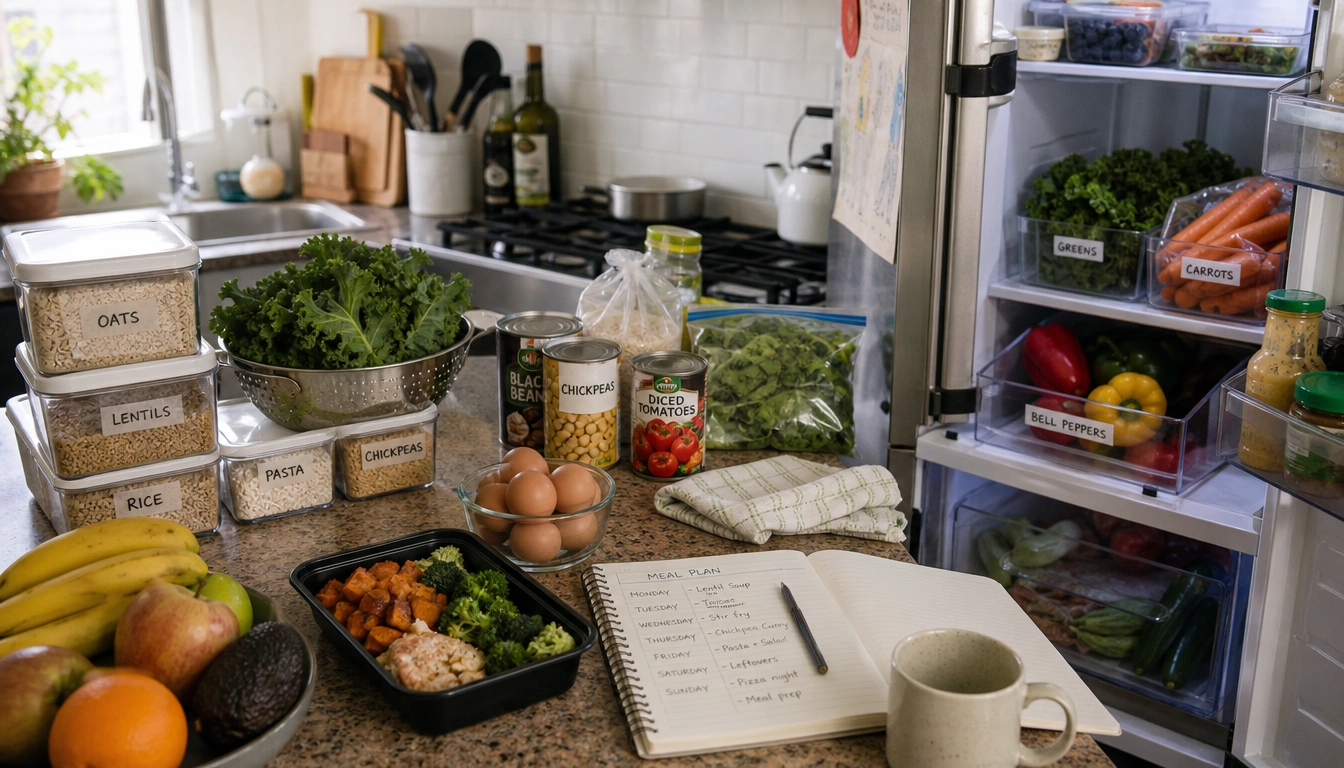
A weekly kitchen reset saves money best when it starts with a quick inventory, then turns that inventory into a simple meal plan and a tight shopping list. The goal is not to buy the cheapest ingredients at random, but to reduce waste, avoid duplicate purchases, and use fresh, frozen, canned, and dried foods in ways that fit your schedule and budget.
Key Takeaways
- Start by checking what you already have before you shop. Forgotten food and duplicate purchases are often bigger budget leaks than ingredient prices.
- Fresh, frozen, canned, and dried foods can all support a healthy pattern when you watch for added sodium, sugar, and saturated fat.
- A single planning window, batch prep, and shelf-stable or freezer staples can make the reset realistic for busy households.
- A clear “use-it-first” shelf or bin helps you save food that might otherwise spoil in the back of the fridge.
- Single-person and small households often need more freezer portioning because spoilage can erase the savings from a good grocery trip.
Why a weekly kitchen reset matters for both health and the grocery budget
A weekly kitchen reset is a short routine that helps you see what food you already own, what needs to be used soon, and what meals you can realistically make in the coming week. That matters because public health guidance from the USDA and CDC supports a pattern built around vegetables, fruits, whole grains, lean proteins, and limited added sugar, sodium, and saturated fat. A reset makes that pattern easier to follow without requiring expensive specialty foods.
For many households, the biggest savings do not come from hunting for the absolute cheapest ingredients. They come from using what is already in the kitchen, buying less on impulse, and stopping food from spoiling before it can be eaten. When meals are planned around actual inventory, there is less overlap between what is in the fridge and what gets bought again at the store.
The health benefit is practical, not glamorous: fewer last-minute takeout decisions, more meals built from basic ingredients, and a lower chance that dinner turns into whatever convenience item is closest. A reset also lowers stress because it turns “What can we eat?” into a short list of realistic options.
The four-part weekly kitchen reset and how to do the inventory step
A useful reset has four parts: inventory, menu mapping, list-driven shopping, and batch prep. The order matters. If shopping comes first, waste tends to follow. If the inventory comes first, the rest of the week has a better chance of staying affordable.
Inventory the fridge, freezer, pantry, and use-it-first items
Begin with the refrigerator. Look for leftovers, open containers, produce that is getting soft, dairy near its date, and any protein that should be used early in the week. Then check the freezer for meats, vegetables, bread, fruit, cooked grains, or prepared portions that can anchor meals. After that, scan the pantry for grains, beans, canned goods, soup, oats, pasta, and cooking basics.
Make one small area the “use-it-first” shelf or bin. Put food that needs attention there so it is visible at eye level. This is especially helpful in shared kitchens, where items get pushed to the back and forgotten. A quick label with a rough date can help, but the most important rule is visibility.
As you inventory, group food into three categories: use soon, use later, and toss. If an item looks questionable, smells off, or has mold where it should not, it should not be part of a money-saving strategy. Saving a few dollars is not worth a foodborne illness.
How to build a flexible weekly menu around what you already have
The best budget menu is flexible enough to handle changing shifts, leftovers, and small surprises. Start with the items you already have and build around them instead of trying to force a new recipe every night. A flexible menu does not need to be fancy; it needs to be usable.
One simple method is to map the week by protein, vegetables, and starch. For example, a pot of beans, a tray of vegetables, and cooked rice can become bowls, tacos, soup, or a quick skillet meal. Leftover chicken can turn into wraps, fried rice, or pasta. Extra vegetables can move from a side dish into a soup or omelet.
Plan the hardest meals for the days when time is better and keep the busiest days as “assembly meals.” That might mean a sandwich, a grain bowl, a soup reheat, or eggs and toast with fruit. The point is not perfection. The point is to keep food from going unused and to reduce the number of times you have to decide dinner from scratch.
Budget-smart food form choices: fresh vs frozen vs canned vs dried
Fresh produce is useful, but it is not the only healthy option. Fresh, frozen, canned, and dried fruits and vegetables can all fit a healthy pattern when added sodium, sugar, and saturated fat are limited. That means a budget-conscious household does not need to treat frozen peas or canned tomatoes as second-rate foods.
Fresh foods often work best for the first part of the week, especially for items you know your household eats quickly. Frozen produce is often the easiest backup because it lasts longer, reduces spoilage, and can be portioned as needed. Canned vegetables and beans can be very practical too, especially if you rinse them when appropriate to reduce sodium. Dried foods such as beans, lentils, oats, rice, and pasta can stretch a budget because they store well and make many meals from one purchase.
| Food form | Best use | Budget advantage |
|---|---|---|
| Fresh | Early-week meals, salads, snacks, quick sides | Good when you will use it soon |
| Frozen | Later-week meals, stir-fries, soups, side dishes | Less spoilage, easy portioning |
| Canned | Fast meals, soups, beans, tomatoes, vegetables | Long shelf life, low prep time |
| Dried | Beans, lentils, grains, oats, pasta | Lowest cost per serving for many staples |
A smart reset uses all four forms on purpose. That is usually cheaper than trying to force every meal to rely on fresh produce only.
Low-cost nutrient-dense staples to anchor the week
A budget pantry works best when it contains a few reliable anchors that can become many meals. Whole grains, beans, lentils, oats, canned tomatoes, frozen vegetables, eggs, peanut butter, and a small set of spices can support a lot of combinations without feeling repetitive.
Think in terms of building blocks. A grain plus a protein plus a vegetable plus a simple sauce is enough for a basic bowl or skillet meal. Oatmeal can become breakfast with fruit and nut butter. Brown rice or pasta can carry leftovers. Frozen vegetables can round out a meal when fresh produce is running low. Eggs can become a fast dinner, not just breakfast.
If money is especially tight, it can help to buy a few staples in larger sizes only when you know they will be used before they lose quality. Otherwise, a smaller package that actually gets eaten is the better deal. The cheapest item is not the cheapest if half of it is thrown away.
How to stretch protein and reduce waste with beans, lentils, eggs, and mixed dishes
Protein is often one of the most expensive parts of the grocery budget, so it helps to stretch it without cutting meal quality. Beans and lentils are useful because they are inexpensive, filling, and easy to mix with meat, grains, or vegetables. They also work well in recipes that already have strong flavor, such as chili, tacos, soups, pasta sauce, and casseroles.
Ground meat can be mixed with beans or lentils to make the meal go farther. Eggs can help use up vegetables, potatoes, or leftover grains in a frittata, scramble, or fried rice. Mixed dishes are especially useful during a reset because they make small amounts of leftover food feel complete instead of random.
For households trying to cut waste, freezer portioning matters. Divide cooked meat, soup, grains, or bean dishes into meal-sized portions so they can be thawed only as needed. That is especially helpful for single-person and small households, where a large package can spoil before it is finished. Freezing in portions turns one purchase into several future meals instead of one rushed cooking project.
Food safety guardrails during the reset: leftovers, dates, thawing, and when to toss food
A reset should save food, but not at the expense of safety. Leftovers in the refrigerator are generally best used within a few days; if they are older, it is safer to discard them. If food has an unusual smell, slimy texture, visible mold, or signs that it was left out too long, do not try to rescue it for the sake of budget.
Date labels can be confusing, so use them as a guide, not the only rule. “Use by,” “best by,” and “sell by” do not all mean the same thing, and appearance and storage matter too. If you are unsure, choose caution. That is especially important for dairy, cooked grains, meat, and cut produce.
Frozen food should be thawed safely in the refrigerator or in cold water, not on the counter. During the reset, move anything you plan to use soon into a clear thawing spot so it is ready when you need it. Good food management is not just about reducing waste; it is also about preventing illness that would cost far more than the food itself.
How to adapt the reset for busy households, small households, and shared kitchens
Busy households do better with a reset that fits one planning window instead of several. That might mean 20 minutes on one evening, a short Sunday session, or a split routine where shopping and prep happen on different days. Use batch prep to lower weekday effort: wash produce, cook one grain, portion snacks, and set aside items that need to be eaten first.
Shared kitchens benefit from clear labels, shelf spaces, and simple agreements about what belongs to whom. A visible use-it-first bin can reduce arguments and forgotten food. Small households often need the strongest version of the reset because spoilage has a bigger effect on the budget. Freezer-safe containers, single-serving portions, and planned leftovers can make a small grocery trip last longer.
A reset-friendly meal flow might look like this: early-week meals use fresh produce and the most fragile leftovers; midweek meals use batch-cooked grains, beans, or soup; later-week meals lean on frozen vegetables, eggs, canned tomatoes, or stored portions from the freezer. That rhythm keeps the kitchen usable without making every night feel like a new project. The goal is steady, realistic eating that respects both time and money.
Frequently Asked Questions
What should I check first during a weekly kitchen reset?
Start with the fridge, especially leftovers, produce that is wilting, and items near the back of shelves. Then check the freezer and pantry so you know what food is already available before you plan meals or shop.
How can I meal plan on a tight grocery budget without wasting food?
Build meals around the food you already have, then fill gaps with a short shopping list. Choose flexible meals that can reuse ingredients in different ways, such as soups, bowls, tacos, stir-fries, and egg dishes.
What are the best low-cost foods to keep on hand for healthy meals?
Beans, lentils, eggs, oats, rice, pasta, frozen vegetables, canned tomatoes, and simple fruit options are all useful budget staples. They store well, work in many recipes, and help you build balanced meals with less waste.
How do I use frozen, canned, and dried foods without lowering nutrition quality?
Use them as normal parts of the menu, not as backup-only foods. Choose versions without much added sodium, sugar, or saturated fat when possible, and combine them with fresh foods when they are available.
How do I safely handle leftovers and older food during a kitchen reset?
Use leftovers within a few days, keep food cold, thaw it safely in the fridge or cold water, and toss anything that smells off, looks moldy, or has been stored too long. When in doubt, discard it.
The Bottom Line
A weekly kitchen reset works best when it starts with what you already have and ends with a short, realistic meal plan. That reduces duplicate purchases, limits waste, and makes healthier meals easier to assemble during a busy week.
The most useful habits are simple: keep a use-it-first bin, rely on fresh, frozen, canned, and dried foods in the right places, and portion extras before they spoil. For small households and shared kitchens, freezer organization matters even more.
The goal is not a perfect routine. It is a repeatable system that helps your household eat better, spend less on avoidable waste, and keep dinner decisions from becoming a daily emergency.
Medical disclaimer
Medical disclaimer: This content is for educational and informational purposes only and is not a substitute for professional medical advice, diagnosis, or treatment. Dietary needs and supplement suitability vary by individual.
Sources
- U.S. Government / Health Authority — dietaryguidelines.gov. Accessed October 2026.
- Centers for Disease Control and Prevention (CDC) — cdc.gov. Accessed October 2026.
- Centers for Disease Control and Prevention (CDC) — cdc.gov. Accessed October 2026.
- U.S. Government / Health Authority — sd.gov. Accessed October 2026.
- Academic Research Institution — columbia.edu. Accessed October 2026.
