A satisfying gluten-free pasta dinner can be simple, colorful, and practical for a busy weeknight. The useful question is not which noodle is “perfect,” but which option fits your needs, cooks well, and helps you build a balanced plate around it.
If you avoid gluten because of celiac disease or another clinician-directed reason, start with products that are clearly labeled gluten-free and check every ingredient label. For everyone else, this guide is about making a more satisfying pasta meal—not treating gluten-free as automatically healthier. Ingredients, portions, protein, vegetables, and sodium all matter.
How to choose gluten-free pasta for a weeknight dinner
Gluten-free pasta is made from many bases, including brown rice, corn, quinoa, lentils, chickpeas, and blends. There is no single best gluten-free pasta for every household. A rice-and-corn blend may have a familiar texture, while legume-based pasta can offer more protein and fiber. Compare the nutrition label and select the shape that works with the sauce you plan to use.
Read the package beyond the front label
- Look for the gluten-free claim. The FDA defines when a food may use the “gluten-free” label in the United States. If strict gluten avoidance is important for you, read the full package and follow your care team’s guidance.
- Compare serving sizes. Two boxes can look similar but list different dry portions, which changes any calorie, fiber, protein, and sodium comparison.
- Check fiber and protein. These are useful context—not a requirement. If your pasta is lower in either, pair it with beans, vegetables, or another protein.
- Consider sodium in the whole meal. Jarred sauces, cheese, and cured meats can add up quickly. Taste before adding extra salt.
Build a better-for-you gluten-free pasta plate
Use MyPlate-style balance as a flexible visual cue. Add produce to the pan, include a protein source, and make the pasta one part of the meal. This approach supports variety without turning dinner into a calculation exercise.
- Start with the pasta. Cook it in generously salted water until just tender; many gluten-free noodles soften quickly after draining.
- Add color. Sauté zucchini, mushrooms, spinach, peppers, broccoli, or tomatoes while the water boils.
- Add staying power. Stir in white beans, lentils, chicken, tuna, salmon, tofu, or a sprinkle of Parmesan.
- Use a bold, simple sauce. Tomato sauce, lemon and olive oil, pesto, or a light yogurt-based sauce can carry the dish without needing a long ingredient list.
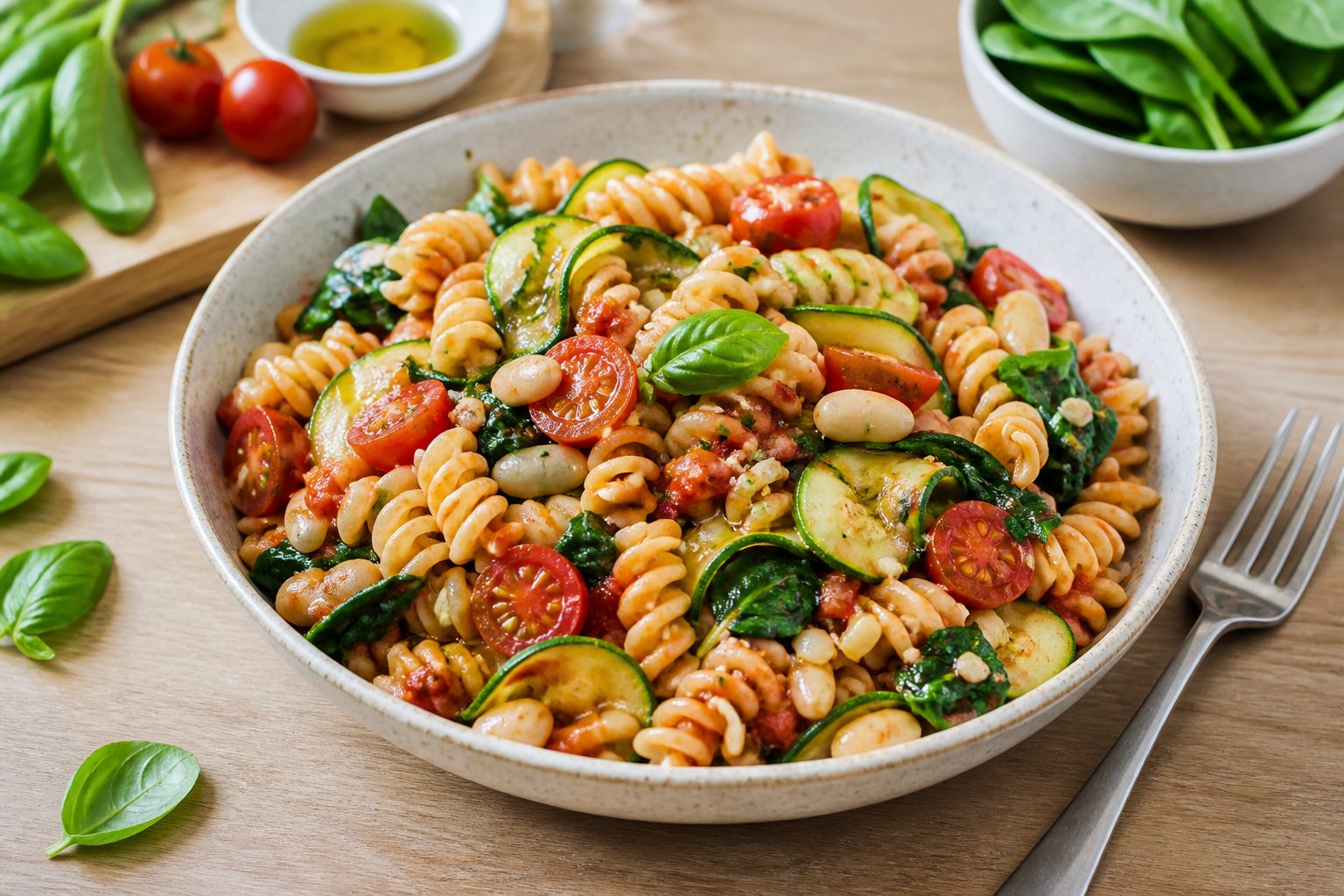
20-minute tomato, zucchini & white bean gluten-free pasta
Serves 4. This is a flexible dinner formula: swap the vegetables, beans, or pasta shape based on what you have.
Ingredients
- 8 ounces gluten-free rotini or penne
- 1 tablespoon olive oil
- 1 medium zucchini, thinly sliced
- 2 cups baby spinach
- 1½ cups no-salt-added or rinsed canned white beans
- 1½ cups marinara sauce
- ¼ cup chopped basil
- Optional: Parmesan, red-pepper flakes, or lemon zest
Method
- Cook the gluten-free pasta according to the package. Reserve ½ cup cooking water, then drain.
- Warm olive oil in a large skillet. Cook zucchini for 4 to 5 minutes, until tender-crisp.
- Add marinara and white beans; simmer until hot. Fold in spinach until just wilted.
- Add pasta and a splash of reserved cooking water. Toss gently, then finish with basil and optional toppings.
Common gluten-free pasta mistakes to avoid
Overcooking is the most common issue. Set a timer for the earliest package time, taste a piece, and drain it promptly. Toss the pasta with sauce soon after draining so it does not clump. If you are cooking for someone with celiac disease, keep preparation surfaces, colanders, utensils, and shared condiments free from gluten cross-contact according to their individual needs.
Gluten-free pasta FAQ
Is gluten-free pasta healthier than regular pasta?
Not automatically. The nutrition profile varies by ingredients and serving size. A more balanced meal usually comes from the full plate: pasta, vegetables, protein, and sauce choices.
What is the best gluten-free pasta for weeknight dinners?
The best choice is one your household enjoys and can cook reliably. Rice-and-corn blends may be familiar in texture, while chickpea or lentil pasta can add protein and fiber. Compare labels and try a small box before stocking up.
How do I keep gluten-free pasta from getting mushy?
Follow the package’s earliest cook-time guidance, taste early, drain promptly, and sauce it right away. Avoid holding it in hot water after it is done.
Can I make gluten-free pasta ahead?
Yes. Cook it just shy of done, toss with a little sauce or oil, cool promptly, and refrigerate. Reheat gently with extra sauce or a splash of water; texture is usually best within a day or two.
Does a “gluten-free” label matter for celiac disease?
For people who need to avoid gluten strictly, labeling and cross-contact practices matter. The FDA regulates the use of the gluten-free claim on packaged foods in the U.S.; follow advice from a qualified health professional for personal medical needs.
This article is for general educational purposes and is not medical advice. People with celiac disease, wheat allergy, or other dietary conditions should follow individualized guidance from a qualified healthcare professional.