
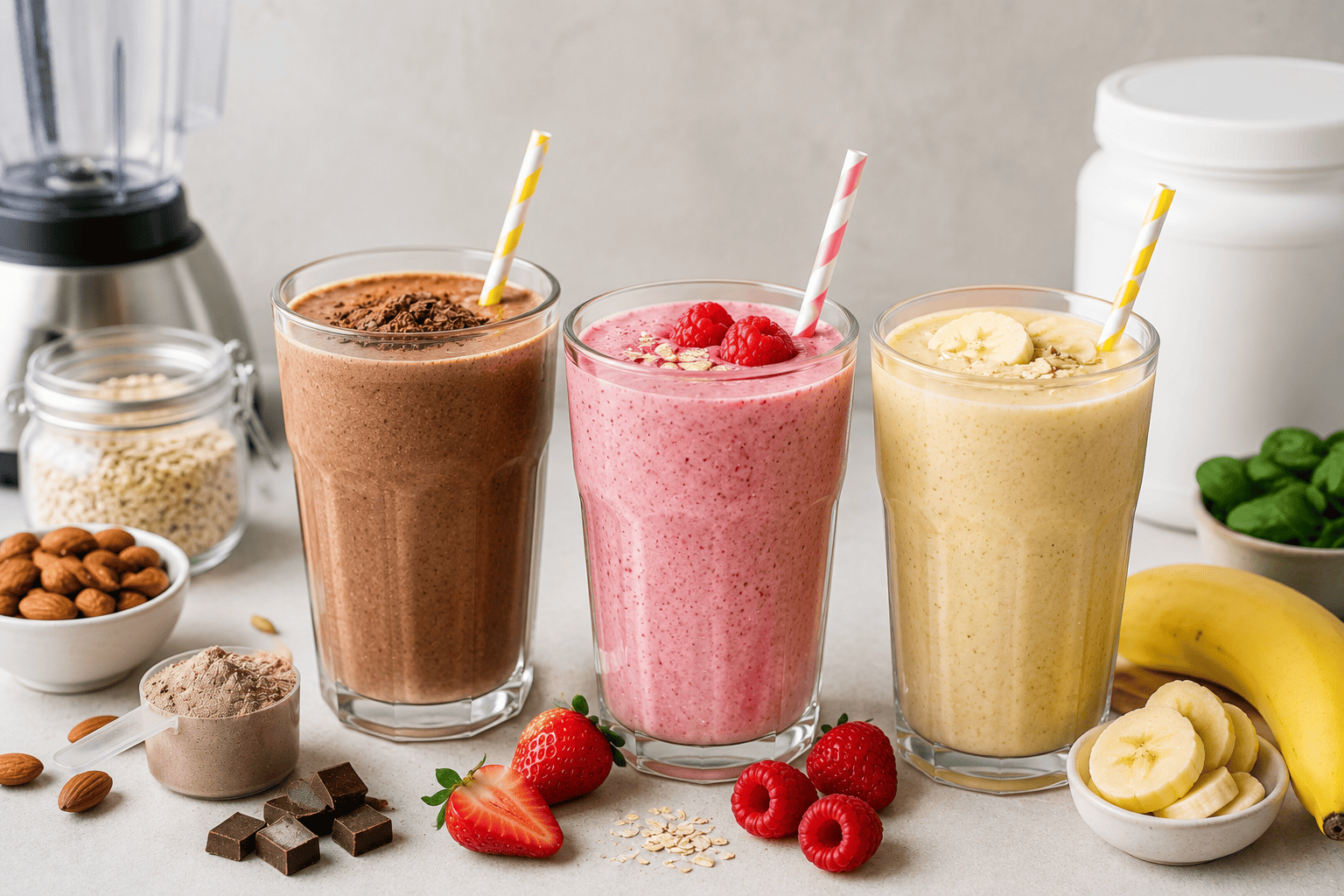
Protein smoothies combine a protein-containing ingredient with fruit, vegetables, liquid, and optional additions such as nuts or seeds. Greek-style yogurt, dairy milk, fortified soy milk, cottage cheese, tofu, nut or seed butters, and protein powders can all be used depending on dietary needs. The final protein, calorie, sugar, and nutrient content depends on the ingredients and portions.
Key Takeaways
- Protein smoothies can use foods such as yogurt, milk, fortified soy milk, cottage cheese, tofu, nuts, seeds, or nut and seed butters.
- Fruit and vegetables can add flavor, texture, and a wider range of nutrients.
- Protein powder is optional; a smoothie does not need a supplement to contain protein.
- Ingredient amounts matter because large portions of nut butter, sweeteners, juice, and other additions can substantially change the nutrition profile.
- Use pasteurized dairy and juice products, wash fresh produce, and do not add raw flour or baking mixes to ready-to-drink smoothies.
What Makes a Smoothie High in Protein?
A fruit smoothie and a protein smoothie can look almost identical, but their ingredient profiles may be quite different. Fruit provides useful nutrients and flavor, yet a smoothie intended to emphasize protein generally needs a meaningful protein-containing ingredient as well.
Dairy milk and yogurt are common options. USDA MyPlate includes milk, yogurt, lactose-free dairy products, and fortified soy milk and yogurt in the Dairy Group. Other smoothie ingredients, including tofu, nuts, seeds, and nut or seed butters, can also contribute protein.
There is no universal protein target that every smoothie needs to meet. Individual requirements vary with age, body size, activity, total food intake, pregnancy, medical conditions, and other factors.
| Smoothie component | Examples | Main role |
|---|---|---|
| Protein base | Greek-style yogurt, milk, fortified soy milk, cottage cheese, tofu | Provides much of the smoothie’s protein |
| Fruit | Berries, banana, mango, peaches | Flavor, carbohydrate, texture, and micronutrients |
| Vegetables | Spinach, kale, cooked or appropriate ready-to-eat vegetables | Adds variety and additional nutrients |
| Optional additions | Nut butter, seed butter, chia seeds, ground flaxseed, protein powder | Can change protein, fat, texture, flavor, and total energy |
Easy Protein Smoothie Ideas
Berry Greek Yogurt Smoothie
Blend plain Greek-style yogurt with berries and enough milk or another suitable liquid to reach your preferred consistency. Banana can make the mixture sweeter and thicker without requiring a separate sweetener.
- Protein option: Greek-style yogurt plus dairy milk or fortified soy milk.
- Fruit: strawberries, blueberries, raspberries, or a mixture.
- Optional: chia seeds, ground flaxseed, or nut butter.
Banana Peanut Butter Smoothie
Blend banana with milk or fortified soy milk and peanut butter. Plain yogurt can be added for a thicker texture and another protein-containing ingredient. Cinnamon or unsweetened cocoa can change the flavor without turning the recipe into a completely different smoothie.
Peanut butter is energy-dense as well as protein-containing, so the amount used can substantially affect the final smoothie. People with peanut allergies should use an appropriate alternative and follow their allergy-management plan.
Peach Cottage Cheese Smoothie
Cottage cheese can blend surprisingly smoothly with peaches and milk. Vanilla, cinnamon, or another preferred spice can help round out the flavor. Packaged cottage cheese varies in sodium, fat, and protein, so check the Nutrition Facts label when those values matter to you.
Berry Tofu Smoothie
Silken tofu can provide a creamy base without dairy. Blend it with berries, banana, and a suitable liquid. Tofu products differ in nutrient composition, so packaged labels are useful when you want to compare protein, calcium, sodium, or other nutrients.
Green Protein Smoothie
Combine washed spinach with banana or another fruit, plain yogurt, and milk or fortified soy milk. Nut or seed butter can be added if desired. Start with a modest amount of leafy greens if you prefer a milder flavor.
Chocolate Banana Protein Smoothie
Blend banana, milk, plain Greek-style yogurt, and unsweetened cocoa powder. Peanut or another nut or seed butter can make the smoothie richer. If using a flavored yogurt or protein product, check the label because added sugars and other ingredients vary among products.
Do You Need Protein Powder?
No. Protein smoothies can be made entirely from conventional foods. For more plant-based options, see our high-protein vegan food guide. Yogurt, milk, fortified soy milk, cottage cheese, tofu, nuts, seeds, and nut or seed butters are among the options that can contribute protein.
Protein powder can be convenient for some people, but products differ in protein content, sweeteners, flavors, allergens, other ingredients, and intended use. A supplement is not automatically necessary simply because a smoothie is being used for breakfast or after exercise.
Protein powders may be sold as conventional foods or dietary supplements. FDA does not approve dietary supplements for safety and effectiveness before sale. Check with a qualified health professional before using a supplement if you take medicines, are pregnant or breastfeeding, have a medical condition, or are choosing one for a child; added ingredients may introduce additional risks.
Practical approach: Build the smoothie around foods first. If you choose a protein powder, read the ingredient list, serving information, allergen statements, and Nutrition Facts or Supplement Facts panel rather than assuming all products are equivalent.
How to Build a More Substantial Smoothie
A smoothie made mainly from fruit and liquid may feel very different from one that includes yogurt, tofu, nut butter, or another substantial ingredient. When you want a smoothie to function as a meal rather than a small beverage, consider the complete combination.
- Choose a protein source: yogurt, milk, fortified soy milk, tofu, cottage cheese, or another suitable option.
- Add fruit: fresh or frozen fruit provides flavor and can help create a thicker texture.
- Consider vegetables: leafy greens are easy to blend into many fruit-based combinations.
- Add fat if desired: nuts, seeds, or nut and seed butters can change flavor, texture, and total energy.
- Adjust the liquid: use enough to reach a drinkable consistency without unnecessarily diluting the flavors you want.
Common Protein Smoothie Mistakes
Assuming “protein” automatically means balanced
Protein is only one part of a food’s nutritional profile. Fruit, vegetables, grains, dairy or fortified soy foods, protein foods, and other foods can contribute different nutrients across the day.
Adding multiple concentrated ingredients without considering portions
Nut butter, seeds, protein powder, yogurt, juice, sweeteners, and other additions can quickly turn a simple smoothie into a much larger meal. That is not inherently a problem, but it makes portion awareness useful.
Using juice as the only liquid by default
Juice can be used in a smoothie, but it is not required. Milk, fortified soy milk, or water can also provide liquid depending on the recipe. When juice is used, choose pasteurized products for food safety.
Treating every plant-based beverage like dairy milk
Plant-based beverages differ considerably in protein and micronutrients. USDA MyPlate specifically includes fortified soy milk and yogurt in the Dairy Group. Check product labels when comparing other plant-based beverages.
Smoothie Food Safety
Smoothies are usually consumed without a cooking step, which makes safe ingredient selection and preparation important. Wash fresh fruits and vegetables thoroughly under running water before preparing them. When using juice, FDA guidance recommends pasteurized juice, particularly for people at greater risk from foodborne illness.
Do not add raw flour or baking mix to a smoothie. FDA identifies flour as a raw food that can contain harmful bacteria. Flour and baking mixes intended to be cooked should not be used in ready-to-eat drinks such as smoothies or milkshakes.
Use pasteurized milk and dairy products, keep perishable ingredients refrigerated, use clean equipment, and wash the blender after preparation.
Drink freshly prepared smoothies promptly or refrigerate them in a covered container at 40°F (4°C) or below. Discard perishable smoothies left out for more than two hours, or one hour above 90°F (32°C). Follow the shortest storage instructions among your ingredients; refrigeration does not make unsafe ingredients safe.
Pregnant people, young children, older adults, and people with weakened immune systems can face greater consequences from some foodborne infections and should pay particular attention to pasteurization and safe handling.
A Simple Protein Smoothie Checklist
- Start with one primary protein-containing ingredient.
- Choose fresh or frozen fruit for flavor and texture.
- Add vegetables if they fit the flavor combination you enjoy.
- Use nuts, seeds, or nut and seed butters intentionally rather than automatically.
- Choose enough liquid to achieve your preferred consistency.
- Check labels on packaged yogurt, beverages, protein products, and other ingredients when precise nutrition matters.
- Use safe, ready-to-eat ingredients and avoid raw flour or uncooked baking mixes.
Frequently Asked Questions
The Bottom Line
Protein smoothies can be a convenient breakfast, snack, or meal component when they are built around ingredients that fit your nutritional needs. Yogurt, milk, fortified soy milk, cottage cheese, tofu, nuts, seeds, and nut or seed butters can contribute protein without making protein powder mandatory.
For a spoonable breakfast alternative, try our protein oatmeal ideas. Focus on the complete smoothie rather than protein alone. Fruit, vegetables, protein-containing foods, portion size, added sweeteners, and concentrated additions all influence the final nutrition profile. When precise intake matters, calculate the ingredients actually used rather than relying on a generic smoothie estimate.
Medical disclaimer
This content is for educational and informational purposes only and is not a substitute for professional medical advice, diagnosis, or treatment. Dietary needs and supplement suitability vary by individual.
Sources
- U.S. Department of Agriculture, MyPlate, Dairy Group, accessed September 2026.
- U.S. Department of Agriculture, MyPlate Kitchen, Yogurt Smoothie in a Bag, accessed September 2026.
- U.S. Food and Drug Administration, Handling Flour Safely: What You Need to Know, accessed September 2026.
- U.S. Food and Drug Administration, Fruits, Veggies and Juices: Food Safety for Moms-to-Be, accessed September 2026.
- U.S. Food and Drug Administration, Are You Storing Food Safely?, accessed September 2026.
- U.S. Food and Drug Administration, FDA 101: Dietary Supplements, accessed September 2026.
