
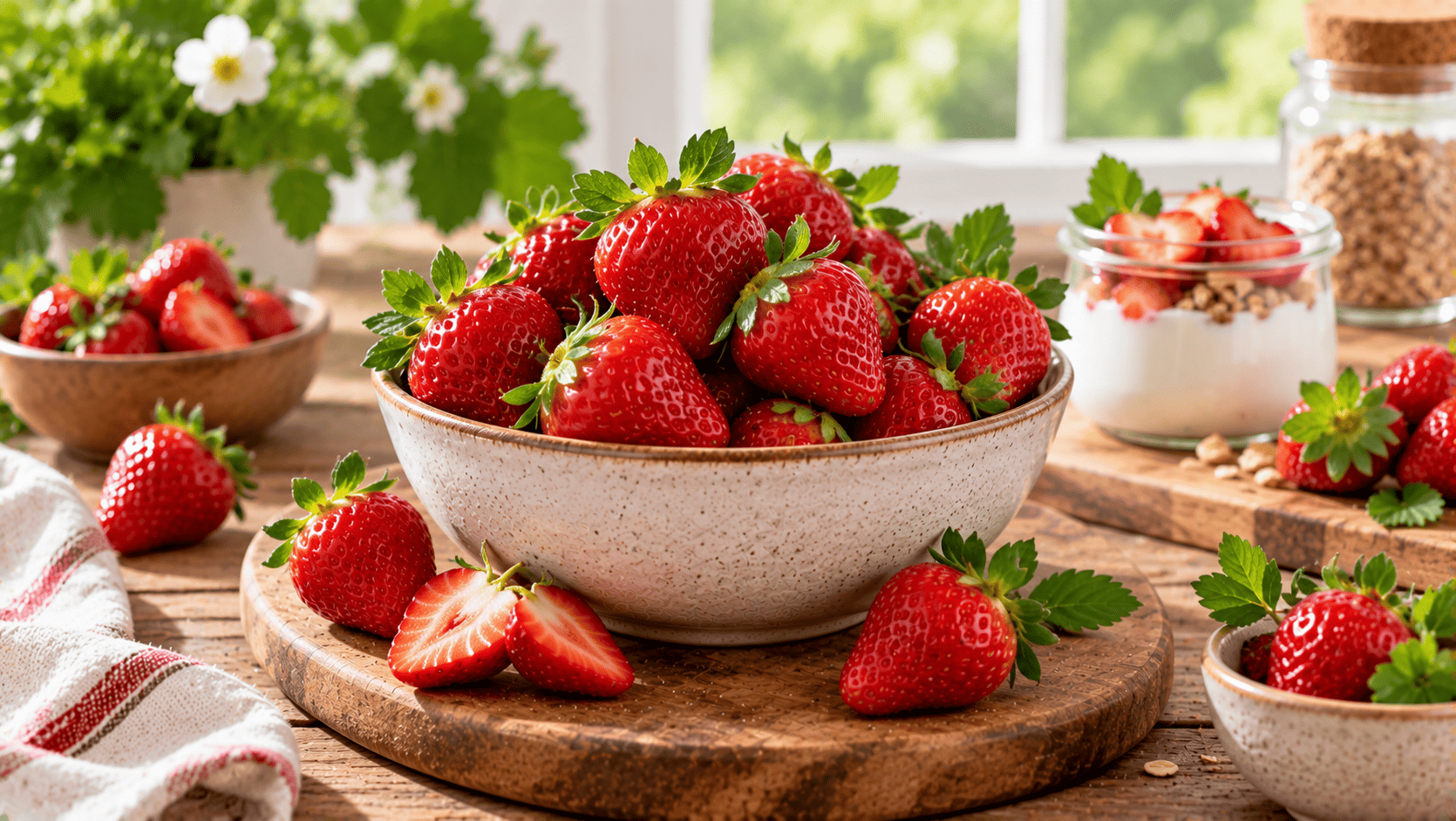
Strawberries nutrition: Strawberries are a low-calorie fruit that provides vitamin C, fiber, folate, potassium, and colorful plant compounds called anthocyanins. One cup of sliced strawberries contains about 53 calories, making them easy to fit into breakfasts, snacks, and desserts. Research suggests berries can support a heart-healthy eating pattern, but strawberries should be viewed as nutritious whole food rather than a treatment for cholesterol, diabetes, inflammation, or other diseases.
Strawberries nutrition includes more than a single nutrient. This strawberries nutrition overview considers fiber, vitamins, calories, serving size, and the overall dietary pattern. This evidence-focused overview considers practical use, limitations, and safety.
Strawberries nutrition: Key Takeaways
- One cup of sliced strawberries provides about 53 calories, 13 grams of carbohydrate, 3 grams of fiber, and 8 grams of naturally occurring sugar.
- Strawberries are especially notable for vitamin C and also provide folate, potassium, manganese, and other nutrients.
- Their red color comes partly from anthocyanins, plant pigments studied for possible cardiometabolic benefits.
- Clinical studies show promising but mixed effects on cholesterol, inflammation, insulin resistance, and other cardiovascular risk markers.
- Fresh and unsweetened frozen strawberries can both contribute to a healthy diet.
Strawberries Nutrition
Strawberries provide a large volume of fruit for relatively few calories. USDA nutrition information lists one cup of sliced strawberries, about 168 grams, at roughly 53 calories.
| Nutrient | Approximate amount per 1 cup sliced |
|---|---|
| Calories | 53 |
| Carbohydrate | 13 g |
| Fiber | 3 g |
| Total sugars | 8 g |
| Protein | 1 g |
| Vitamin C | About 108 mg |
Nutrient values vary somewhat with variety, ripeness, serving size, and food database. The broader nutritional pattern remains clear: strawberries are low in calories and fat while providing vitamin C, fiber, and naturally occurring carbohydrate.
Strawberries Are Rich in Vitamin C
Vitamin C is one of the standout nutrients in strawberries. The body needs this vitamin to make collagen, support normal immune function, maintain connective tissues, and improve absorption of nonheme iron from plant foods.
Vitamin C also functions as an antioxidant, meaning it helps protect cells from oxidative damage. That biological role does not mean eating extra strawberries will prevent colds, reverse aging, or treat chronic disease.
Strawberries can simply be one useful food source alongside citrus fruit, kiwi, peppers, tomatoes, broccoli, and other vitamin C-rich foods.
Fiber in Strawberries
One cup of sliced strawberries contributes about 3 grams of dietary fiber. That amount is lower than a cup of raspberries or blackberries, but it still makes a useful contribution to daily intake.
Fiber supports normal bowel function and can help meals feel more satisfying. It also slows digestion compared with rapidly absorbed carbohydrate foods that contain little or no fiber.
For a more fiber-rich eating pattern, combine strawberries with foods such as oatmeal, chia seeds, nuts, beans, whole grains, or other fruits rather than expecting berries to provide all of your daily fiber.
Simple upgrade: strawberries with plain yogurt, oats, and nuts provide fruit, fiber, protein, and unsaturated fat in the same meal.
What Are Anthocyanins?
Anthocyanins are plant pigments found in red, purple, and blue fruits and vegetables. They contribute to the color of strawberries, blueberries, blackberries, cherries, and several other foods.
Scientists study anthocyanins because they may influence blood-vessel function, inflammation, glucose metabolism, and other processes related to cardiovascular health. Research across anthocyanin-rich foods has produced encouraging findings, but these studies include many different foods and populations.
That distinction matters. Evidence about anthocyanin-rich dietary patterns cannot prove that a serving of strawberries by itself prevents a heart attack, diabetes, or another chronic condition.
Are Strawberries Good for Heart Health?
Strawberries fit naturally into a heart-healthy dietary pattern. They contain little saturated fat or sodium, provide fiber and potassium, and offer polyphenols such as anthocyanins.
Clinical evidence is more nuanced than many food claims suggest. A meta-analysis of randomized strawberry trials found a reduction in C-reactive protein, a marker of inflammation, but did not find significant overall changes in blood pressure, standard cholesterol measurements, or fasting glucose.
Some individual trials have found improvements in selected cholesterol particles, vascular measures, or metabolic markers, particularly among adults with elevated cardiometabolic risk. Other trials have found little change in conventional LDL cholesterol, blood pressure, glucose, or insulin.
Best interpretation: strawberries belong comfortably in a heart-healthy diet, but they do not replace cholesterol medication, blood-pressure treatment, physical activity, or an overall balanced eating pattern.
Strawberries and Blood Sugar
Strawberries taste sweet, but one cup of sliced berries contains only about 8 grams of naturally occurring sugar. Their water and fiber also contribute volume without a large carbohydrate load.
A 2025 randomized crossover study in adults with prediabetes reported improvements in fasting glucose, insulin, insulin resistance, and glycated hemoglobin during a 12-week strawberry intervention. The study involved a relatively small number of participants, so its findings are promising rather than definitive.
Earlier trials have produced mixed findings. For example, some studies in adults with obesity or elevated LDL cholesterol found improvements in insulin-related measures, while others found no significant fasting glucose or insulin changes.
People with diabetes can often include whole strawberries within an individualized meal plan. Total carbohydrate intake, medication, physical activity, and overall dietary pattern remain more important than any single fruit.
Are Strawberries Good for Weight Management?
Strawberries provide a large serving for relatively few calories, which can make them useful when someone wants a sweet-tasting food without adding a large amount of energy.
Replacing candy, pastries, or heavily sweetened desserts with fresh berries can lower the calorie density and added sugar of a snack. Pairing strawberries with protein-rich foods can also make the meal more filling.
Still, strawberries do not directly burn body fat or increase metabolism in a clinically meaningful way. Long-term weight change reflects total energy intake, activity, sleep, health conditions, medications, genetics, and other factors.
Fresh vs Frozen Strawberries
Fresh and frozen strawberries can both contribute to a nutritious diet. Frozen berries are convenient because they keep longer and work well in oatmeal, yogurt, smoothies, sauces, and cooked dishes.
Look for frozen strawberries without added syrup or sugar when you want the nutritional profile of whole fruit. Sweetened frozen berries can contain considerably more added sugar.
Freezing changes texture, so thawed strawberries are often softer than fresh fruit. That texture change does not make them nutritionally worthless.
What About Dried Strawberries?
Removing water concentrates a fruit into a smaller volume. This makes dried strawberries easier to eat quickly and can increase the calories and naturally occurring sugar per bite compared with fresh berries.
Some packaged dried strawberries also contain substantial added sugar. Read the ingredient list because a product labeled “strawberries” may include sweeteners or oils.
Freeze-dried strawberries usually have a crisp texture and may contain only fruit. They can be useful in cereal, yogurt, or trail mix, but portion size still differs from fresh berries because most of the water has been removed.
How Much Should You Eat?
There is no medical requirement to eat strawberries every day. A half-cup to one-cup serving fits easily into many meals and snacks, while larger portions can also work depending on appetite and overall food intake.
Fruit variety deserves just as much attention as the serving size of a single berry. Rotating strawberries with blueberries, blackberries, raspberries, citrus, apples, pears, kiwi, and other fruits broadens nutrient and plant-compound exposure.
Healthy Ways to Eat Strawberries
- Slice them over oatmeal or overnight oats.
- Pair them with plain Greek yogurt and nuts or seeds.
- Add fresh berries to cottage cheese for a fruit-and-protein snack.
- Use frozen strawberries in smoothies without adding sweetened juice.
- Add sliced strawberries to spinach or mixed-green salads.
- Serve berries with a small amount of dark chocolate or yogurt instead of a heavily sweetened dessert.
How to Choose and Store Strawberries
Choose strawberries that look firm, brightly colored, and free from obvious mold or extensive bruising. Check the bottom of the container because moisture or crushed berries can signal faster spoilage.
FDA recommends refrigerating perishable produce such as strawberries at 40°F or below. Keep the fruit refrigerated and use it before mold or spoilage develops.
Leaving berries unwashed until shortly before use can reduce excess moisture during storage. Discard fruit that looks rotten or moldy rather than cutting around extensive spoilage.
How to Wash Strawberries
Wash fresh strawberries under plain running water shortly before eating or preparing them. FDA does not recommend using soap, detergent, bleach, or commercial produce washes.
Handle the berries gently because their surface bruises easily. Drying them with a clean paper towel or cloth after rinsing can remove additional surface moisture.
Washing can reduce surface contamination but cannot guarantee removal of every microorganism. Good refrigeration, clean hands, and clean food-preparation surfaces also matter.
Who May Need to Be Careful?
Most people can safely include strawberries in their diet. Individual circumstances can still affect portion size or suitability.
- Food allergy: strawberry allergy is possible and can cause oral, skin, digestive, or more serious allergic symptoms.
- Digestive sensitivity: some people experience bloating or discomfort after larger fruit portions.
- Modified-fiber diets: certain gastrointestinal conditions or procedures may require temporary restrictions that affect berry intake.
- Blood sugar management: strawberries still contain carbohydrate, so portion size should fit an individualized diabetes meal plan when relevant.
Common Strawberry Myths
“Strawberries Detox the Body”
Strawberries provide nutrients and plant compounds, but they do not perform a special detox. The liver, kidneys, lungs, and digestive system handle normal waste processing.
“Strawberries Are Too Sugary for Diabetes”
Whole strawberries contain naturally occurring sugar along with water and fiber. Many people with diabetes can include them as part of an individualized eating plan.
“Strawberries Burn Belly Fat”
No fruit selectively burns abdominal fat. Strawberries can replace higher-calorie foods, but changes in body fat depend on overall energy balance and many other factors.
“Frozen Strawberries Have No Nutritional Value”
Unsweetened frozen strawberries remain a practical fruit choice. Texture changes after freezing, but frozen berries can still provide fiber and important nutrients.
Frequently Asked Questions
Related reading
The Bottom Line
Strawberries offer vitamin C, fiber, naturally occurring plant compounds, and plenty of volume for relatively few calories. Fresh or unsweetened frozen berries can make it easier to add fruit to breakfast, snacks, salads, and desserts without relying on foods high in added sugar.
Clinical research on cholesterol, inflammation, insulin resistance, and vascular health is encouraging in some populations but remains mixed. Enjoy strawberries for their nutritional value and versatility rather than expecting them to act as medicine. The overall eating pattern still matters far more than any single berry.
Medical disclaimer
Medical disclaimer: This content is for educational and informational purposes only and is not a substitute for professional medical advice, diagnosis, or treatment. Dietary needs and supplement suitability vary by individual.
Authoritative nutrition resources: USDA FoodData Central and Dietary Guidelines for Americans.
Sources
- U.S. Department of Agriculture, SNAP-Ed. Strawberries: Nutrition Information. Accessed September 2026.
- U.S. Food and Drug Administration. Selecting and Serving Produce Safely. Accessed September 2026.
- U.S. Food and Drug Administration. Summary of FDA’s Strategy to Prevent Human Norovirus and Hepatitis A Outbreaks Associated with Fresh and Frozen Berries. Accessed September 2026.
- Gao Q, Qin LQ, Arafa A, et al. Effects of strawberry intervention on cardiovascular risk factors: a meta-analysis of randomised controlled trials. British Journal of Nutrition. 2020.
- Huang L, Xiao D, Zhang X, et al. Strawberry Consumption, Cardiometabolic Risk Factors, and Vascular Function: A Randomized Controlled Trial in Adults with Moderate Hypercholesterolemia. Journal of Nutrition. 2021.
- Basu A, Izuora K, Betts NM, et al. Dietary Strawberries Improve Cardiometabolic Risks in Adults with Obesity and Elevated Serum LDL Cholesterol in a Randomized Controlled Crossover Trial. Nutrients. 2021.
- Strawberries Improve Insulin Resistance and Related Cardiometabolic Markers in Adults with Prediabetes: A Randomized Controlled Crossover Trial. 2025.
- Dietary intakes of anthocyanins and cardiometabolic health: a systematic review and meta-analysis of randomized trials and prospective cohort studies in healthy participants. 2026.
