
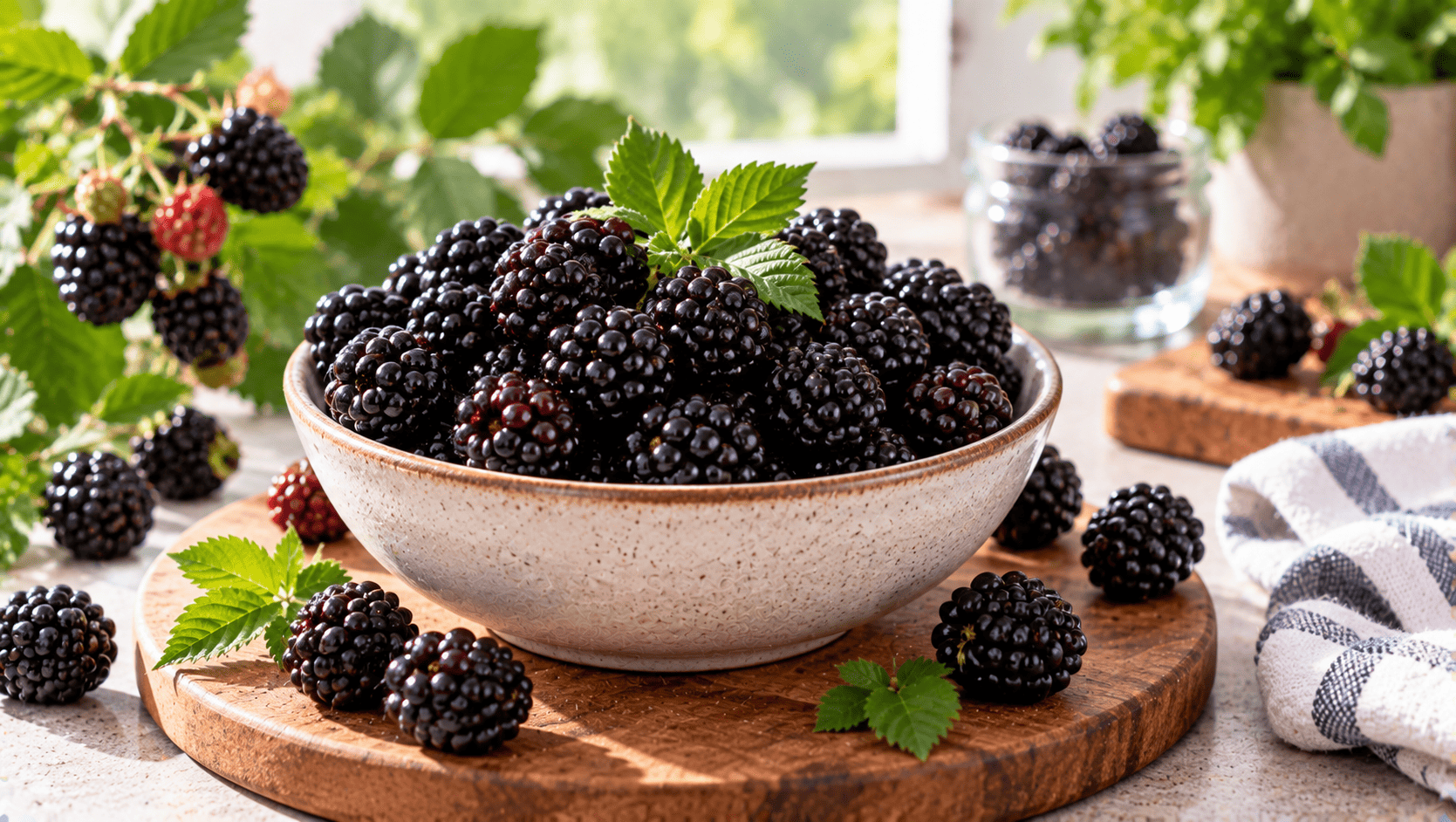
Blackberries nutrition: Blackberries are a low-calorie berry with a notable amount of fiber, vitamin C, and naturally occurring plant compounds called anthocyanins. One cup provides about 62 calories and nearly 8 grams of fiber. They can fit easily into breakfasts, snacks, desserts, and savory meals. Their strongest nutritional value comes from being a whole fruit, not from treating blackberries as a cure for inflammation, diabetes, heart disease, or other medical conditions.
Blackberries nutrition includes more than a single nutrient. This blackberries nutrition overview considers fiber, vitamins, calories, serving size, and the overall dietary pattern. This evidence-focused overview considers practical use, limitations, and safety.
Blackberries nutrition: Key Takeaways
- One cup of raw blackberries has about 62 calories, 14 grams of carbohydrate, 7 grams of naturally occurring sugar, and nearly 8 grams of fiber.
- Blackberries provide vitamin C along with smaller amounts of several other vitamins and minerals.
- Their dark purple color comes partly from anthocyanins, a group of plant compounds also found in other deeply colored berries.
- Fiber and relatively modest sugar content can make blackberries a useful fruit choice in balanced meals, including for many people managing blood sugar.
- Fresh and frozen unsweetened blackberries can both be practical options; added sugar matters more than whether the fruit is fresh or frozen.
Blackberries Nutrition
Blackberries pack a large amount of fiber into a relatively small number of calories. USDA data list one cup of raw blackberries, about 144 grams, at roughly 62 calories.
| Nutrient | Approximate amount per 1 cup |
|---|---|
| Calories | 62 |
| Carbohydrate | 14 g |
| Fiber | About 7.6–8 g |
| Total sugars | About 7 g |
| Protein | About 2 g |
| Fat | Less than 1 g |
| Vitamin C | About 30–34 mg |
Exact values can vary slightly by variety, growing conditions, ripeness, and database update. The overall pattern is consistent: blackberries provide relatively few calories, little fat, and a substantial amount of fiber.
Blackberries Are High in Fiber
Fiber is one of the most notable features of blackberries. A single cup provides close to 8 grams, which is substantial for a fruit serving.
Dietary fiber supports normal bowel function and can increase fullness after meals. Fiber-rich foods also tend to produce a different blood-glucose response from foods containing similar carbohydrate but little fiber.
Blackberries should still be part of a varied fiber intake. Beans, lentils, vegetables, whole grains, nuts, seeds, and other fruits provide different types of fiber and nutrients.
Practical benefit: berries can add both fruit and fiber to a meal without requiring a large serving or a high calorie intake.
Vitamin C and Other Nutrients
A cup of blackberries provides roughly 30 milligrams or more of vitamin C. Vitamin C supports normal collagen formation, helps with iron absorption from plant foods, and acts as an antioxidant in the body.
Blackberries also contain potassium and other micronutrients. They contribute manganese as well, a mineral involved in normal metabolism and antioxidant enzyme function.
Their value does not come from one nutrient alone. The combination of fiber, vitamins, minerals, and plant compounds makes whole berries nutritionally useful.
What Are Anthocyanins?
Anthocyanins are naturally occurring pigments that give many berries their red, blue, purple, or nearly black color. Blackberries contain these compounds along with other polyphenols.
Researchers study anthocyanins because they may influence blood-vessel function, glucose regulation, and other pathways involved in cardiometabolic health. A recent systematic review found associations between higher habitual anthocyanin intake and lower rates of several cardiovascular and metabolic outcomes, while randomized trials found changes in some intermediate biomarkers.
Those findings apply to anthocyanin-rich diets and foods more broadly, not exclusively to blackberries. They also do not prove that eating blackberries prevents heart attacks, diabetes, or other diseases.
Avoid the “antioxidant superfood” shortcut. Blackberries are nutritious, but health outcomes depend on the broader dietary pattern, physical activity, sleep, smoking status, medications, and many other factors.
Are Blackberries Good for Heart Health?
Blackberries can fit well into a heart-healthy eating pattern because they provide fiber, contain little sodium naturally, and add fruit without much saturated fat.
Research on berries and anthocyanins also suggests possible cardiovascular benefits. Recent reviews have linked higher anthocyanin intake with favorable cardiovascular outcomes, while controlled studies with different berry products have found improvements in selected blood-vessel measures.
The evidence does not justify treating blackberries as a cholesterol or blood-pressure therapy. They work best as part of an eating pattern that also emphasizes vegetables, whole grains, legumes, nuts, unsaturated fats, and other whole foods.
Blackberries and Blood Sugar
One cup of blackberries contains about 14 grams of total carbohydrate and roughly 7 grams of naturally occurring sugar. Nearly 8 grams of fiber accompany that carbohydrate.
That combination can make blackberries easier to fit into a blood-sugar-conscious meal plan than many sweetened snacks or fruit products with added sugar. Pairing berries with protein or healthy fat, such as plain yogurt, nuts, seeds, or cottage cheese, can also create a more balanced snack.
Research on anthocyanin supplements and extracts in people with type 2 diabetes has found improvements in several glucose-related measures in pooled analyses. However, those studies used different sources and doses and should not be interpreted as proof that ordinary servings of blackberries treat diabetes.
For diabetes: whole unsweetened blackberries can often fit into an individualized eating plan, but medication, total carbohydrate intake, meal composition, and glucose monitoring remain more important than any single fruit.
Are Blackberries Good for Weight Management?
Blackberries provide a relatively large volume of food for about 62 calories per cup. Their fiber may also help meals or snacks feel more satisfying.
That makes them practical when someone wants fruit without adding many calories. They can replace candy, pastries, sweetened cereal toppings, or other higher-calorie foods when the goal is to improve overall dietary quality.
No berry directly burns body fat. Weight change depends on energy intake, physical activity, sleep, medications, health conditions, genetics, and other factors over time.
Fresh vs Frozen Blackberries
Both fresh and frozen blackberries can be nutritious choices. Frozen berries are especially convenient for oatmeal, smoothies, yogurt, and cooked dishes.
Choose unsweetened frozen fruit when possible. Products packed with syrup or added sugar can contain much more sugar than the berries naturally provide.
Texture changes after freezing, but that does not make frozen berries nutritionally useless. Their softer texture often works well in cooked meals and blended foods.
How Much Should You Eat?
There is no requirement to eat blackberries every day. A half-cup to one-cup portion can fit comfortably into many meals and snacks.
People who are not accustomed to much fiber may prefer to increase portions gradually. A sudden large increase in fiber can cause gas, bloating, or changes in bowel habits.
Variety also matters. Rotating blackberries with blueberries, raspberries, strawberries, citrus, apples, pears, and other fruits provides a wider range of nutrients and plant compounds.
Healthy Ways to Eat Blackberries
- Add them to plain Greek yogurt with nuts or seeds.
- Mix them into oatmeal or overnight oats.
- Serve them with cottage cheese for a higher-protein snack.
- Add frozen berries to smoothies without adding syrup or juice concentrate.
- Use them in salads with leafy greens, nuts, and a simple vinaigrette.
- Serve them with other fresh fruit as a naturally sweet dessert.
How to Choose and Store Blackberries
Choose berries that look plump and deeply colored. Avoid containers with obvious mold, leaking juice, or large numbers of crushed berries.
Refrigerate fresh blackberries and use them relatively quickly because berries are highly perishable. Keep them dry until you are ready to wash and eat them.
For longer storage, freeze washed and thoroughly dried berries in a single layer before transferring them to a freezer container. This helps reduce clumping.
How to Wash Blackberries
Rinse blackberries gently under cool running water before eating. Their delicate structure makes them easy to crush, so avoid aggressive scrubbing.
Washing berries shortly before eating rather than before storage can help reduce excess moisture in the container. Moisture encourages faster spoilage and mold growth.
Organic and conventionally grown berries both need washing. Buying organic produce does not remove the need for basic food-handling practices.
Who May Need to Be Careful?
Blackberries are safe for most people as a normal food, but certain situations may require a more individualized approach.
- Food allergy: berry allergy is possible, although uncommon.
- Digestive sensitivity: a large serving may trigger bloating or discomfort in some people because of the fiber and naturally occurring carbohydrates.
- Special gastrointestinal diets: portion size may need adjustment for people following a medically supervised low-fiber or modified-carbohydrate diet.
- Swallowing or chewing problems: seeds and texture can matter for some individuals who require texture-modified foods.
Common Blackberry Myths
“Blackberries Detox the Body”
Blackberries provide useful nutrients, but they do not perform a special detoxification process. The liver, kidneys, lungs, and digestive system already handle the body’s normal waste-processing functions.
“Dark Berries Prevent Cancer”
Laboratory research on berry compounds can be interesting, but it does not prove that eating blackberries prevents or treats cancer in humans. No single fruit should be described as an anticancer therapy.
“People With Diabetes Should Avoid Berries”
Whole blackberries contain carbohydrate, but they also provide substantial fiber and no added sugar. Many people with diabetes can include them within an individualized carbohydrate plan.
“Frozen Berries Are Nutritionally Inferior”
Unsweetened frozen berries remain a useful fruit choice. Freshness, convenience, cost, and texture may differ, but frozen fruit can still provide fiber and important nutrients.
Frequently Asked Questions
Related reading
The Bottom Line
Blackberries offer a strong combination of fiber, vitamin C, relatively few calories, and anthocyanin-rich plant compounds. One cup provides nearly 8 grams of fiber while containing only about 62 calories and 7 grams of naturally occurring sugar.
Their health value is best understood as part of a broader eating pattern rather than as a superfood cure. Fresh or unsweetened frozen blackberries can make it easier to eat more fruit, increase fiber intake, and add natural sweetness to meals without relying on heavily sweetened foods.
Medical disclaimer
Medical disclaimer: This content is for educational and informational purposes only and is not a substitute for professional medical advice, diagnosis, or treatment. Dietary needs and supplement suitability vary by individual.
Authoritative nutrition resources: USDA FoodData Central and Dietary Guidelines for Americans.
Sources
- U.S. Department of Agriculture, FoodData Central. Blackberries, raw. Foundation Food database. Accessed September 2026.
- U.S. Department of Agriculture, SNAP-Ed. Blackberries: Nutrition Information. Accessed September 2026.
- Harvard T.H. Chan School of Public Health. The Nutrition Source. Antioxidants. Accessed September 2026.
- Harvard T.H. Chan School of Public Health. Berries Are Among the Healthiest Foods You Can Eat. Updated November 22, 2024.
- Dietary intakes of anthocyanins and cardiometabolic health: a systematic review and meta-analysis of randomized trials and prospective cohort studies in healthy participants. 2026.
- Effects of anthocyanin supplementation in diet on glycemic and related cardiovascular biomarkers in patients with type 2 diabetes: a systematic review and meta-analysis of randomized controlled trials. Frontiers in Nutrition. 2023.
