
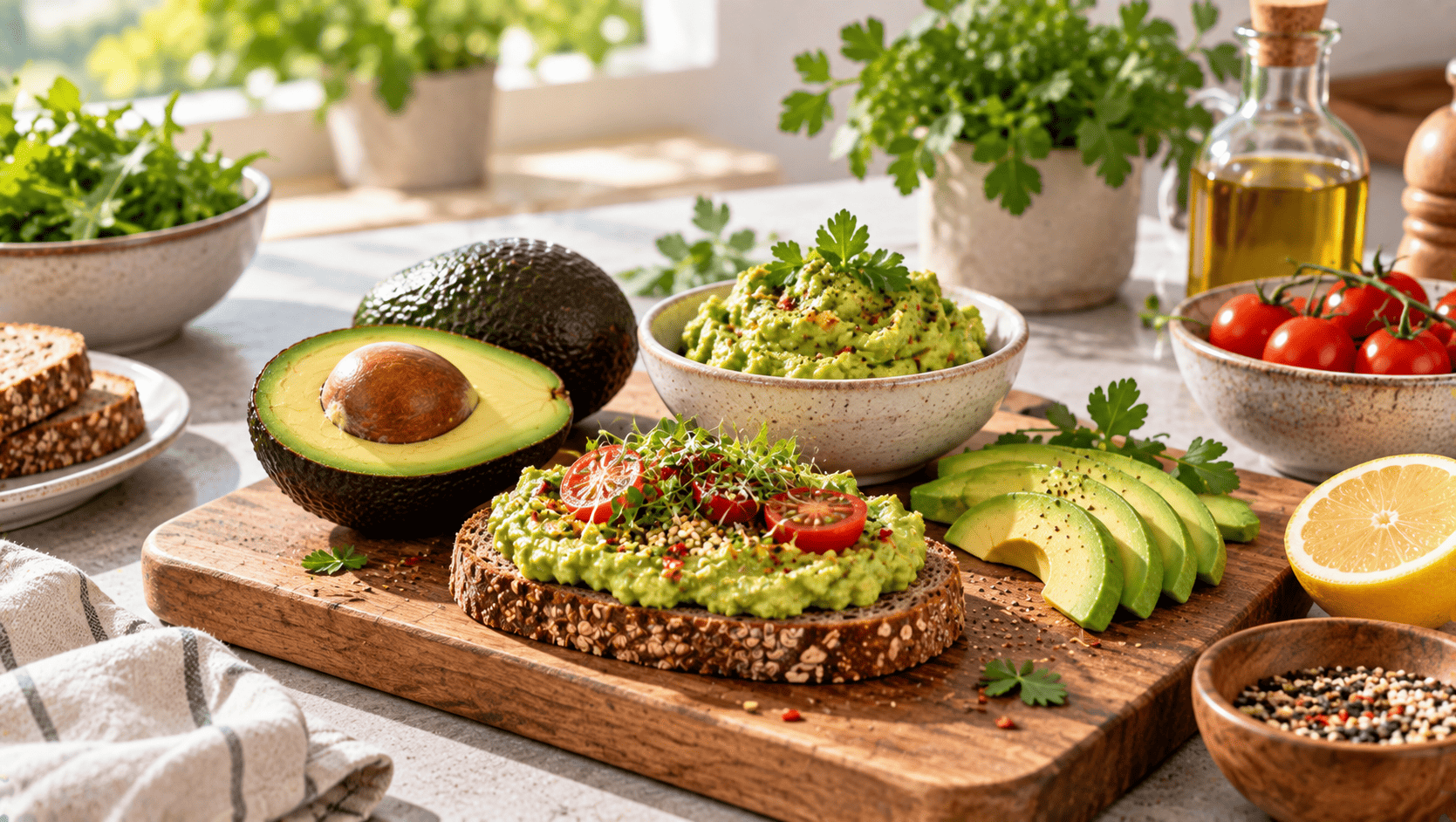
Avocado nutrition: Avocado is a nutrient-dense fruit known for its creamy texture, fiber, and mostly unsaturated fat. It also provides potassium, folate, vitamin E, vitamin K, and other nutrients. Eating avocado can fit comfortably into a heart-healthy eating pattern, especially when it replaces foods higher in saturated fat. Portion size still matters because avocado is relatively calorie-dense, and its health value depends on the overall meal and diet.
Avocado nutrition includes more than a single nutrient. This avocado nutrition overview considers fiber, vitamins, calories, serving size, and the overall dietary pattern. This evidence-focused overview considers practical use, limitations, and safety.
Avocado nutrition: Key Takeaways
- Most of the fat in avocado is unsaturated, including a substantial amount of monounsaturated fat.
- Avocado also contributes fiber, potassium, folate, vitamin E, vitamin K, and several other nutrients.
- Research suggests avocado may modestly improve some cholesterol measures, although results differ across studies.
- Avocado is calorie-dense compared with many fruits, so portions can be adjusted to fit appetite and total energy needs.
- Its biggest advantage often comes from what it replaces, such as butter, cream cheese, or other foods higher in saturated fat.
What Is an Avocado?
Avocado comes from the Persea americana tree. Botanically, it is a fruit, even though people usually prepare it in savory dishes such as salads, sandwiches, tacos, and guacamole.
Unlike most fruits, avocado contains relatively little sugar and much more fat. Most of that fat is unsaturated. Its combination of fat and fiber also gives avocado its dense, creamy texture and makes it more filling than many watery fruits.
Hass avocados are among the most familiar varieties in U.S. grocery stores, but nutrient amounts can vary somewhat with variety, fruit size, and serving size.
Avocado Nutrition
A medium avocado provides roughly 240 calories, about 22 grams of fat, 10 grams of fiber, 13 grams of carbohydrate, and 3 grams of protein. Most of its fat is monounsaturated, with smaller amounts of polyunsaturated and saturated fat.
Avocado also supplies several vitamins and minerals. Notable nutrients include potassium, folate, vitamin E, vitamin K, magnesium, several B vitamins, and carotenoids such as lutein and zeaxanthin.
Portion matters: eating half an avocado provides about half the calories, fat, fiber, and other nutrients found in a whole medium fruit. You do not need to eat an entire avocado to benefit from it.
Avocado Is Rich in Unsaturated Fat
The type of fat in a food matters as much as the fact that it contains fat. Avocado contains mostly unsaturated fat, with monounsaturated fat making up the largest share.
U.S. nutrition guidance encourages replacing foods high in saturated fat with sources of unsaturated fat. Avocado can help with that exchange. For example, mashed avocado can replace butter or cream cheese on toast, and sliced avocado can add richness to a sandwich without relying on a high-saturated-fat spread.
The benefit depends on substitution. Adding avocado to an already energy-dense meal does not have the same nutritional effect as using it in place of a less favorable fat source.
Avocado and Fiber
Avocado stands out among higher-fat foods because it also provides a meaningful amount of dietary fiber. Fiber supports normal bowel function and contributes to fullness after meals.
The FDA Daily Value for fiber is 28 grams on a 2,000-calorie diet. A medium avocado can contribute roughly one-third of that amount, although actual nutrient content varies with fruit size.
Avocado should still be part of a varied fiber intake. Beans, lentils, whole grains, vegetables, fruits, nuts, and seeds provide different nutrients and types of fiber that complement one another.
Potassium and Other Micronutrients
Potassium helps support normal nerve and muscle function and plays an important role in fluid balance and blood pressure regulation. Avocado contributes potassium without containing much sodium in its natural state.
It also provides folate, which the body uses for DNA production and cell division, along with vitamin E, vitamin K, magnesium, and other micronutrients.
No single food needs to provide every nutrient. Avocado works best as one component of a varied eating pattern rather than as a nutritional shortcut.
Is Avocado Good for Heart Health?
Avocado has several characteristics that fit a heart-healthy diet: it contains mostly unsaturated fat, provides fiber and potassium, and can replace foods higher in saturated fat.
Clinical research has produced generally favorable but not perfectly consistent results. A 2024 systematic review found a small reduction in total cholesterol overall, while reductions in LDL cholesterol appeared more clearly among participants with high cholesterol. The authors rated certainty in several findings as low or very low.
A newer 2025 meta-analysis of randomized trials reported a modest reduction in LDL cholesterol and a small reduction in systolic blood pressure, while triglycerides, HDL cholesterol, fasting glucose, body mass index, and several other measures did not significantly change.
Best interpretation: avocado can support a heart-healthy eating pattern, but it is not a cholesterol-lowering medication and should not replace treatment prescribed for high cholesterol or cardiovascular disease.
Does Avocado Raise Cholesterol?
Avocado itself contains no dietary cholesterol. More importantly, its fat profile is dominated by unsaturated rather than saturated fat.
Recent clinical-trial reviews do not suggest that avocado raises LDL cholesterol. Several analyses instead report small LDL reductions, although the size and consistency of the effect vary.
A person’s cholesterol levels depend on the entire dietary pattern, genetics, body weight, physical activity, medications, and other health factors. Adding one food cannot determine the outcome by itself.
Is Avocado Good for Weight Management?
Avocado is relatively calorie-dense because fat provides more calories per gram than carbohydrate or protein. That does not make avocado inherently “fattening.” Body-weight change depends on overall energy intake over time.
Clinical trials have generally not found that including avocado causes greater weight gain than comparison diets. A 12-week randomized trial in adults with overweight or obesity, for example, found no significant difference in body weight or body composition when avocado replaced an energy-matched carbohydrate food.
Its fiber and fat may also make meals feel more satisfying. Still, someone trying to manage total calorie intake may prefer one-quarter or one-half of an avocado instead of routinely using a whole fruit.
Avocado and Blood Sugar
Avocado contains relatively little sugar and combines carbohydrate with fiber and fat. Those features can make it useful in meals that aim for a balance of carbohydrate, protein, fiber, and healthy fat.
However, randomized-trial evidence does not show that avocado acts as a blood-sugar treatment. Recent meta-analyses have not found a consistent significant reduction in fasting glucose.
Someone with diabetes can include avocado within an individualized meal plan, but medication, carbohydrate intake, physical activity, and overall dietary quality remain much more important than any single ingredient.
How Much Avocado Should You Eat?
There is no official requirement to eat a specific amount of avocado each day. A useful portion depends on your appetite, meal size, calorie needs, and what other fat sources are present.
One-quarter to one-half of a medium avocado works well for many meals. A whole avocado can also fit some diets, particularly when it replaces other calorie-containing ingredients rather than being added on top of them.
Avoid treating portion recommendations as rigid rules. Hunger, activity level, body size, dietary goals, and the rest of the meal all matter.
Healthy Ways to Eat Avocado
Avocado’s mild flavor makes it easy to use in meals without turning every dish into guacamole.
- Mash it onto whole-grain toast and add an egg, beans, or another protein source.
- Add slices to salads, grain bowls, tacos, soups, or sandwiches.
- Combine avocado with tomatoes, onions, lime, and herbs for a simple guacamole.
- Blend a small amount into sauces or dressings for a creamy texture.
- Pair it with beans or lentils for a meal containing both fiber and plant protein.
- Use mashed avocado instead of butter or another saturated-fat-rich spread when the flavor fits.
Avocado Toast: Healthy or Overrated?
Avocado toast can be a nutritious meal or snack, but the details matter. Whole-grain bread adds more fiber than refined white bread, while eggs, cottage cheese, tofu, or beans can add protein.
A generous restaurant portion may contain considerably more avocado, oil, cheese, or bread than a home-prepared version. None of those ingredients is automatically a problem, but serving size affects total calories and sodium.
Build the meal around balance rather than labeling avocado toast as universally healthy or unhealthy.
How to Choose a Ripe Avocado
A ripe avocado should give slightly when you apply gentle pressure with your palm. Avoid squeezing hard with your fingertips, which can bruise the flesh.
Very firm fruit usually needs more time at room temperature. An avocado that feels extremely soft or has deeply sunken areas may be overripe.
Skin color can offer a clue with some varieties, but firmness is more dependable because different avocado varieties do not all change color in the same way.
How to Store Avocado
Leave firm avocados at room temperature until they ripen. Once ripe, refrigeration can slow further softening and give you more time to use them.
Cut avocado browns when its flesh reacts with oxygen. Lemon or lime juice can slow the color change. Keeping the cut surface covered tightly also reduces exposure to air.
Browning alone does not always mean the avocado has spoiled. Discard it if you notice mold, an unpleasant odor, or other clear signs of spoilage.
Who May Need to Be Careful With Avocado?
Avocado is safe for most people as a normal food, but individual medical needs can change the picture.
- Potassium restrictions: some people with advanced kidney disease or certain medical conditions may need individualized potassium limits.
- Food allergy: avocado allergy is uncommon but possible, including reactions in some people with latex allergy.
- Digestive sensitivity: large amounts may cause discomfort for some people, particularly when total dietary fat or certain fermentable carbohydrates are poorly tolerated.
- Energy needs: someone following a calorie-controlled eating plan may want to pay closer attention to portion size.
Medical restrictions should be individualized. Do not remove potassium-rich foods from your diet simply because you have heard that avocado contains potassium.
Common Avocado Myths
“Avocado Is Too Fatty to Be Healthy”
Most avocado fat is unsaturated. Nutrition guidance distinguishes unsaturated fats from saturated fats, so total fat alone does not determine whether a food fits a healthy diet.
“Eating Avocado Burns Belly Fat”
No food selectively burns abdominal fat. Avocado can fit a satisfying, nutrient-dense diet, but body-fat changes depend on many factors over time.
“More Avocado Means More Heart Protection”
Research does not support a simple more-is-better rule. The overall dietary pattern and the foods avocado replaces matter more than maximizing avocado intake.
“Avocado Is a High-Protein Food”
Avocado contains some protein, but not enough to function as a major protein source. Pair it with eggs, yogurt, fish, poultry, beans, lentils, tofu, or another protein-rich food when building a meal.
Frequently Asked Questions
Related reading
The Bottom Line
Avocado is a nutritious source of mostly unsaturated fat, fiber, potassium, folate, vitamin E, and other nutrients. Its fat and fiber make it relatively calorie-dense but also useful for creating satisfying meals.
The strongest case for eating avocado is not that it performs a dramatic health trick. It fits well into an overall healthy diet and can replace foods higher in saturated fat. Recent research suggests possible modest cholesterol benefits, but variety, portions, and the rest of the eating pattern remain more important than treating avocado as a superfood.
Medical disclaimer
Medical disclaimer: This content is for educational and informational purposes only and is not a substitute for professional medical advice, diagnosis, or treatment. Dietary needs and supplement suitability vary by individual.
Authoritative nutrition resources: USDA FoodData Central and Dietary Guidelines for Americans.
Sources
- U.S. Food and Drug Administration. Raw Fruits Nutrition Facts. Accessed September 2026.
- U.S. Food and Drug Administration. How to Understand and Use the Nutrition Facts Label. Accessed September 2026.
- Harvard T.H. Chan School of Public Health. The Nutrition Source: Avocados. Accessed September 2026.
- James-Martin G, Brooker PG, Hendrie GA, Stonehouse W. Avocado Consumption and Cardiometabolic Health: A Systematic Review and Meta-Analysis. Journal of the Academy of Nutrition and Dietetics. 2024;124(2):233-248.e4.
- Hamednia S, Shouhani Z, Tavakol S, et al. Effects of Avocado Products on Cardiovascular Risk Factors in Adults: A GRADE-Assessed Systematic Review and Meta-Analysis. Food Science & Nutrition. 2025;13(7):e70547.
- Exploring the Effect of Avocado on Lipid Profile Modulation: A Systematic Review and Dose-Response Meta-Analysis of Clinical Trials. Critical Reviews in Food Science and Nutrition. 2025.
- Avocado Consumption for 12 Weeks and Cardiometabolic Risk Factors: A Randomized Controlled Trial in Adults With Overweight or Obesity and Insulin Resistance. Journal of Nutrition. 2022.
