Learning how to get deeper sleep naturally begins with a realistic goal: you cannot directly command your brain to produce more deep sleep. You can, however, create conditions that support healthy sleep architecture and reduce the interruptions that make sleep feel shallow.
Deep sleep—also called slow-wave sleep—is one stage in a normal night. It supports physical restoration and memory, but more is not always better. Consumer watches estimate sleep stages rather than measure them as accurately as a clinical sleep study, so focus on how rested and functional you feel.
How to Get Deeper Sleep Naturally: 10 Evidence-Based Habits
1. Protect enough time for sleep
Most healthy adults need at least seven hours. Deep sleep is only one part of a full night, so cutting total sleep short reduces the opportunity to complete normal sleep cycles. Choose a schedule that gives you enough time before a consistent wake-up.
2. Keep the same wake time
Wake at roughly the same time every day, including weekends. Regular timing strengthens the body clock and makes sleepiness more predictable. Avoid compensating for one poor night by sleeping very late, which can shift the next night.
3. Get bright light early in the day
Morning daylight supports alertness during the day and helps set the timing of nighttime sleep. Step outside after waking or take a morning walk when possible. Dim the environment during the final hour before bed.
4. Exercise regularly
Regular physical activity can improve sleep quality and overall health. Walking, cycling, swimming, and strength training all count. If vigorous evening exercise leaves you wired, move it earlier; individual responses differ.
5. Create a real wind-down period
For 30 to 60 minutes before bed, lower the lights and switch to quiet activities such as reading, gentle stretching, or a warm shower. A consistent routine helps separate work, news, and problem-solving from sleep.
6. Make the bedroom cool, dark, and quiet
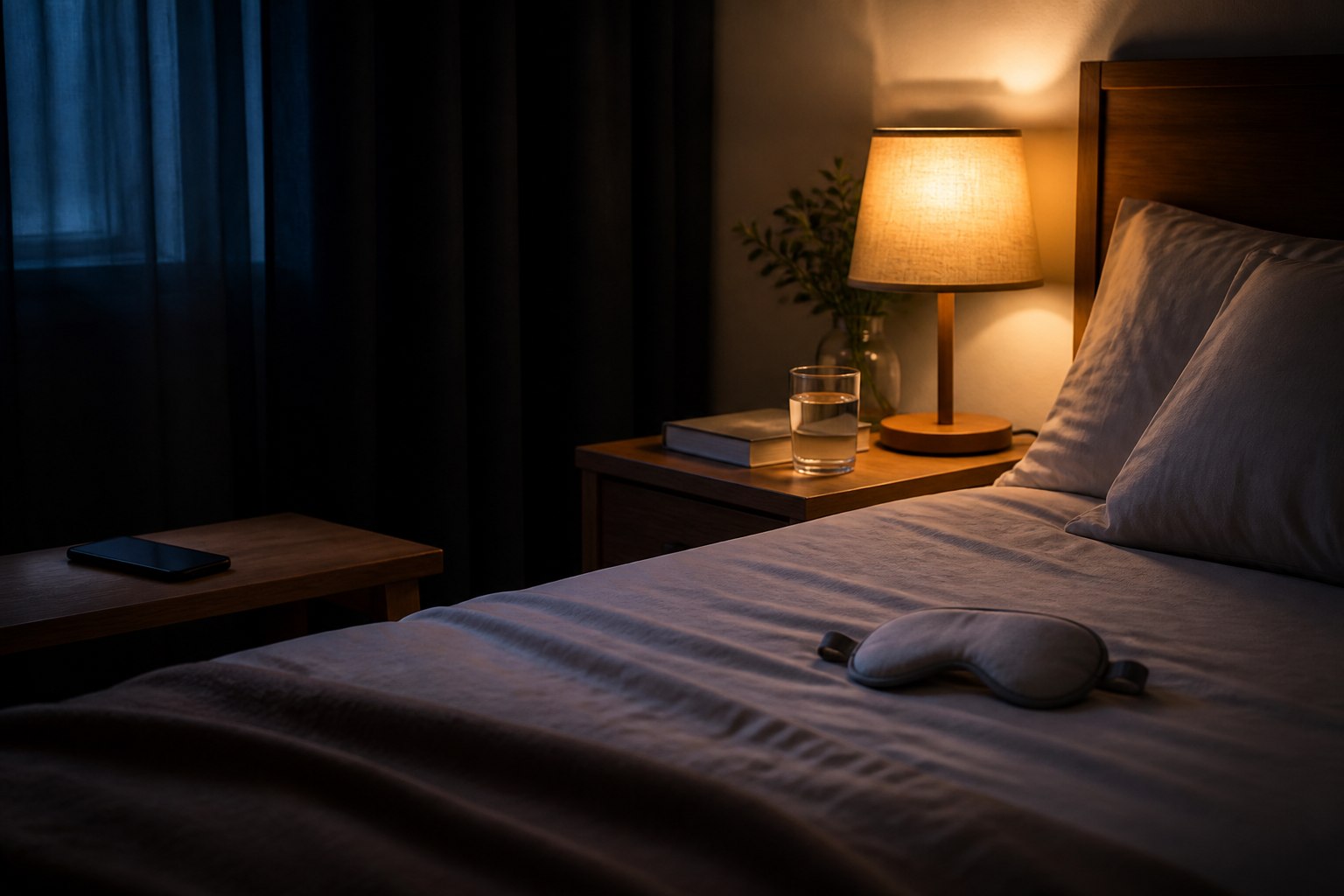
Use blackout curtains, an eye mask, earplugs, or steady background sound if needed. Silence unnecessary notifications and keep the phone away from the bed. Comfort matters: adjust pillows, bedding, and room temperature to reduce awakenings.
7. Set a caffeine cutoff
Caffeine can remain active for hours. Coffee, tea, energy drinks, chocolate, pre-workout products, and some medicines may all contribute. Try stopping at least six to eight hours before bed, then adjust for your sensitivity.
8. Avoid alcohol as a sleep aid
Alcohol may make you drowsy, but it can produce lighter, more fragmented sleep later and worsen snoring or breathing problems. Reducing the amount and avoiding it near bedtime may improve continuity.
9. Keep late meals light
Large or heavy meals can cause discomfort and reflux. Finish dinner a few hours before bed when possible. If genuine hunger keeps you awake, choose a small snack; see our guide to the best foods to eat before bed.
10. Manage nighttime wakefulness calmly
Avoid clock-watching. If you are awake long enough to become frustrated, leave the bed for a quiet activity in dim light and return when sleepy. This stimulus-control approach is part of cognitive behavioral therapy for insomnia (CBT-I).
What Can Prevent Deeper, Restorative Sleep?
Stress and conditioned alertness
Stress can keep the body in a state of readiness. Repeatedly worrying about sleep may then make the bed feel like a place of effort. Schedule planning or journaling earlier, and use relaxation as practice rather than a performance test.
Sleep apnea
Loud snoring, witnessed breathing pauses, gasping, morning headaches, dry mouth, or major daytime sleepiness may indicate obstructive sleep apnea. It fragments sleep and requires professional assessment; bedroom tips alone cannot correct an obstructed airway.
Pain, reflux, menopause, and medications
Pain, night sweats, reflux, urinary symptoms, restless legs, depression, anxiety, and some medicines can interrupt sleep. Ask a clinician or pharmacist about symptoms and medication timing. Do not stop prescribed treatment on your own.
Can Supplements Increase Deep Sleep?
No over-the-counter supplement reliably guarantees deeper sleep. NHLBI notes that research has not proven melatonin to be an effective treatment for insomnia broadly, and supplements can cause side effects or interact with medicines. Magnesium is helpful when a true deficiency exists, but it is not a universal sleep cure.
Talk with a qualified healthcare professional before using melatonin, antihistamine sleep aids, magnesium, CBD, or herbal products—especially during pregnancy, with chronic illness, or alongside prescriptions.
How Accurate Are Sleep Trackers?
Wearables can help reveal trends in bedtime, wake time, and total sleep, but their stage labels are estimates. A low “deep sleep” score on one night is not a diagnosis. Look at multiweek patterns and daytime symptoms, and avoid letting the score create more anxiety.
When to Get Professional Help
Speak with a healthcare professional if poor sleep occurs at least three nights a week, continues for months, or interferes with mood, concentration, work, or safe driving. Seek assessment sooner for gasping, breathing pauses, severe daytime sleepiness, chest symptoms, or an irresistible urge to move the legs.
For long-term insomnia, CBT-I is generally recommended as the first treatment option. It addresses the thoughts and behaviors that keep insomnia going and can be delivered in person, by phone, or online.
Frequently Asked Questions
How much deep sleep do adults need?
There is no single target that applies to everyone. Deep sleep varies with age, health, recent sleep, activity, and measurement method. Total sleep quality and daytime functioning are more useful than chasing a perfect percentage.
Can I force myself into deep sleep?
No. Sleep stages are automatically regulated. You can support healthy sleep by protecting enough time, keeping a regular schedule, exercising, controlling light, and treating disorders that cause awakenings.
Does sleeping longer always mean more deep sleep?
Not necessarily, but adequate total sleep gives your brain time to complete normal cycles. Spending excessive time awake in bed can worsen insomnia, which is why individualized CBT-I may help.
What is the fastest natural way to improve sleep?
There is no instant fix. Start with a consistent wake time, morning light, a caffeine cutoff, and a dark, cool bedroom. Track the pattern for two weeks before judging the result.
The Bottom Line
The best answer to how to get deeper sleep naturally is to support the entire night: allow enough time, keep a stable wake time, get daylight and exercise, wind down, limit caffeine and alcohol, and make the bedroom sleep-friendly. If sleep remains unrefreshing or breathing symptoms appear, seek professional evaluation.
This article is for general education and does not replace diagnosis or personalized medical care.